What are the planting methods and precautions for bowl lotus
Bowl lotus is also a type of lotus and is suitable for home growing, but how much do you really know about bowl lotus? Here is a detailed introduction to bowl lotus growing knowledge.
First, the planting methods for bowl lotus

Step one: scarify the seeds. The seed coat of the lotus seed has a hard and thick special structure. After the seed is fully mature and dried and shrunk, water and air cannot easily penetrate it, respiration is very slow, and it is in a state of enforced dormancy. Therefore, lotus seeds can be buried in soil for hundreds or even thousands of years without germinating or rotting. This is the reason for the longevity of lotus seeds. In order for lotus seeds to absorb water and oxygen after sowing, break the enforced dormancy, and enter germination and growth, scarification must be carried out before seed germination is promoted.
The lotus has an anatropous ovule, and the embryo bud is attached at the top end of the seed. When scarifying, the basal end of the seed should be broken, that is, the end where the seed is attached to the receptacle, which is also the concave end of the lotus seed. It can be cracked open with scissors or pliers. Before sowing, generally it is enough to wear through the seed coat (that is, the hard shell of the lotus seed) until the brown seed coat is visible; when cracking the shell, just make a 2 to 3 mm opening at the base, and never crack it too deeply, so as not to damage the embryo. After soaking the seed for one day, when the embryo absorbs water and swells, and the seed coat absorbs water and softens, you can peel off 1/3 of the seed coat by hand along the cracked area to expose the embryo, so as to facilitate the extension of the embryo bud. It must be noted that the scarified area must not be too large or too numerous. If the entire hard shell of the lotus seed is removed, the embryo bud loses protection and is very likely to rot and die.
Step two: soak the seeds to promote germination. Soak the scarified seeds in warm water at about 50 degrees. The water used for soaking should be clean, free of grease and dirt, and water higher than 50 degrees should not be used, otherwise germination will be affected. The water temperature will naturally drop and should finally remain at about 30 degrees; it should not be higher than 40 degrees or lower than 20 degrees. If the water temperature is higher than 40 degrees, although the seeds germinate rapidly on the first day, subsequent growth will be inhibited. If the water temperature is lower than 20 degrees, seed germination and growth will be too slow. When soaking a small quantity at home, a thermos bottle can be used to keep the temperature. Under the condition of 30 degrees, generally soaking to promote germination for 3 days is enough for germination, and the embryo bud extends from the opening. During this period, the water needs to be changed 1 to 3 times a day, and seeds that cannot germinate should be removed promptly. Under normal circumstances, seeds that still do not germinate after 7 days will not germinate. Seeds without germination ability often float on the water surface, with yellow embryo buds and moldy, foul-smelling cotyledons.
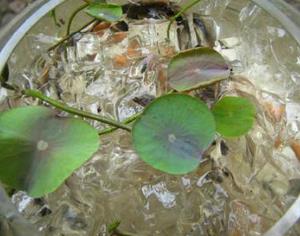
Step three: begin water culture seedling raising of the seeds. After the seeds sprout, water culture seedling raising should be carried out at about 25°C for 5 to 7 days. During water culture seedling raising, the root absorption capacity of the lotus seedlings is weak, and growth mainly relies on nutrients provided by the seed embryo, so fertilization is generally not needed. During water culture seedling raising, the water layer should be kept about 10 cm deep, and sufficient light should be provided; the water should not be changed frequently or the plants turned often, so as to avoid excessive elongation of the leaves caused by frequently changing their growth direction; the leaf stalks should be kept in the water, and the leaves should lie freely and flat on the water surface. When the first leaf opens, the second leaf is about to open, and white roots have grown, they can be planted in place.
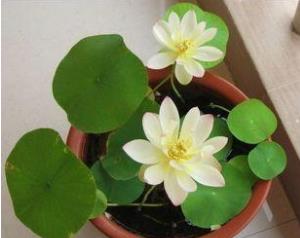
Step four is planting in place. When the buds grow to about 10 cm, they can be transplanted. According to the needs of bowl lotus planting, choose soil and put it into a flower pot, then add clean water, and mix the soil and fertilizer evenly. After the muddy water clears, plant the water-cultured seedlings in the center of the flower pot, with all the seeds entering the mud, so that the leaves spread freely on the water surface. When transplanting, note that the leaf stalks must not be broken, so as not to affect growth. After planting, maintain a water layer of 3 to 5 cm, but the leaves must never be submerged in water. Bowl lotus loves light, so the flower pot should be placed in a sunny place. Young seedlings are delicate, and some may scorch under sunlight, but generally they will still sprout and survive. Do not water too much either, so as to raise the water temperature and promote growth. After 7 to 13 floating leaves grow, standing leaves can appear. Generally speaking, for multi-flowered varieties, flower buds can begin to appear after 5 to 17 standing leaves have grown. The timing of bud appearance varies by variety; some varieties even show buds and bloom before standing leaves grow.
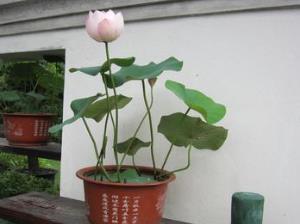
Second, summer care methods for bowl lotus
After the Beginning of Summer, watering once a day can allow bowl lotus to grow normally. In July and August, water as soon as the water is not full, ensuring that water is not cut off on any day, so water twice a day; otherwise the standing leaves will wilt until they dry and turn green. When duckweed, Marsilea quadrifolia, floating moss, and green algae plants are present in the pot, they not only rob fertilizer but also hinder viewing, and they shade light and lower the water temperature, so they should be removed completely. In addition, water weeds that breed should be carefully pulled out. For lotus rot and brown spot disease, once they appear, immediately remove and burn the affected parts, then spray the plants with 50% carbendazim or 500-fold diluted Yimeijing solution once a week, for about three consecutive sprays.
Third, precautions when planting
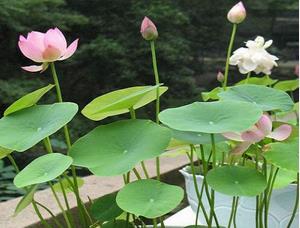
Bowl lotus is propagated by lotus seeds or seed lotus roots. When propagating by seeds, first crack the large end of the lotus seed with pliers, being careful not to damage the embryo bud, then soak the seed in warm water at about 50°C, and after it naturally cools, keep the water temperature at about 28°C. Change the water once or twice a day, and after about 5 to 7 days, it can sprout; after roots grow, plant it. The container used for cultivation should be suitable. If too large, it is unsightly; if too small and too shallow, the root system will not grow well, it will be difficult for it to bloom well, or the flowers will be few and small. For the cultivation soil, fertile lake or pond mud can be selected, mixed with a small amount of decomposed human feces and urine or cake fertilizer water, which can meet the needs of a whole year's growth. If the fertilizer requirement is too large, in mild cases the leaves will be lush and the flowers sparse, and in severe cases the seed lotus root will die. If the water in the pot turns green and black, and the lotus leaves are wrinkled and do not unfold, this is a sign of fertilizer damage, and the fertilized water in the pot should be poured out immediately and continuously replaced with clean water to alleviate it. When applying liquid topdressing during the growth period of large seedlings, never contaminate the leaves and flower buds, so as to avoid rotting leaves and flowers. The water for bowl lotus should vary with the time; during the small seedling stage, shallow water is needed, and as floating leaves grow, gradually raise the water surface. After standing leaves emerge, the pot can be filled with water, about 6 cm deep. In summer, water frequently; if water is lost, the leaf edges will quickly scorch. When the temperature is not high, a single watering should not be too much either; too much water will lower the water temperature and mud temperature, affecting plant growth and development, and in severe cases the seed lotus root will mold and die. Bowl lotus loves sunlight, so the flower pot should be placed in a sunny place. If light is insufficient, the lotus leaves will grow leggy and the green color will fade, so that buds cannot form and bloom. Although bowl lotus is cold tolerant, the lotus root is delicate, and because the container is small, the seed lotus root is prone to freezing damage at low temperatures. Therefore, in winter, do not water too much; just keep the pot mud from drying out. Around Qingming, repot and take out the seed lotus root, do not damage the terminal bud, and replace with new soil to replant. If cultivation and management are proper, one pot of bowl lotus can bloom 5 to 6 flowers a year, with a flowering period as long as one month. Placed on a windowsill or desk, the flower colors are gorgeous and the fragrance is pleasant, with a unique charm.
Second, summer care methods for bowl lotus
After the Beginning of Summer, watering once a day can allow bowl lotus to grow normally. In July and August, water as soon as the water is not full, ensuring that water is not cut off on any day, so water twice a day; otherwise the standing leaves will wilt until they dry and turn green. When duckweed, Marsilea quadrifolia, floating moss, and green algae plants are present in the pot, they not only rob fertilizer but also hinder viewing, and they shade light and lower the water temperature, so they should be removed completely. In addition, water weeds that breed should be carefully pulled out. For lotus rot and brown spot disease, once they appear, immediately remove and burn the affected parts, then spray the plants with 50% carbendazim or 500-fold diluted Yimeijing solution once a week, for about three consecutive sprays.
Third, precautions when planting
Bowl lotus is propagated by lotus seeds or seed lotus roots. When propagating by seeds, first crack the large end of the lotus seed with pliers, being careful not to damage the embryo bud, then soak the seed in warm water at about 50°C, and after it naturally cools, keep the water temperature at about 28°C. Change the water once or twice a day, and after about 5 to 7 days, it can sprout; after roots grow, plant it. The container used for cultivation should be suitable. If too large, it is unsightly; if too small and too shallow, the root system will not grow well, it will be difficult for it to bloom well, or the flowers will be few and small. For the cultivation soil, fertile lake or pond mud can be selected, mixed with a small amount of decomposed human feces and urine or cake fertilizer water, which can meet the needs of a whole year's growth. If the fertilizer requirement is too large, in mild cases the leaves will be lush and the flowers sparse, and in severe cases the seed lotus root will die. If the water in the pot turns green and black, and the lotus leaves are wrinkled and do not unfold, this is a sign of fertilizer damage, and the fertilized water in the pot should be poured out immediately and continuously replaced with clean water to alleviate it. When applying liquid topdressing during the growth period of large seedlings, never contaminate the leaves and flower buds, so as to avoid rotting leaves and flowers. The water for bowl lotus should vary with the time; during the small seedling stage, shallow water is needed, and as floating leaves grow, gradually raise the water surface. After standing leaves emerge, the pot can be filled with water, about 6 cm deep. In summer, water frequently; if water is lost, the leaf edges will quickly scorch. When the temperature is not high, a single watering should not be too much either; too much water will lower the water temperature and mud temperature, affecting plant growth and development, and in severe cases the seed lotus root will mold and die. Bowl lotus loves sunlight, so the flower pot should be placed in a sunny place. If light is insufficient, the lotus leaves will grow leggy and the green color will fade, so that buds cannot form and bloom. Although bowl lotus is cold tolerant, the lotus root is delicate, and because the container is small, the seed lotus root is prone to freezing damage at low temperatures. Therefore, in winter, do not water too much; just keep the pot mud from drying out. Around Qingming, repot and take out the seed lotus root, do not damage the terminal bud, and replace with new soil to replant. If cultivation and management are proper, one pot of bowl lotus can bloom 5 to 6 flowers a year, with a flowering period as long as one month. Placed on a windowsill or desk, the flower colors are gorgeous and the fragrance is pleasant, with a unique charm.