How to Propagate Schefflera: A Detailed Introduction to Several Common Methods
How do you propagate Schefflera? What are the propagation methods for Schefflera? If you want to know, take a look at the introduction below!
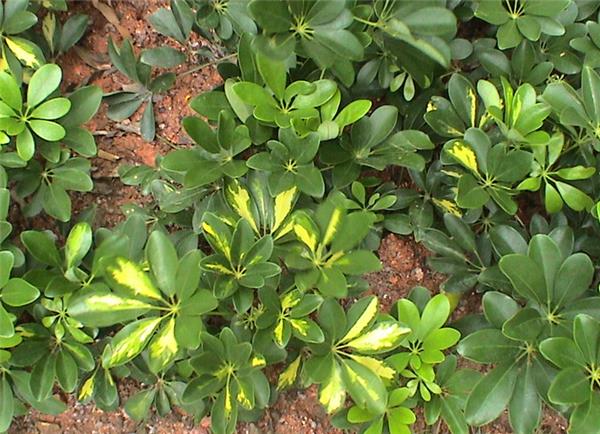
How to Propagate Schefflera
1. Schefflera cuttings propagation:
Carry this out from April to September. Cut a 1-year-old terminal branch, 8-10 cm long, remove the lower leaves, insert it into a sand bed, and keep it moist. At a room temperature of about 25°C, roots can form 30-40 days after insertion. Seed propagation: from April to May, sow indoors in pots. The suitable germination temperature is 20-25°C. Keep the potting soil moist, and germination occurs 15-20 days after sowing. When the seedlings are 5-8 cm tall, transplant them into 4 cm pots.
For potted Schefflera, 15-20 cm pots are commonly used. Place plenty of broken tiles or broken bricks at the bottom of the pot to improve drainage. During the growing season, fertilize once every half month, or use "Huiyou" 20-8-20 all-season high potassium nitrate fertilizer. In summer, shade with a 70% shade net; in winter, no shading is needed. When leggy shoots sprout, pay attention to shaping and pruning. For young plants, carry out thinning and light pruning, focusing mainly on shaping. When older plants become too large, carry out heavy pruning to readjust them. Repot young plants every spring, and repot mature plants once every 2 years.
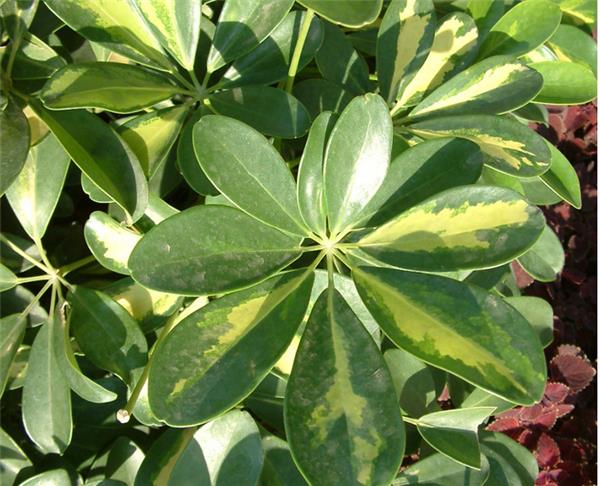
2. Schefflera seed propagation and cuttings propagation:
For seed propagation, sow in spring, keep the potting soil moist, and under a temperature of 20-25°C, seedlings emerge in 2-3 weeks. When the seedlings are 5-7 cm tall, transplant them once, and they can be planted out the following year. Cuttings are also taken in spring. Cut 1-year-old branches 8-10 cm long, remove the lower leaves, and insert them into a bed soil made of river sand or vermiculite. Keep them warm and moist; at 25°C they root in 4-6 weeks.
Home propagation of Schefflera by substrate propagation and rapid propagation. Cuttings are best taken in late spring and early summer. The usual room temperature is 15°C at night and about 25°C during the day; this is the most suitable growth temperature for Schefflera after cuttings are inserted.
Selection of cuttings: From a mother plant that has grown for several years, cut off 1-year-old branches 6-8 cm long, or use branches cut during repotting or spring heavy pruning as cutting material. Remove the leaves from the part to be inserted, and insert the cuttings into a plastic flowerpot with a diameter of 15-20 cm using perlite that has been soaked in water beforehand as the substrate. Add a tray at the bottom of the pot to catch the leachate. Insert 3 cuttings per pot or a single cutting per pot. About 1.5 months after insertion, roots can form. After insertion, water frequently to keep the medium moist. After insertion, place them in a low-light spot indoors and strengthen fertilizer and water management. After rooting, apply nutrient solution; replenish the solution once a week in the pot, 100 ml each time.
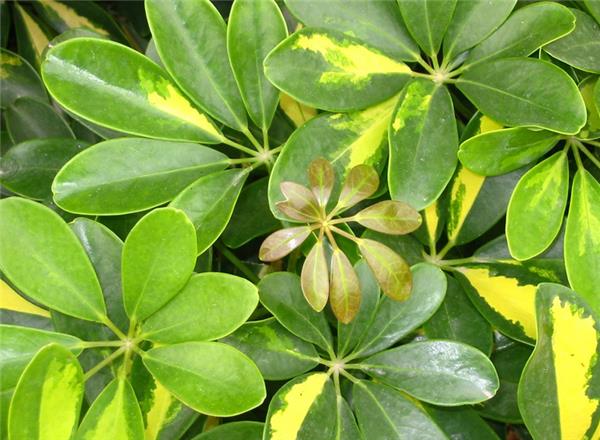
In addition, Schefflera propagation methods also include full-light mist cuttings propagation and air layering propagation.
Full-light mist cuttings propagation. By making use of the plant's growing season, artificially create a small high-humidity environment so that the plant can reproduce asexually rapidly under conditions of high temperature and high humidity. First, lay a layer of bricks at the bottom of the cutting bed, and place disinfected river sand 30 cm thick on top. Next, select current-year tender shoots 8 cm long as cuttings, remove the lower leaves, dip the roots in ABT rooting powder at 1000 mg/kg for 20 minutes, and insert these cuttings halfway into the bed sand. Inserting in the afternoon is best. For the first two weeks after insertion, mist from 8:00 to 17:00 at an interval of 3 minutes, and stop misting at night; in the third and fourth weeks, the interval is 7-8 minutes; after the fifth week, keep the interval at 10 minutes. By this time roots have already formed (if there is low temperature or rainy weather, mist less, and rooting time may be relatively later). Once the seedling roots have grown strong, they can be divided and planted.
Air layering propagation. This can be done from late April to mid-June. Select a 2-year-old branch, first carry out ring barking, 1-1.5 cm wide, deep enough to reach the green cambium. Wrap moist moss or rotted cow manure mixed with garden soil (1:1) or leaf mold around the wound, then wrap tightly with plastic film and tie the upper and lower ends securely. Roots form in about 40 days. This method is labor- and time-intensive, but the root system is good, the survival rate is high, and it also helps with shaping and pruning the plant.
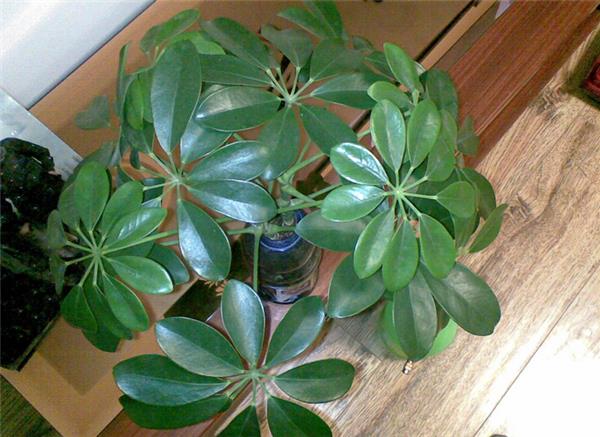
That is all for today's introduction on how to propagate Schefflera. I hope the above content has been helpful to everyone!