How to prevent lychee stink bug eggs? Their harm and control methods along with those of the rove beetle
Recently many people have received notices on Facebook about rove beetles, a type of pest that can cause diffuse ulcerating skin damage, and everyone is reminded to pay attention: when clothes are hung out to dry on the balcony, watch out for a kind of small, round, blue-and-white object stuck to them.
If you do find any, be sure to clean them off quickly and never put the clothes on directly, because they are eggs laid by an insect called the lychee stink bug (Tessaratoma papillosa). If you wear the clothes directly, the irritating fluid contained in the eggs touches the skin and causes severe skin ulceration, as if you had been burned. If it causes a large-area wound, it may even be life-threatening, and this has made many people anxious and afraid.
It is said that the lychee stink bug is not only dangerous in its egg stage. Originally centered on southern Taiwan, China as the affected area, over the past three or four years it has moved north, and even the forest areas of Keelung have seen them invade in force. Some experts say that it is not only the eggs that are dangerous: the adult lychee stink bug, which looks like a colorful longhorn beetle, can also spray toxic fluid, and if a curious child touches it, the skin may be corroded and ulcerated.
Dermatologist Zhao Zhaoming says the damage caused by this insect is similar to a chemical burn, so it is extremely painful and severe, but as long as you do not scratch it open, the damage will not be so great.
After lychee stink bug venom touches the skin, blisters like burn blisters appear on the skin. Zhao Zhaoming reminds people that if skin has been sprayed with lychee stink bug venom, never scratch the skin; rinse it with water right away to reduce the burn blisters the venom forms on the skin. If the skin has already turned red, it will itch badly, but do not scratch it, because small chemical burn blisters may already have formed, and scratching can break the skin, let body fluids seep out, and easily lead to infection; after the wound heals, scars easily form.
Also, when clothes are hung outdoors where there are trees, when you bring them back in you should check whether the clothes have picked up insect eggs or insect bodies. If you find anything unusual, it is best to wash them again. And it is not only clothes dried outdoors that require attention when put on: the weather has been hot recently, and many people take summer clothes out of the wardrobe for the seasonal change and wear them without washing them again, so be careful that the eggs of parasitic small boring insects may also cause dermatitis. If the wardrobe is damp, there may also be mold, so it is best to wash clothes before wearing them, otherwise they may also cause itchy skin.
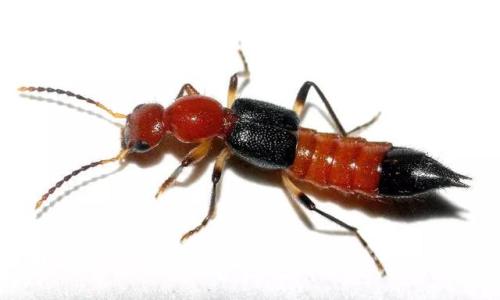
Besides the lychee stink bug, Zhao Zhaoming says that in fact many insects in summer easily cause skin allergies, among which the rove beetle has long been notorious for the harm it causes. The rove beetle looks like a termite, and its wings are not very clearly visible. It often flies at night toward homes that have lights, and sometimes it crawls onto people. When a person feels something crawling on the body, they often cannot help but swat it with their hand. Once swatted, the rove beetle's body fluid, which is like sulfuric acid, causes a chemical burn to the skin, producing large blister-like wounds.
Some people online have wildly spread the claim that after being contaminated by rove beetle body fluid, "you may be doomed." Zhao Zhaoming says it is not that frightening, but if it is not handled well it will be very bad, because the burn blisters it causes are just like scalds and must be properly treated. Otherwise, if they are broken and infection occurs, severe symptoms may result. Fortunately, the rove beetle is usually not large, and the affected area is about the size of a palm. Handle it well, do not break the blisters, use ice packs to relieve itching, take anti-inflammatory and anti-itch medicine and apply ointment, and it usually heals in seven to ten days. However, a small number of people are severely allergic to the insect's body fluid, and they should see a doctor for treatment as soon as possible.
Besides rove beetles and lychee stink bugs, which cause diffuse ulcerating skin damage, there are many other insects in summer that cause skin symptoms, such as fleas and red ants, both of which cause severe itchy skin symptoms.
There is also another itchy condition that many people overlook because no insect is seen: caterpillar dermatitis. In summer many eggs hatch into caterpillars, and the hairs on caterpillars easily fall off and scatter with the wind. Because the weather is hot, many people wear clothes that leave skin exposed, and when caterpillar hairs touch the skin, together with sweat, they may cause extremely itchy red rashes.
Zhao Zhaoming reminds people to be careful when they have itchy skin rashes. Many children cannot bear the itching, scratch the skin open, and may even develop cellulitis. So once itchy skin is found, it is best to use physical anti-itch methods such as ice packs and cold compresses, or apply some local anti-itch ointment.