What are the uses of the areca palm? An analysis of its main uses and value
Did you know that besides its ornamental value, the areca palm has other uses too? Below we take a detailed look at the uses of the areca palm.
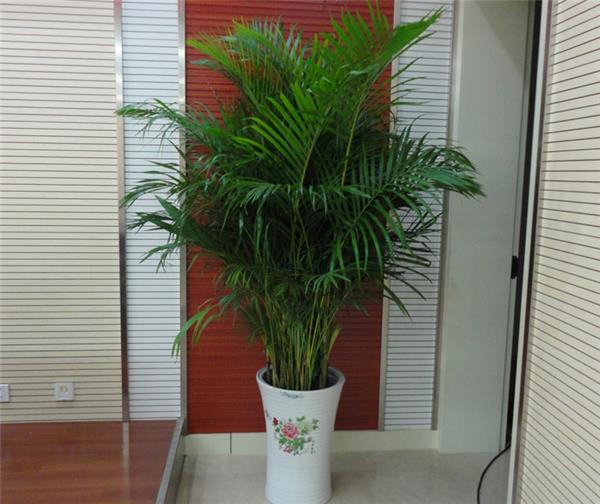
The uses of the areca palm
1. Ornamental
The areca palm has pinnate lanceolate leaves with soft tips and a graceful, elegant posture. It is shade-tolerant and can be displayed indoors in bright light for long periods, and can also be kept in dimmer environments for 4-6 consecutive weeks. It is a highly popular upscale ornamental plant with relatively high ornamental value.
2. Home style matching
The areca palm is the best partner for ornate styles, possessing a gorgeous and elegant appearance along with the excellent quality of shade tolerance. In Rococo-style palaces, the areca palm is mostly used as the chief green plant. For American-style and French-style interiors, nothing pairs better than the areca palm; the languid atmosphere it gives off matches perfectly with the elaborate American and French style decor.

3. Removing harmful substances
The areca palm is a small palm plant with strong shade tolerance. It can resist harmful gases such as sulfur dioxide, HF and mercury vapor, and has a strong ability to absorb chlorine and sulfur. After home renovation, indoor pollution of varying degrees exists. Placing some green plants to absorb these pollutants as nutrients and release fresh oxygen helps. Placing an areca palm in the home can effectively remove volatile harmful substances such as benzene, trichloroethylene and formaldehyde from the air.
4. Increasing air humidity
The areca palm has the function of evaporating water vapor. If an areca palm is grown in the home, it can keep indoor humidity at 40%-60%. Especially in winter, when indoor humidity is low, it can effectively raise indoor humidity.
5. Medicinal
The areca palm can also be used medicinally. It has an astringent and hemostatic effect, and can be used to treat hematemesis, hemoptysis, hemafecia, metrorrhagia and metrostaxis, etc.
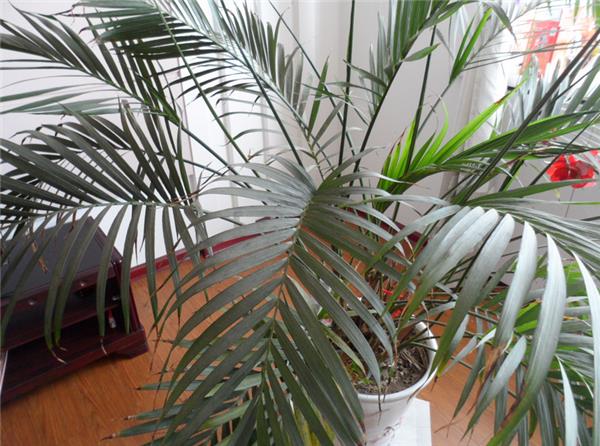
Next, let's look at the special precautions for growing areca palm.
1. Humidity management: The areca palm likes a moist climate environment and requires the relative air humidity of the growing environment to be 70%-80%. If the relative air humidity is too low, the leaf tips will dry out.
2. Temperature management: Since the areca palm originates from tropical regions, it likes high-temperature environments and has strict requirements for winter temperatures. When the temperature is below 10°C, growth slows and it begins to enter a semi-dormant or dormant state; when it is below 5°C, it cannot safely overwinter; in summer, it can tolerate temperatures as high as above 35°C, but growth will be temporarily hindered. The most suitable growth temperature is 18-30°C.
3. Light management: The areca palm is not strict about light. It likes sufficient sunlight and is also tolerant of partial shade, but it grows better with sufficient light.
4. Fertilizer and water management: For potted areca palm plants, in addition to adding organic fertilizer when potting, appropriate fertilizer and water management should also be carried out during regular care.
5. Pruning: Winter pruning. In winter, when the plant enters dormancy or semi-dormancy, branches that are weak, diseased or pest-infested, dead or too dense should be cut off.
6. Repotting: Repot once every 2-3 years in early spring; older plants can be repotted once every 3-4 years. After repotting, place it in a semi-shaded spot with relatively high air humidity, and promptly prune withered and yellow branches and leaves.
That wraps up this introduction to the uses of the areca palm. I hope the above content has been helpful to everyone!