Reasons for Root Rot in Hydroponic Hyacinths and How to Solve It
Many people love hyacinths not only for their gorgeous appearance but also for their captivating fragrance. But what should you do if the roots of a hydroponic hyacinth start to rot?
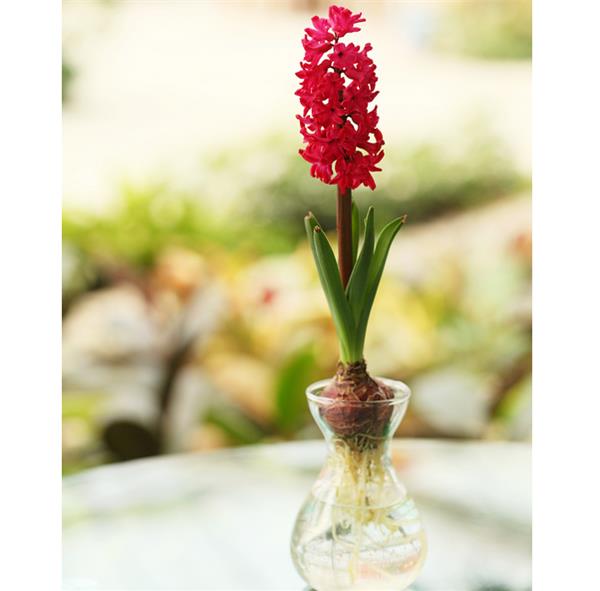
What to Do If Hydroponic Hyacinth Roots Rot
First, let's look at the causes of root rot in hydroponic hyacinths.
1. The water level is too high. The ideal water level is, in the early stage of hydroponics, just up to the base plate of the bulb; once the roots have grown out, the water level should be below the base plate.
2. Deteriorating water quality leads to root rot. Regarding the water used for hydroponic hyacinths, there are currently two common approaches: one is to change the water regularly to keep it clean, and the other is to only add water without changing it. Both have advantages and disadvantages. Changing the water can easily damage the roots, while only adding water without changing it may cause the water quality to deteriorate.
3. Using too much nutrient solution. In fact, hydroponic hyacinths do not need nutrient solution.
4. The hydroponic container has no ventilation holes. Hydroponics differs from soil cultivation: in hydroponics you must give the roots space to breathe, so besides keeping the water level lower, you should also make sure there is proper air circulation so the roots can breathe.
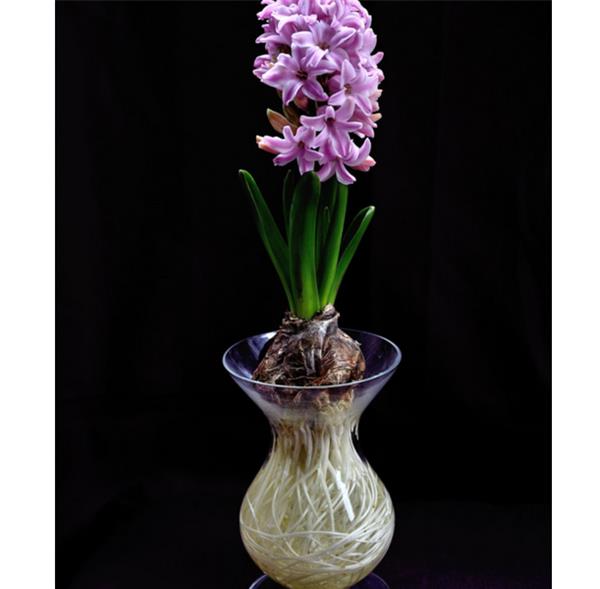
Now let's look at the solutions.
If only the roots have rotted and the bulb itself is fine, you can clean away the rotten roots completely, then, if conditions allow, disinfect with potassium permanganate, let it dry in a ventilated place, and replant it in soil. As long as the base plate is not damaged, the chances of saving it are still quite good.
If the bulb has also become moldy and rotten, first wash the moldy areas clean, peel off the rotten parts, and check the surrounding interior of the bulb for any signs of rot. Finally, disinfect it, let it dry, and replant it (soil cultivation is recommended).
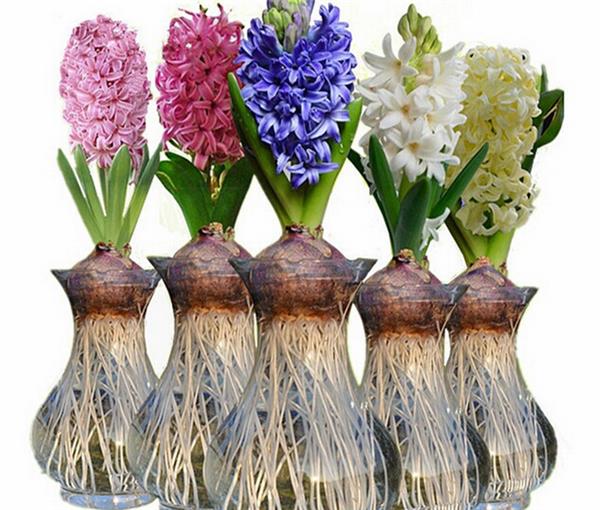
Notes on Hydroponic Hyacinths
1. Leave a 1-2cm gap between the water level and the base plate of the bulb so the roots can breathe air. It is strictly forbidden to fill the water so high that it submerges the bottom of the bulb. In December, you can place the bulb in a wide-mouthed glass jar with a grid, and add a little charcoal to help with disinfection and preservation. The hyacinth bulb only needs to be immersed up to its base. Then place it in a dark place and cover the jar with black cloth.
2. If you grow it in clean water, change the water once every 7 days. If you use a hydroponic nutrient solution, replace the nutrient solution once every 10-15 days depending on how cloudy it becomes. Either way, keep the water in the jar clean. You can grow the hyacinth in a specially made glass jar shaped like a gourd, with its flower cluster visible in the upper section. After about 20 days of this, the roots will sprout in a completely dark environment, and at that point you can take it outside to receive sunlight.
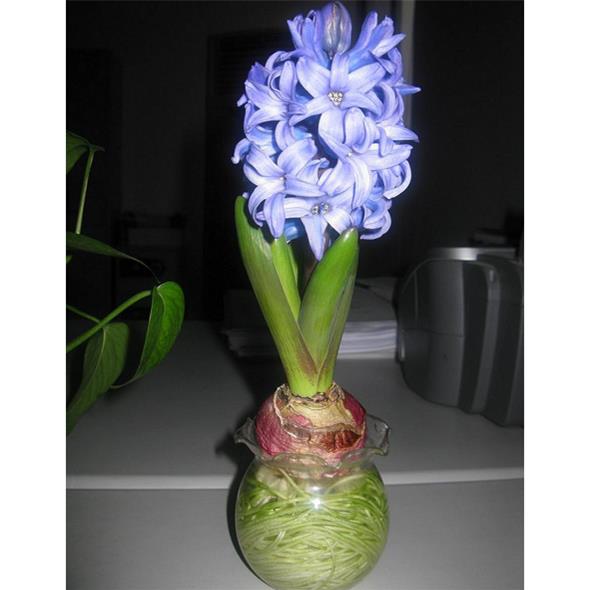
3. Before the bulb sprouts, do not place it in direct sunlight. After it sprouts, place it in a bright, well-ventilated spot with sunlight to promote its growth. At first, give it one to two hours of light per day, then gradually increase it to seven or eight hours. If the weather does not change much, it may bloom by the Spring Festival, and in the lower section you can see a cluster of thick white roots. This scene of flowers and roots flourishing together is rarely seen in other flowers and plants, except for orchids.
4. The hydroponic hyacinth is one of the easiest flowering ornamental varieties to grow among hydroponic flowers. Hyacinths come in many colors: red like fire, purple intoxicating, yellow dazzling, pink charming, white pure, and blue profound. They represent positivity and a love of life. When they bloom, they symbolize the arrival of spring and lift people's spirits. Start hydroponic cultivation in November, and they will bloom after about 70-80 days, with a fragrance.