How to Grow Cacti? Detailed Guide to Cultivation Methods and Tips
Cacti are desert plants with strong drought tolerance. What we are going to share with you below is how to grow cacti, so let's take a look!
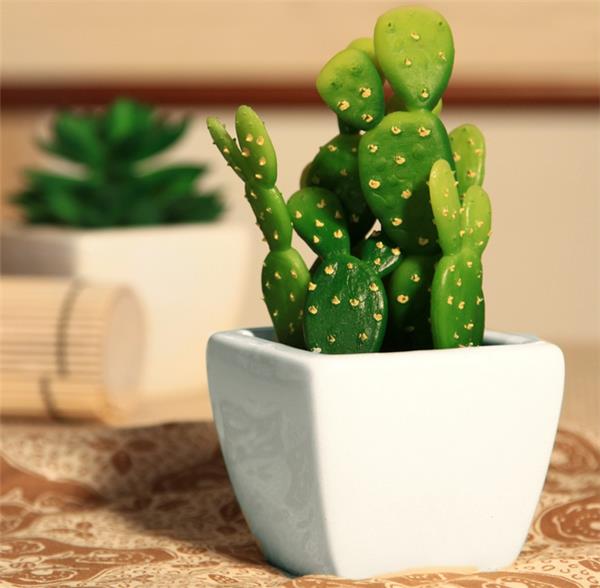
How to Grow Cacti
I. Watering and Misting
Terrestrial cacti have distinct growth and dormancy periods. They need watering during the growth period, and little or even no watering during dormancy. For epiphytic types, if the winter temperature is kept above 12°C, they can be watered and misted year-round; if the winter temperature is kept below 12°C, watering can be reduced as appropriate and misting stopped. When watering, follow this principle: "water thoroughly when dry, do not water when not dry." The water temperature should be as close as possible to the soil temperature. In summer, water early (before sunrise) and late (after sunset); in winter, water between 10 a.m. and 11 a.m. Also, pour the water directly onto the potting soil, otherwise it will affect the appearance of the spines. In addition, in summer, sprinkle water on the ground to increase air humidity.
II. Fertilizing
Follow this principle when fertilizing: timely, appropriate in amount, and suited to the plant. Fertilize in spring and autumn, once every 20 days, and choose to do it in the early morning or evening of a sunny day. If the potting soil is rather dry, sprinkle a little water on the potting soil before fertilizing. A concentration of 0.05%-0.2% is appropriate. Water thoroughly once the next morning for even better results. Terrestrial types require fertilizer rich in potassium and phosphorus and low in nitrogen, while epiphytic types require more nitrogen fertilizer.
III. Light
Terrestrial types prefer ample sunlight, especially in winter when they need full sunlight. Generally, tall columnar and flattened cacti are more tolerant of intense light and can be placed outdoors in summer without shading; smaller spherical types prefer semi-shaded conditions in summer. During the hot summer months of June to August, cover the growing point at the top of a golden barrel cactus and the area around it with a round piece of plastic film so that all parts of the sphere grow evenly. Epiphytic cacti require semi-shaded conditions year-round.
IV. Temperature
The suitable growing temperature for cacti is between 20-35°C. Terrestrial types do not require very high temperatures during winter dormancy; while keeping the potting soil dry, maintaining a temperature of 4-7°C is sufficient. Epiphytic types, however, require higher temperatures in winter, preferably maintaining 10-13°C or higher. When the temperature reaches 30-35°C in summer, most cacti slow their growth, and sometimes the stems of certain species turn yellow or get scorched. At this time, shading is essential and more water should be sprinkled on the ground to lower the temperature.
V. Air
Most cacti originate from desolate, open desert areas with good ventilation and fresh air. Therefore, during the hot midsummer weather, ventilation and cooling of the growing area should be done well. A cultivation greenhouse should be chosen in an environment with air circulation, and more vents such as windows and skylights should be installed to allow ventilation and air exchange during hot weather. If necessary, equipment such as exhaust fans, blowers or electric fans can be installed to enhance air circulation in the environment, so as to help cacti safely get through the summer.
VI. Pests and Diseases
The pathogens harming cacti include bacteria and fungi, but the problem is not very serious. As long as cultivation conditions are improved, management measures are appropriate, and prevention and elimination of pests and diseases are combined, good results are easily achieved. The more common pests and diseases mainly include:
1. Rot. Its pathogens include both bacteria and fungi. The occurrence of this disease is often related to improper watering, poor drainage of the potting soil, and persistently excessive moisture. After discovering a diseased plant, immediately cut out the diseased tissue with a sharp knife, apply charcoal powder or sulfur powder to the cut, and at the same time reduce watering or repot, and separately take cuttings or graft. It is best to regularly spray a 40% copper oxychloride suspension at 800-1000 times dilution on the planting site and the plants as a preventive measure, but the main thing is still to improve ventilation conditions and avoid persistently excessive moisture.
2. Damage by insects and other animals. Mainly scale insects, red spider mites and slugs, etc. To control scale insects, spray a 50% omethoate emulsion at 1000 times dilution; to control red spider mites, spray a 20% dicofol wettable powder at 600 times dilution or a 40% dicofol emulsifiable concentrate at 1000 times dilution; to control rats and woodlice, spray a 2000 times dilution of Lorsban around the flower stand and flower pots; to control snails and slugs, sprinkle lime powder around the flower pots, or apply an 8% metaldehyde granule pesticide; to control cockroaches and ants, place cockroach and ant poison or mix sugar water with trichlorfon pesticide to kill them.
Key Points for Cactus Care
Seed-grown cacti are indeed very easy to grow; neither watering nor soil needs to be very particular. However, some cacti that people buy are cuttings, which look fine on the surface but actually have no roots. This mainly applies to small potted plants bought on the roadside as well as small potted plants bought at flower markets.
Although cacti are succulent plants and relatively drought-tolerant, and will not completely die even if not watered for a month, they must be watered to grow healthily. Winter: water about once every 20 days or so, and it is best to choose the warmer afternoon hours for watering. If the room is rather dry, water can be sprayed on the leaf surface to keep the stem pads emerald green. After the whole plant enters dormancy, watering can be stopped.
Spring: as the temperature rises, the frequency of watering can be appropriately increased. The principle of watering is not to water when not dry, and to water thoroughly when watering; do not water too much, and do not go without watering for a long time. When the temperature rises to around 20°C, watering once every 7-10 days is generally appropriate.
Summer: with high temperatures, large evaporation and vigorous growth, this is the season when edible cacti need the most water. Generally, watering is needed once every 3-5 days. When the temperature rises above 30°C, in order to maintain the turgor of the stem pads and increase ornamental value, it is best to spray water on the cactus stem pads 1-2 times every morning and evening.
Autumn: gradually reduce watering. When watering potted plants, also pay attention to water temperature and water quality. The water should be neutral or slightly acidic in pH. If using tap water, it is best to let it sit for two days before use. In addition, the water temperature should preferably be close to the room temperature; in cold northern regions, extra attention should be paid when growing edible cacti in pots.
Neither watering nor soil needs to be very particular, but some cacti that people buy are cuttings, which look fine on the surface but actually have no roots. This mainly applies to small potted plants bought on the roadside as well as small potted plants bought at flower markets.Although cacti are succulent plants and relatively drought-tolerant, and will not completely die even if not watered for a month, they must be watered to grow healthily. Winter: water about once every 20 days or so, and it is best to choose the warmer afternoon hours for watering. If the room is rather dry, water can be sprayed on the leaf surface to keep the stem pads emerald green. After the whole plant enters dormancy, watering can be stopped.
Spring: as the temperature rises, the frequency of watering can be appropriately increased. The principle of watering is not to water when not dry, and to water thoroughly when watering; do not water too much, and do not go without watering for a long time. When the temperature rises to around 20°C, watering once every 7-10 days is generally appropriate.
Summer: with high temperatures, large evaporation and vigorous growth, this is the season when edible cacti need the most water. Generally, watering is needed once every 3-5 days. When the temperature rises above 30°C, in order to maintain the turgor of the stem pads and increase ornamental value, it is best to spray water on the cactus stem pads 1-2 times every morning and evening.
Autumn: gradually reduce watering. When watering potted plants, also pay attention to water temperature and water quality. The water should be neutral or slightly acidic in pH. If using tap water, it is best to let it sit for two days before use. In addition, the water temperature should preferably be close to the room temperature; in cold northern regions, extra attention should be paid when growing edible cacti in pots.