What are the effects of golden pothos and its feng shui considerations?
Golden pothos is usually grown indoors in pots. It brings a beautiful visual impression and helps purify the environment. Because golden pothos can absorb benzene, formaldehyde and other substances from the air, it is widely grown in home life. Next, let us learn about the cultivation methods and growing techniques of golden pothos.
Introduction to golden pothos
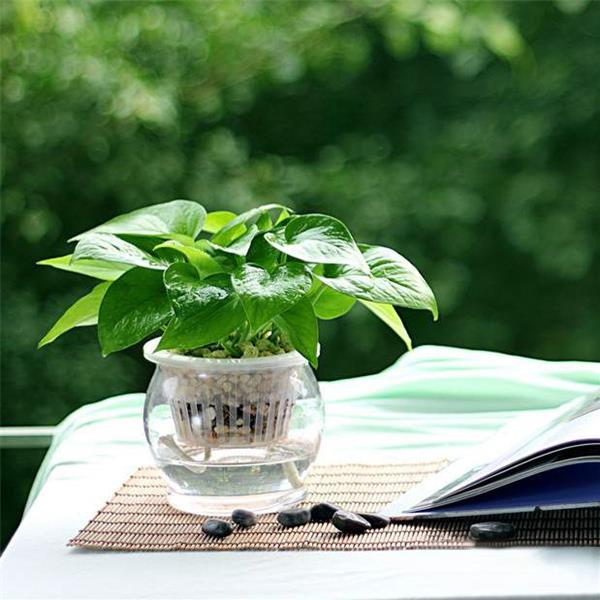
Golden pothos is a perennial evergreen climbing herbaceous plant. Its stems and vines can reach several meters long and climb by means of aerial roots on the stems. The leaves grow densely, alternately, heart-shaped, 15-30 cm long and 8-15 cm wide, papery, glossy, tender green or olive green, with irregular large yellow patches or stripes, entire; the petioles and stems are yellow-green or brown.
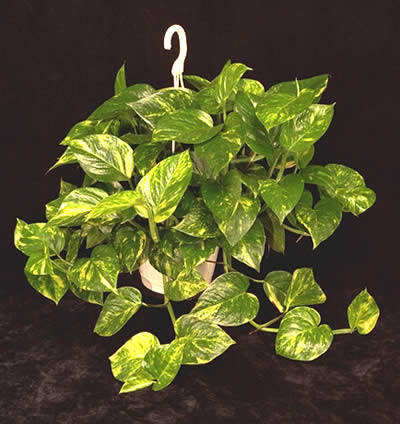
The effect of pothos on the home environment
Pothos is a large evergreen vine. Like spider plants and ivy, it has a strong ability to purify the air. Pothos can absorb benzene, trichloroethylene, formaldehyde and other substances from the air. It is especially suitable to place pothos in a newly renovated home. According to environmental scientists, one pot of pothos in a room of 8-10 sq m is equivalent to an air purifier. It can be seen that pothos has a fairly strong air-purifying ability.
Feng shui applications of pothos
1. It eliminates many harmful intrusions for us and gives home life a good start. When we have just moved into a new house, the smell inside may be very strong, so much so that we cannot live in it. Many people choose to place a few or even more pothos plants indoors just after renovation, letting them absorb harmful gases inside, and then move in after a period of time. From this perspective, pothos has actually taken on many toxic intrusions for us, and its role has already gone far beyond a purely feng shui function.
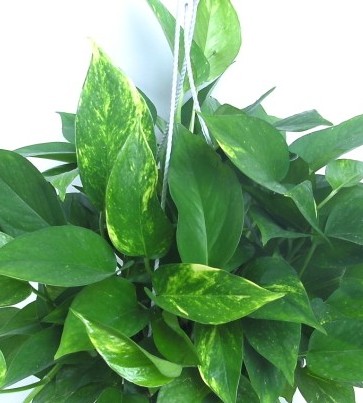
2. Pothos can attract airflow and let indoor spaces ventilate and breathe. Why say this? Plants themselves also breathe, absorbing carbon dioxide and releasing oxygen. Pothos is generally placed by the window. When there is too much wind outside, it blocks some of it. If there is no wind, it itself also releases new oxygen. The oxygen enters our living space, making us more energetic and making the indoor air fresher.
On the surface, there are only two major feng shui effects, but in fact, some plants have many small feng shui effects yet cannot help much, while pothos has a very large influence.
Pairing pothos with home styles
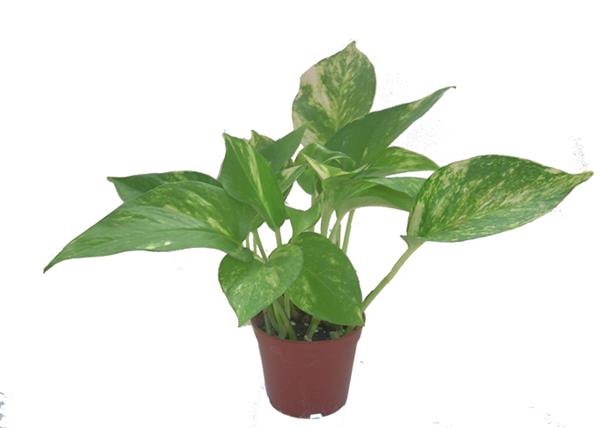
1. Pothos is suitable for places where family members have the most contact. Beside the living room TV and on the living room table are both very good choices. Pothos is one of the very fine indoor decorative plants, a climbing vine foliage flower. Its vine stems are slender and soft, and its leaves are delicate and elegant. Place a nested pot high on top of a furniture cabinet and let its vine stems hang down freely, or after the hanging vine stems grow too long, loop and hang them into a ring, just like an emerald relief. In this way, it makes full use of space, purifies the air, and adds a lively-lined, bright-colored green decoration to a rigid cabinet surface. It is full of vitality and adds a harmonious touch of interest to the room. Morphological characteristics: pothos vines grow several meters long, with aerial roots at the nodes. As the plant ages, the stems thicken and the leaves also become larger and larger. The leaves are alternate, green, with a few leaves also slightly mottled with yellow, entire, heart-shaped. These places fully demonstrate its ornamental value.
2. Place it in the kitchen with the most oil fumes. Placing it in the kitchen both achieves the goal of environmental protection and adds a bit of green to the kitchen, achieving two aims at once. Environmental scientists have found that one pot of pothos in a room of 8-10 sq m is equivalent to an air purifier and can effectively absorb harmful gases such as formaldehyde, benzene and trichloroethylene from the air. Pothos not only has strong vitality, but when placed indoors, its air-purifying ability is no less than that of ivy and spider plants. Newly laid flooring very easily produces harmful substances. Because pothos can simultaneously purify benzene, trichloroethylene and formaldehyde from the air, it is very suitable for placement in newly renovated rooms.
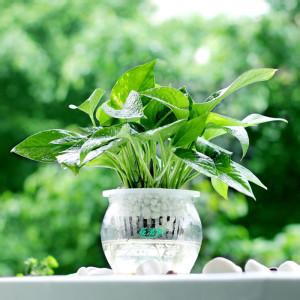
3. The windowsill position is its specialty. If we pay careful attention, we can find that the plants generally placed on windowsills in ordinary homes are all pothos, because its size is especially small and it fits just right on the windowsill. It will not crush the windowsill, nor will it block the beautiful scenery the owner sees from the windowsill.
Such pairings can achieve the goals of environmental protection, adding vitality and decorating the home, reflecting a home style that combines home and nature.
Cultivation of golden pothos
1. Water. Golden pothos likes to live in a moist environment, so it is best to water it more. In summer, the weather is hot and water dissipates quickly. In addition to watering more, the leaves should also be misted. The amount of watering depends on the potting soil. Larger golden pothos plants should be watered more.
2. Sunlight. Golden pothos likes a cool, semi-shaded environment with relatively high air humidity. It cannot be exposed to strong sunlight, otherwise newly sprouted leaves will lose water and become smaller, with dull color, and the leaf edges are also easily scorched. In autumn and winter, golden pothos can be placed in a sunny spot indoors to receive photosynthesis.
3. Temperature. Although golden pothos does not like blazing sun, it is still quite sensitive to temperature. If the temperature is too low, it is very easy for it to suffer frost damage. A room temperature of about 20 degrees is sufficient. If heating equipment is used, the leaves of golden pothos must not be too close to it. If the indoor temperature is kept above 10 degrees, golden pothos can safely pass the winter.
4. Fertilizing. Because it is grown indoors, golden pothos absorbs nutrients less abundantly than outdoors. It is recommended to apply fertilizer once every half month. You can buy fertilizer specially for pothos on the market. Or ask the flower shop owner to help choose fertilizer.
5. Humidity. Golden pothos grows faster in an environment with relatively high air humidity. It is recommended to maintain indoor humidity, and a humidifier can be used to increase air humidity. A transparent plastic bag can be placed over the plant to create a mini greenhouse effect, but it should not exceed two hours.
Golden pothos has wide adaptability, grows relatively fast, and is extensively managed in cultivation. During cultivation and management, more water should be sprayed on the plants in summer, and a foliar topdressing should be carried out once every 10 days to keep the leaves green. For potted seedlings, when the seedlings grow 30 cm above the support column, they should be pruned; when the lower leaves have fallen by 30%-50%, they should be discarded and replanted. Golden pothos is mainly propagated by cuttings. For cuttings, choose strong upper leafy vines 25-30 cm long, insert them into a sand bed or directly pot them for cultivation, and maintain 85%-90% humidity. For column cultivation, it is best to use terminal buds, 3-4 per column.
It fits just right on the windowsill. It will not crush the windowsill, nor will it block the beautiful scenery the owner sees from the windowsill.Such pairings can achieve the goals of environmental protection, adding vitality and decorating the home, reflecting a home style that combines home and nature.
Cultivation of golden pothos
1. Water. Golden pothos likes to live in a moist environment, so it is best to water it more. In summer, the weather is hot and water dissipates quickly. In addition to watering more, the leaves should also be misted. The amount of watering depends on the potting soil. Larger golden pothos plants should be watered more.
2. Sunlight. Golden pothos likes a cool, semi-shaded environment with relatively high air humidity. It cannot be exposed to strong sunlight, otherwise newly sprouted leaves will lose water and become smaller, with dull color, and the leaf edges are also easily scorched. In autumn and winter, golden pothos can be placed in a sunny spot indoors to receive photosynthesis.
3. Temperature. Although golden pothos does not like blazing sun, it is still quite sensitive to temperature. If the temperature is too low, it is very easy for it to suffer frost damage. A room temperature of about 20 degrees is sufficient. If heating equipment is used, the leaves of golden pothos must not be too close to it. If the indoor temperature is kept above 10 degrees, golden pothos can safely pass the winter.
4. Fertilizing. Because it is grown indoors, golden pothos absorbs nutrients less abundantly than outdoors. It is recommended to apply fertilizer once every half month. You can buy fertilizer specially for pothos on the market. Or ask the flower shop owner to help choose fertilizer.
5. Humidity. Golden pothos grows faster in an environment with relatively high air humidity. It is recommended to maintain indoor humidity, and a humidifier can be used to increase air humidity. A transparent plastic bag can be placed over the plant to create a mini greenhouse effect, but it should not exceed two hours.
Golden pothos has wide adaptability, grows relatively fast, and is extensively managed in cultivation. During cultivation and management, more water should be sprayed on the plants in summer, and a foliar topdressing should be carried out once every 10 days to keep the leaves green. For potted seedlings, when the seedlings grow 30 cm above the support column, they should be pruned; when the lower leaves have fallen by 30%-50%, they should be discarded and replanted. Golden pothos is mainly propagated by cuttings. For cuttings, choose strong upper leafy vines 25-30 cm long, insert them into a sand bed or directly pot them for cultivation, and maintain 85%-90% humidity. For column cultivation, it is best to use terminal buds, 3-4 per column.