What to Do When Spider Plant Leaves Turn Yellow? Causes and Solutions
Spider plant (Chlorophytum comosum) is a highly ornamental plant with many varieties, each with different forms and characteristics. Today we want to introduce the causes of yellowing spider plant leaves and solutions, so let's take a look!
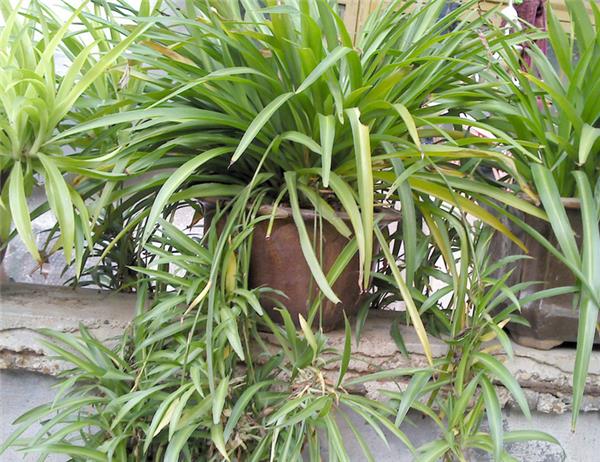
Causes of Spider Plant Leaves Turning Yellow
1. Excessive fertilization, exceeding the plant's needs. After fertilizing, the leaves will appear glossy and uneven, and later after part of the root system rots, the leaves turn yellow due to nutrient deficiency. So at this time you should stop fertilizing, water more, or wash the root system by repotting, and replacing the soil with new soil is also a good option. It can be seen that the soil solution concentration is very important.
2. The soil has not been turned for a long time, and the soil has become compacted, after all the nutrient elements in the pot have been exhausted. The lack of the three most important elements, nitrogen, phosphorus and potassium, causes the leaves to gradually turn yellow. At this time you should replace the soil or promptly change to fertile loam and water with alum fertilizer water.
3. Spider plant is a semi-shade flowering plant, but it still needs light, so you should ensure at least 4-5 hours of light every day. Otherwise chlorophyll decreases and the leaves will also turn yellow. The best approach is to place it under an indoor incandescent lamp or keep it on a balcony.
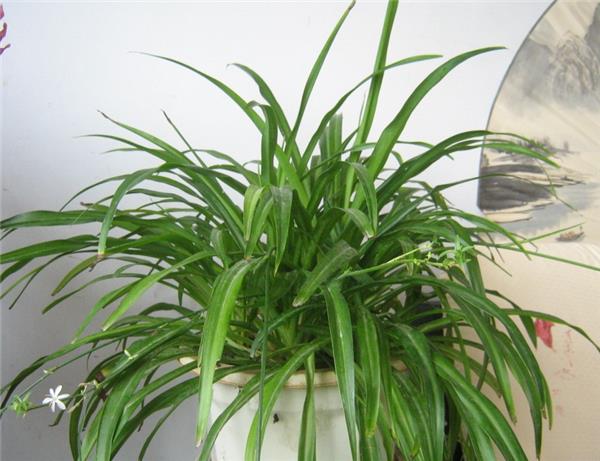
Solutions for Spider Plant Leaves Turning Yellow
1. Yellowing spider plant leaves may be caused by too much fertilization, exceeding the plant's needs. At first the leaves are glossy and uneven, then the root system rots, and the leaves turn yellow. You should stop fertilizing, water more with clear water, or repot to clean the roots and replace with new soil.
2. Yellowing spider plant leaves may also be caused by not repotting and changing the soil for a long time. The various nutrient elements contained in the potting soil have been exhausted, and the three key elements nitrogen, phosphorus and potassium have not been supplemented in time. The plant lacks nutrients, and the leaves appear yellow and thin. You should promptly change to fertile loam and water with alum fertilizer water.
3. Yellowing spider plant leaves may also be caused by insufficient light. Although spider plant is a semi-shade flowering plant, it still needs at least four hours of diffused light every day, otherwise chlorophyll decreases and the leaves turn yellow.
4. Poor air permeability and water permeability of the potting soil lead to long-term water accumulation in the pot that does not dry out, making root respiration difficult, so the leaves naturally turn yellow. At this time you should promptly loosen the soil and control moisture. Fifth is long-term watering that does not penetrate. The roots of the spider plant lose water, and the lower old leaves turn yellow. You should water thoroughly and keep the potting soil warm and moist.
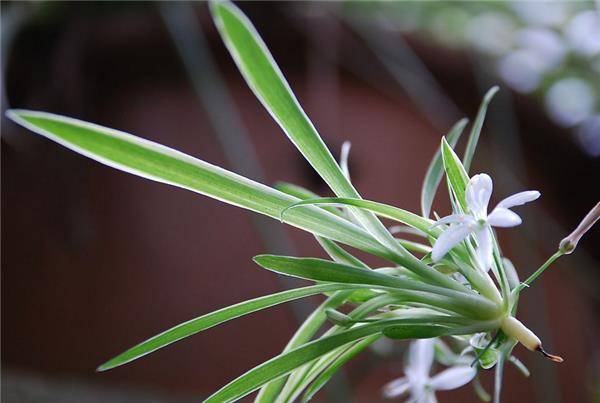
Tips for Spider Plant Care
Winter care methods for spider plant: move it indoors, water once every four days, and water thoroughly. It is best to choose to water at noon, and the water temperature should ideally match the air temperature when watering. This can prevent the roots from freezing, and when placed indoors the leaf surface should be cleaned frequently. In winter it is advisable to keep the potting soil slightly moist. Keep the room temperature at 15-20°C, and the spider plant can grow normally.
Light
Spider plant prefers a semi-shade environment. In spring and autumn, avoid direct strong sunlight. In summer the sunlight is especially strong, so it can only receive some slanting light in the morning and evening, and during the day 50%-70% of the sunlight needs to be shaded, otherwise the leaf tips will dry up. Variegated varieties are especially afraid of strong sunlight. Golden spider plant (Chlorophytum comosum 'Variegatum') grows more beautifully in weak light, with the yellow edges more obvious and the leaves more glossy. But in winter it should be given more sunlight to keep the leaves tender and fresh green. Household potted spider plants should be placed in front of a south-facing window, otherwise the leaves will lose their luster and may even wither. When conditions permit, it is best to rotate the pot about 15° in a fixed direction every week to ensure the spider plant hangs down to the same degree.
Watering
Spider plant likes a moist environment, and the potting soil should be kept moist often. In summer, watering should be sufficient, and around noon and in the evening you should also spray water on the branches and leaves to promptly clean dust off the leaves and prevent the leaves from drying up. However, the fleshy roots of the spider plant can store a large amount of water, so it has strong drought resistance and will not dry out and die even if not watered for several days. In winter, when the temperature is below 5°C, water less, and do not let the potting soil become too wet, otherwise the leaves will easily turn yellow.
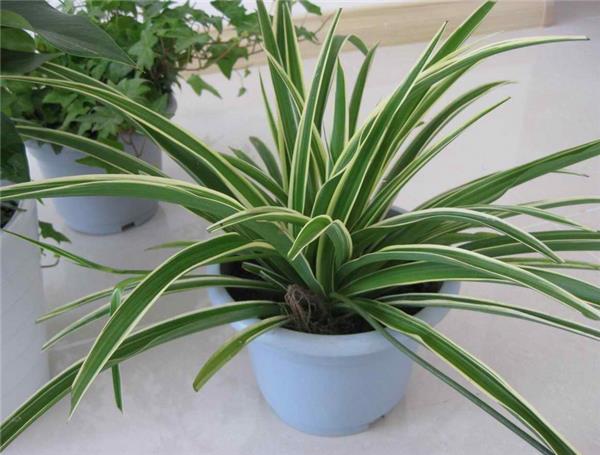
Fertilizing
Spider plant is a foliage plant that is relatively tolerant of fertilizer. If fertilizer and water are insufficient, it easily becomes scorched and aged, the leaves turn yellow, and it loses its ornamental value. From late spring to early autumn, apply an organic fertilizer solution once every 7-10 days, but for variegated varieties such as golden-edge and golden-heart, less nitrogen fertilizer should be applied, so as to avoid the variegated leaf color fading or even disappearing and affecting the appearance. You may appropriately apply organic fertilizer made by fermenting bone meal, eggshells and the like. After full fermentation, take an appropriate amount of diluted liquid and apply it once every 10-15 days, which can make the variegated leaves brightly colored.
During the growing season, apply liquid fertilizer once every two weeks. Variegated varieties should be given less nitrogen fertilizer, otherwise the white or yellow markings on the leaves will become less obvious. Stop fertilizing when the ambient temperature is below 4°C.
Pruning
At ordinary times, cut off yellow leaves at any time. Once a year in March you can repot, cutting off old roots, rotten roots and excess fibrous roots. In early to mid-May, cut off some of the old leaves of the spider plant, which will promote the sprouting of more new leaves and small spider plantlets. The root system of the spider plant is quite developed, and after growing for a period of time the pot should be replaced in time to avoid root accumulation, which causes yellowing leaves, withering and other problems in the spider plant.
Spider plant is not only for ornamental purposes; it can also absorb harmful gases in the room such as carbon monoxide, carbon dioxide, sulfur dioxide and nitrogen oxides, playing the role of an air filter. We hope everyone can grow a healthy batch of good plants.
Apply once every 10-15 days, which can make the variegated leaves brightly colored.During the growing season, apply liquid fertilizer once every two weeks. Variegated varieties should be given less nitrogen fertilizer, otherwise the white or yellow markings on the leaves will become less obvious. Stop fertilizing when the ambient temperature is below 4°C.
Pruning
At ordinary times, cut off yellow leaves at any time. Once a year in March you can repot, cutting off old roots, rotten roots and excess fibrous roots. In early to mid-May, cut off some of the old leaves of the spider plant, which will promote the sprouting of more new leaves and small spider plantlets. The root system of the spider plant is quite developed, and after growing for a period of time the pot should be replaced in time to avoid root accumulation, which causes yellowing leaves, withering and other problems in the spider plant.
Spider plant is not only for ornamental purposes; it can also absorb harmful gases in the room such as carbon monoxide, carbon dioxide, sulfur dioxide and nitrogen oxides, playing the role of an air filter. We hope everyone can grow a healthy batch of good plants.