What to Do When Azalea Leaves Turn Yellow? Cause Analysis and Solutions
Azaleas are brilliantly colorful, delicate and luxurious, making them a rare ornamental flowering plant. Growing azaleas is not difficult, just like growing ordinary flowers, but do you know what to do when azalea leaves turn yellow?
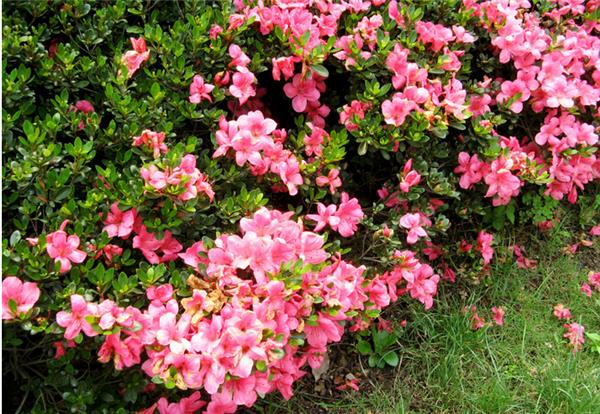
What to Do When Azalea Leaves Turn Yellow
1: Soil and water too alkaline
Most areas in the north have soil and water with a high salt and alkali content. Azaleas are acid-loving flowering plants, and because the soil lacks soluble iron and other elements that they can absorb, the leaves gradually turn yellow. When planting, choose acidic soil, and during the growing period regularly water with alum fertilizer water.
2: Overwatering
Long-term overly wet potting soil causes a lack of oxygen in the soil, rotting some of the azalea's fibrous roots, hindering normal respiration and the absorption of water and nutrients, and causing the leaves to turn yellow and drop. After being affected, the young leaves first turn pale yellow, then the old leaves also gradually turn yellow. Watering should be controlled immediately, fertilizing paused, and the soil often loosened to give it good aeration.
3: Underwatering
Missing a watering or long-term half-watering (that is, wet on top and dry below) affects nutrient absorption and easily causes the leaves to become dull and lusterless, wilting and drooping. The lower old leaves age first and gradually turn yellow and drop from the bottom upward. Water lightly and mist the plant so it gradually recovers, then return to normal watering.
4: Too much light
In summer, if a cool-loving azalea is placed in a hot spot under direct strong sunlight, the tips and edges of the young leaves are very likely to scorch, or the leaves turn yellow and drop. Move it promptly to a well-ventilated, shady spot.
5: Too little light
If a sun-loving azalea is kept for a long time in deep shade or a spot with insufficient light, the branches and leaves grow leggy, the leaves become thin and yellow, and it does not bloom or blooms very little. Move the pot to a sunny spot.
6: Too little fertilizer
If the azalea has not been given nitrogen fertilizer for a long time, or the pot and soil have not been changed, the soil lacks nitrogen and other nutrients, so the branches and leaves become weak and the leaves thin and yellow. Repot promptly, replace with fresh loose, fertile potting soil, and gradually apply more dilute, well-rotted liquid fertilizer or compound flower fertilizer.
7: Too much fertilizer
With too much fertilizer, the new leaves become thick and fleshy and mostly uneven, while the old leaves dry at the tips, scorch yellow and drop. Stop fertilizing immediately, increase watering so the fertilizer flows out through the drainage holes at the bottom of the pot, or repot immediately, rinsing the root ball with water before planting it back in the pot.
8: Improper temperature
If the room temperature in winter is too low, the azalea is prone to cold damage, which causes the leaves to turn yellow and, in severe cases, to wither yellow and die. If the room temperature is too high, the azalea transpires excessively and the roots cannot supply enough water and nutrients, which also turns the leaves yellow. Around late autumn each year, about mid-October, the azalea should be brought indoors for care. In winter, place the azalea in a spot with plenty of sunlight and keep the indoor temperature at 5-10°C, but not below 5°C, otherwise the azalea will stop growing or die.
9: Pest and disease attack
Leaf spot disease caused by fungi and other pathogens infecting the azalea easily causes localized leaf necrosis, with yellow spots or patches appearing, and in severe cases the whole leaf withers yellow and drops. After infection by mosaic virus, yellow-green mottled patches appear on the leaves. Damage by scale insects, red spider mites and the like also turns parts of the leaves yellow and withered, or even makes whole leaves wilt yellow and drop. In all cases, spray promptly to control the problem.
10: Strong irritants
Using pesticides at too high a concentration when controlling pests and diseases, contamination by toxic gases in the air, or suddenly watering with cold water when the temperature is high can all easily cause the leaf tips or parts of the leaf surface to turn yellow and scorch, or even kill the whole azalea. Therefore, use pesticides reasonably and try to eliminate sources of air pollution.
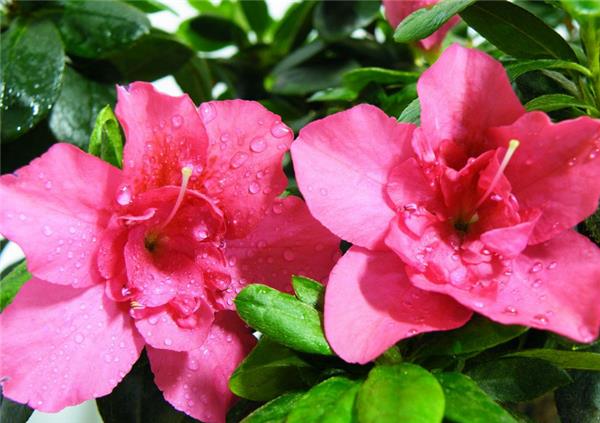
How to prevent azalea leaves from turning yellow
Azaleas like loose, slightly acidic soil, should not be watered with hard water, and should be given light fertilizer more often during the growing season. Azaleas like a cool, humid environment, so avoid strong direct sunlight, keep the air moist, and ensure an adequate water supply. Prune the azalea once a year after flowering, cutting out diseased, pest-damaged, dead, crossing, overlapping, weak and leggy branches, and also shortening overly long branches appropriately, so the plant has a graceful shape and a reasonable branch distribution, and improving ventilation and light penetration in the inner canopy, which benefits the azalea's growth. Repot once every 2 years or so in spring or late autumn, using a slightly acidic sandy soil rich in humus, fertile and loose.
The potting soil should be a slightly acidic sandy soil rich in humus, fertile and loose.