How to grow crape myrtle? Detailed guide to cultivation methods and precautions
Crape myrtle has brightly colored flowers, graceful blooms, and a long flowering period. It is a fairly common flowering ornamental plant, and it can also purify the air, so it is widely planted in many places. Below, let us look at the cultivation methods and precautions for crape myrtle.
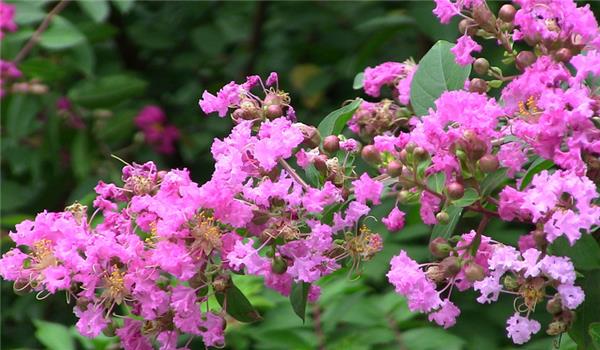
Crape myrtle cultivation methods and precautions
Soil: Crape myrtle is vigorous and easy to cultivate, and it is not strict about soil, but it grows best in deep, fertile sandy loam. Crape myrtle dislikes waterlogging and should not be planted in low, damp places with a high water table.
Watering: During the growing season, crape myrtle has a high demand for water and the soil needs to be kept moist. In spring and winter, keep the potting soil moist; in summer and autumn, water once in the morning and once in the evening, and in hot weather the number of waterings can be increased. During the rainy season, drainage should be done well to prevent root rot from excess water. In autumn, watering should be reduced.
Sunlight: Crape myrtle likes light. Insufficient light not only means fewer or no flowers, but can even lead to weak growth with thin branches and small leaves. Therefore, during the growing season, crape myrtle should be placed in a sunny spot outdoors.
Fertilizing: Crape myrtle is a plant that likes fertilizer. A lack of fertilizer can lead to thin, weak branches and yellowing color, which weakens growth and results in few or even no flowers, but too much fertilizer can cause excessive leggy growth of branches and leaves. Fertilizer can be applied each year after the leaves fall in winter and before bud break in spring. Human excrement and urine or sesame paste residue are even better, as they can make crape myrtle grow vigorously the next year with large, brightly colored flowers.
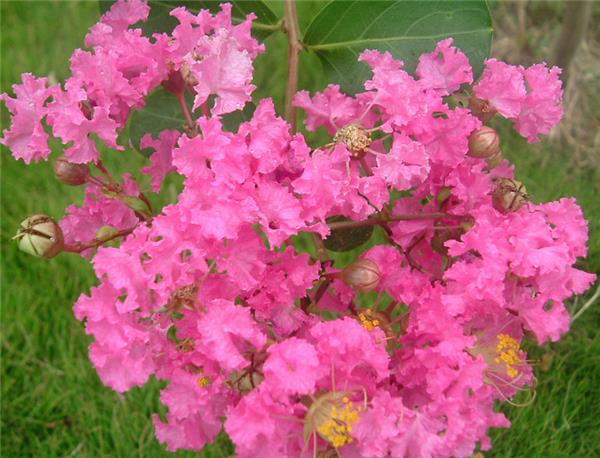
Pruning: Crape myrtle has strong branching ability, and new shoots also grow a great deal, so it is very tolerant of pruning. After crape myrtle blooms, the spent flowers should be cut off, which can extend the flowering period. At the same time, crossing branches, diseased branches, and radiating branches should be removed promptly to avoid consuming extra nutrients. Also, to improve the shape, other branches are generally cut back about 1 cm above a plump terminal bud, leaving about 5 cm.
Pests: Common pests of crape myrtle include felt scale, yellow slug moth, and bagworm moth, so pesticides should be sprayed for control.
Precautions: If crape myrtle is grown in a pot, it should be repotted in time. Potted crape myrtle needs the potting soil replaced once every two to three years. Use a culture soil mixed from 5 parts loose mountain soil, 3 parts garden soil, and 2 parts fine river sand. When repotting, organic fertilizers such as bone meal and soybean cake meal can be used as a base fertilizer, mixed into the surface layer of the soil. Fertilizer must not come into direct contact with the roots, so as not to burn the roots and affect plant growth.
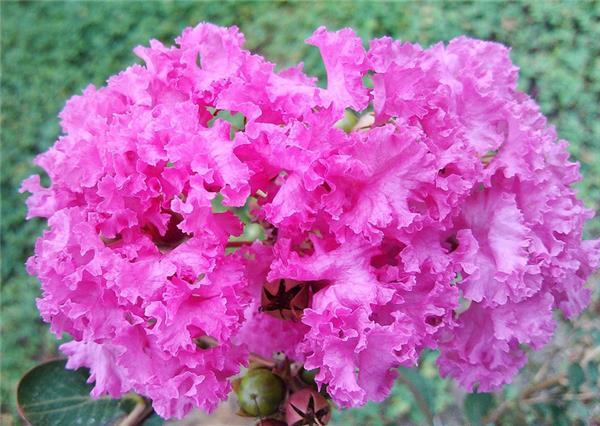
Crape myrtle propagation methods
1. Crape myrtle grafting propagation
This is done from late February to early March, before the crape myrtle branches sprout. For grafting, choose a robust seedling grown from seed as the rootstock, take a branch of the desired flower color as the scion, and use the cleft grafting method. First make a vertical split about 5-8 cm deep at the top of the rootstock near the edge, then take a scion 5-8 cm long with at least 2 buds, cut it into a wedge shape, insert it into the cleft of the rootstock, and align the cambium. Then wrap the entire scion branch with plastic film, leaving the bud tip exposed. Using this method, branches of different colors can be grafted in layers onto the same rootstock, forming one tree with multiple colors.
2. Crape myrtle hardwood cuttings
This is generally done from mid-to-late March to early April, before the branches sprout. Select robust one-year-old branches, cut them into 15 cm long cuttings, and insert them into a loose, well-drained sandy loam seedbed. The insertion depth should be such that the topmost bud of the cutting is exposed. After insertion, water thoroughly, and cover with plastic film to retain moisture and warmth. When the seedlings grow to 15-20 cm, the film can be lifted and replaced with a shade net, with timely watering. In the same year, the branches can grow to about 60-80 cm.
3. Crape myrtle softwood cuttings
This is done in July-August, when new branches grow vigorously and are at their most vigorous. Select semi-lignified branches, cut them into 8-10 cm long cuttings, and keep 2-3 leaves at the upper end. The insertion depth is 3-4 cm. After insertion, water thoroughly and set up a shade shed for shading. Roots generally form in about 20 days. Remove the film, keep the shade net, and water in a timely manner. In the same year, the branches can grow to about 60-80 cm, with a very good survival rate.
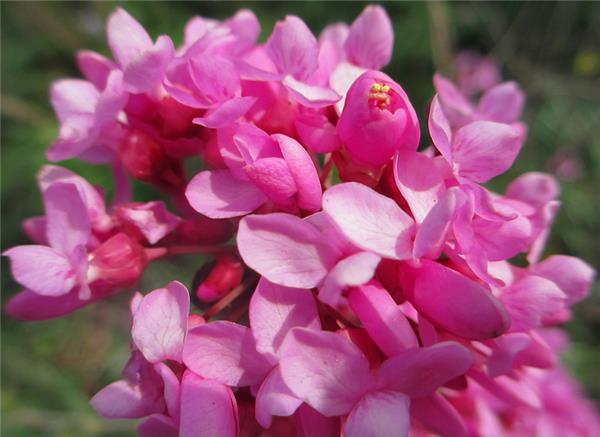
4. Crape myrtle layering propagation
Layering propagation can be carried out throughout the entire growing season of crape myrtle, and March to April in spring is better. For air layering, choose a one- to two-year-old branch, use a sharp knife to score and girdle the bark by about 1.5 cm, exposing the xylem, apply rooting powder solution (diluted according to the instructions) about 3 cm above the wounded area, and after it dries, wrap a cylindrical plastic bag around the wounded area, fill it with loose garden soil, water it, and tie both ends tightly. Check after one month; if the soil is too dry, add water to keep it moist. After rooting, cut it off and plant separately.
5. Crape myrtle division propagation
In early March to April or in autumn, dig out the tiller shoots sprouting from the base of the plant together with their roots, prune the roots and branches appropriately, and plant them separately. Small seedlings can be bare-rooted, while large seedlings should be kept with a soil ball. During cultivation, prune and shape regularly to maintain a graceful tree form and promote lush flowering branches.
6. Crape myrtle seed propagation
Collect mature seeds from November to December, remove the fruit skin, dry the seeds slightly, and store them dry in a container. In March of the following year, sow them in wide rows or broadcast them on a sandy loam seedbed, cover with a layer of fine burnt mud ash just enough to hide the seeds, and cover with grass on top. They sprout and emerge in more than 10 days; remove the grass promptly. When the seedlings have 2 pairs of true leaves, thin them after rain. During the seedling stage, weed frequently, apply light fertilizer 2-3 times from June to July, and irrigate in early summer to prevent drought. By the end of the year, the seedlings are about 40-50 cm tall. Vigorous ones may bloom in the same year, and those flowers should be cut off promptly. Transplant them in the following spring equinox to grow larger. Seed propagation can produce a large number of robust and uniform seedlings at one time.
Fill it with loose garden soil, water it, and tie both ends tightly. Check after one month; if the soil is too dry, add water to keep it moist. After rooting, cut it off and plant separately.5. Crape myrtle division propagation
In early March to April or in autumn, dig out the tiller shoots sprouting from the base of the plant together with their roots, prune the roots and branches appropriately, and plant them separately. Small seedlings can be bare-rooted, while large seedlings should be kept with a soil ball. During cultivation, prune and shape regularly to maintain a graceful tree form and promote lush flowering branches.
6. Crape myrtle seed propagation
Collect mature seeds from November to December, remove the fruit skin, dry the seeds slightly, and store them dry in a container. In March of the following year, sow them in wide rows or broadcast them on a sandy loam seedbed, cover with a layer of fine burnt mud ash just enough to hide the seeds, and cover with grass on top. They sprout and emerge in more than 10 days; remove the grass promptly. When the seedlings have 2 pairs of true leaves, thin them after rain. During the seedling stage, weed frequently, apply light fertilizer 2-3 times from June to July, and irrigate in early summer to prevent drought. By the end of the year, the seedlings are about 40-50 cm tall. Vigorous ones may bloom in the same year, and those flowers should be cut off promptly. Transplant them in the following spring equinox to grow larger. Seed propagation can produce a large number of robust and uniform seedlings at one time.