What are the tips and key points for kitchen renovation? This article helps you master them
As living standards continue to improve, people's demands for kitchen functionality and usability are getting higher and higher. So how should a kitchen be renovated to make things more convenient and efficient? Below we will explain kitchen renovation tips and key points.
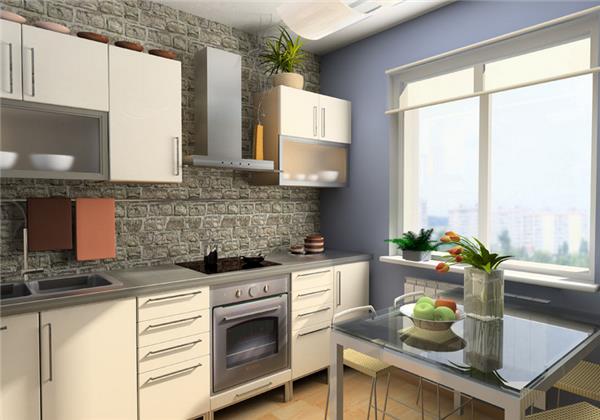
Kitchen renovation tips
1. Height of the work counter
When working in the kitchen, the height of the work counter plays a decisive role in preventing fatigue and allowing flexible turning. When you bend forward for a long time at 20 degrees Celsius, it will place a huge load on your waist, and over time back pain will follow. Therefore, the height of the counter must be determined according to your height.
2. Make full use of available space
The gap between the wall cabinets and the work counter can generally be put to use, making it easy to place and take out some utensils needed during cooking. Some can also serve as simple roller shutter doors to keep small appliances free from dust, such as food processors and toasters.
3. Layout of the cabinets
Kitchen renovation must be considered thoroughly, especially for small kitchens, which need to save space while also being reasonably distributed and convenient to use. Kitchen renovation involves many considerations. The most basic concept of kitchen renovation is the "triangular work space," so the sink, refrigerator and stove should all be placed in appropriate positions. Ideally they form a triangle, and the distance between them should preferably not exceed one meter.
4. Appliances embedded in the kitchen cabinets
Now that kitchen areas are relatively moderate in size, appliances have also been brought into the kitchen, making things much more convenient. According to each person's different needs, the refrigerator, oven, microwave, dishwasher, etc. can be placed in appropriate positions in the cabinets for easy opening and use.
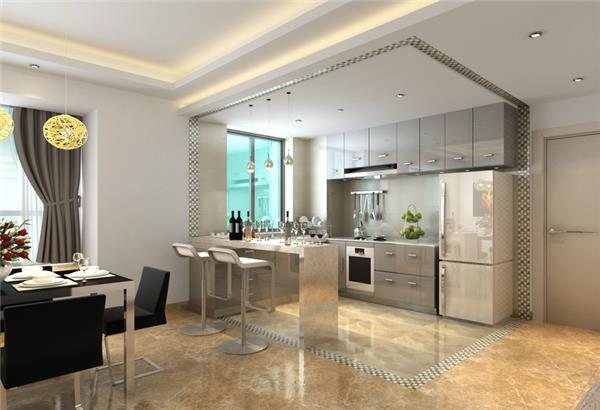
5. Low cabinets in the kitchen are best made as drawers
Pull-out type is convenient for taking and placing items and also looks better. Wall cabinets are generally made as multi-layer compartments 30 to 40 cm wide, with doors made as double-opening or folding sliding doors.
6. Lighting layout
Kitchen lighting needs to be divided into two levels: one is lighting for the entire kitchen, and the other is lighting for washing, preparation and operation. The latter generally involves arranging local lighting under the wall cabinets, with conveniently placed switches. In addition, today's well-performing range hoods generally also have lights, which is enough for cooking.
7. Safety protection for children
Many places in the kitchen need to take into account preventing dangers to children. For example, necessary guards should be set on the stove to prevent pots and bowls from falling, various cleaning products should be placed in a dedicated cabinet under the low cabinet (sink), and sharp knives and other utensils should be placed in drawers with safety openings.
8. Trash placement
The kitchen produces a relatively large amount of trash and odors, so it is easy to place it in a convenient and concealed spot for disposal, such as on the low cabinet door under the sink, with a trash can, or a pull-out trash drawer.
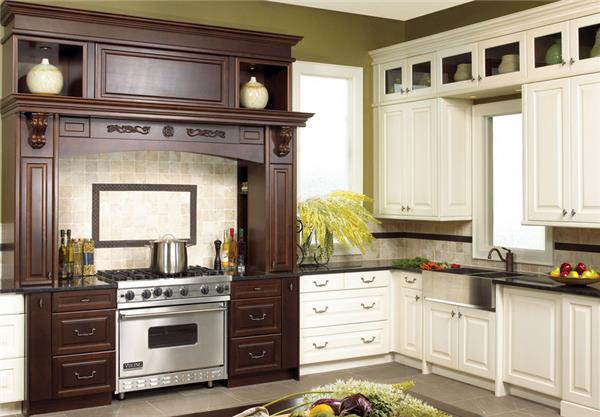
Key points of kitchen renovation
1. Waterproofing issues
Apart from the cabinet sink where a lot of water is used, the kitchen does not use much water elsewhere, but waterproofing in the kitchen still needs attention. Kitchen waterproofing mainly ensures the position of the sink and the slope of the floor. The most critical part of the sink is to do a good job of waterproofing at the interface. Some homeowners think that using modular cabinets can avoid this problem, but that is not actually the case. Cabinets made of plywood can be ventilated and dried after getting wet, but modular cabinets will expand when exposed to water, which can easily cause the surface fireproof board layer to separate.
Due to different living habits, some homeowners' kitchens do not have floor drains, and such kitchens actually do not need waterproofing. If there is a floor drain in the kitchen, then waterproofing must be done, and the waterproofing return height needs to reach about 300-400 mm.
2. Circuit issues
There are many appliances in the kitchen, so kitchen circuit renovation is also a key part of the renovation. In addition to choosing wires and conduits of excellent quality during circuit renovation, if there are many appliances in the kitchen, it is best to choose 6 sq mm copper core wire, so that the load of a single line can reach 7500 w. If the wire is 4 sq mm, it is recommended to make the circuit into two loops, so that a single circuit can reach a power load of 5500 w.
3. "Unconventional" use of materials is unsafe
"Unconventional" use of materials, for example breaking brightly colored floral wall tiles and laying them on the bathroom floor, and then putting plain-colored floor tiles on the wall. This may seem distinctive, but in fact it is neither scientific nor safe. You should know that wall tiles and floor tiles cannot be mixed.
Indoor ceramic tiles are divided into wall tiles and floor tiles according to where they are laid. Wall tiles are ceramic products, while floor tiles are usually porcelain products. The two differ greatly from clay formulation to firing process, resulting in completely different water absorption rates. The water absorption rate of wall tiles is about 10%, several times higher than that of floor tiles, which is only 1%.
Bathroom and kitchen floors should be laid with floor tiles that have a low water absorption rate, because the floor will often be washed with large amounts of clean water, so that the tiles will not be affected by moisture and will not absorb stains. Wall tiles are made of glazed ceramic, have a higher moisture content and a rougher back, which helps the adhesive firmly bond the wall tiles. Floor tiles are not easy to stick firmly on the wall, and wall tiles used on the floor will become difficult to clean because they absorb too much water.
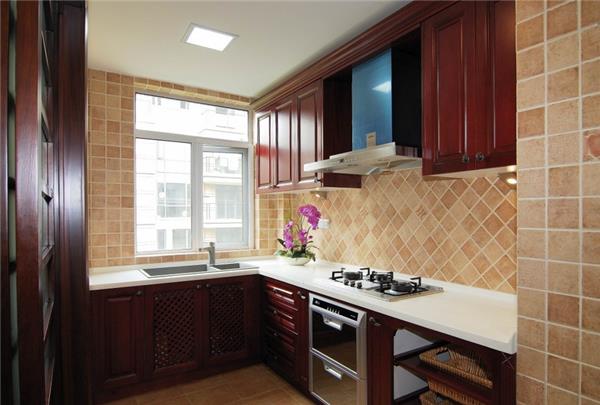
4. Material selection for vertical surfaces
1. Kitchen ceilings should preferably use flat aluminum ceiling panels. PVC, plastic and other strip-shaped materials are not recommended, as they easily deform downward.
2. Kitchen wall tiles should preferably use glossy glazed tiles. Without the guidance of a designer, white or milky white can be used. Tiles in bone color, dark colors and with overly dark patterns are not suitable.
3. Kitchen floor tiles must use anti-slip tiles. Because even without water, the kitchen is still relatively prone to grease.
5. Color issues
As the saying goes, the kitchen is a woman's battlefield. If bright yellow, red, blue and green are used in local areas, they can stir people's enthusiasm in the kitchen and also give the woman cooking visual pleasure. However, too many bright colors should absolutely be avoided in the kitchen. The kitchen easily produces high temperatures and oil fumes, and too many overly bright colors will make people's emotions become agitated.
Generally speaking, the kitchen should mainly use neutral colors such as white, and then match other colors in local areas. A milky white kitchen looks clean and elegant, but do not choose yellow with green elements, as it is neither convenient to maintain nor good in visual effect.
6. Cabinet countertop issues
Cabinet countertops are mainly natural stone (marble or granite) and artificial stone. Relatively speaking, natural stone has high hardness, while artificial stone is softer but more attractive. However, because the quality of artificial stone countertops on the market now varies greatly, consumers should be especially careful when purchasing and should not choose artificial stone countertops with excessively low prices. Scratches on some higher-quality artificial stone countertops can be treated with sandpaper, but poor-quality artificial stone countertops will become more and more scratched when treated with sandpaper, and their strength and hardness cannot meet requirements.
7. Lighting fixture issues
Kitchen lighting fixtures should preferably use ceiling lights with covers. Currently there is also a kind of embedded light panel with a glass cover on the market that can also be used in the kitchen.
Wall tiles are made of glazed ceramic, have a higher moisture content and a rougher back, which helps the adhesive firmly bond the wall tiles. Floor tiles are not easy to stick firmly on the wall, and wall tiles used on the floor will become difficult to clean because they absorb too much water.
4. Material selection for vertical surfaces
1. Kitchen ceilings should preferably use flat aluminum ceiling panels. PVC, plastic and other strip-shaped materials are not recommended, as they easily deform downward.
2. Kitchen wall tiles should preferably use glossy glazed tiles. Without the guidance of a designer, white or milky white can be used. Tiles in bone color, dark colors and with overly dark patterns are not suitable.
3. Kitchen floor tiles must use anti-slip tiles. Because even without water, the kitchen is still relatively prone to grease.
5. Color issues
As the saying goes, the kitchen is a woman's battlefield. If bright yellow, red, blue and green are used in local areas, they can stir people's enthusiasm in the kitchen and also give the woman cooking visual pleasure. However, too many bright colors should absolutely be avoided in the kitchen. The kitchen easily produces high temperatures and oil fumes, and too many overly bright colors will make people's emotions become agitated.
Generally speaking, the kitchen should mainly use neutral colors such as white, and then match other colors in local areas. A milky white kitchen looks clean and elegant, but do not choose yellow with green elements, as it is neither convenient to maintain nor good in visual effect.
6. Cabinet countertop issues
Cabinet countertops are mainly natural stone (marble or granite) and artificial stone. Relatively speaking, natural stone has high hardness, while artificial stone is softer but more attractive. However, because the quality of artificial stone countertops on the market now varies greatly, consumers should be especially careful when purchasing and should not choose artificial stone countertops with excessively low prices. Scratches on some higher-quality artificial stone countertops can be treated with sandpaper, but poor-quality artificial stone countertops will become more and more scratched when treated with sandpaper, and their strength and hardness cannot meet requirements.
7. Lighting fixture issues
Kitchen lighting fixtures should preferably use ceiling lights with covers. Currently there is also a kind of embedded light panel with a glass cover on the market that can also be used in the kitchen.