How to grow and care for Peperomia clusiifolia 'Variegata'
How do you grow Peperomia clusiifolia 'Variegata'? Below we introduce how to grow Peperomia clusiifolia 'Variegata', so let's take a look!
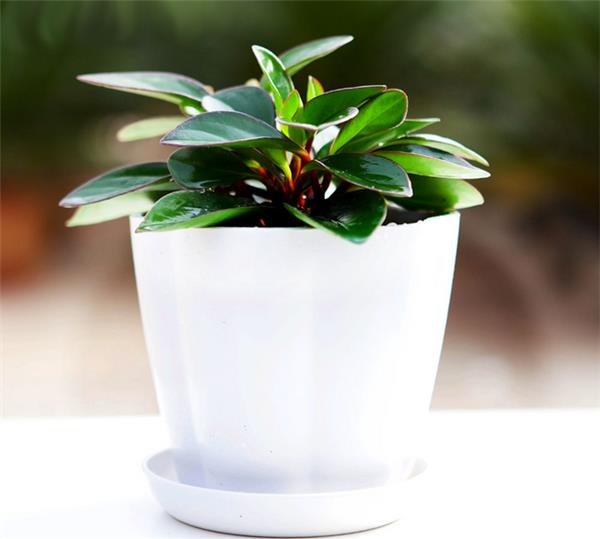
Introduction to Peperomia clusiifolia 'Variegata'
Peperomia clusiifolia 'Variegata', also known as peperomia, belongs botanically to the genus Peperomia in the family Piperaceae and is a perennial herbaceous plant species.
Peperomia clusiifolia 'Variegata' is native to the West Indies in the Western Hemisphere and northern South America, and by nature it likes a warm, humid, semi-shaded environment. The most suitable temperature for growth is around 25°C, and the lowest should not go below 10°C. It does not tolerate high temperatures, but it requires fairly high air humidity and prefers loose, fertile, well-drained soil.
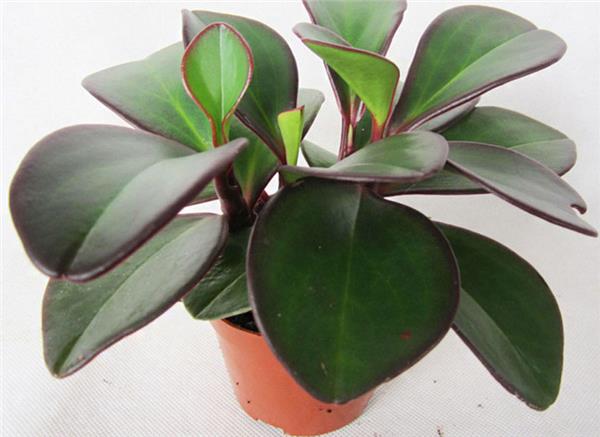
Morphological characteristics of Peperomia clusiifolia 'Variegata'
Peperomia clusiifolia 'Variegata' is a perennial herb with a plant height of 15-20 cm. It has no main stem. The leaves are clustered, somewhat succulent and rather thick, obovate, grayish green mixed with dark green vein patterns. The spike inflorescence is grayish white. Cultivated types include a variegated-leaf type, whose leaves are succulent with a reddish tinge; a mosaic-leaf type, whose leaves are green in the middle with a broad golden-yellow margin; a glossy-leaf type, with heart-shaped leaves that have a metallic luster; and a crinkled-leaf type, whose veins are deeply sunken, forming a highly wrinkled leaf surface, which is extremely interesting.
Peperomia clusiifolia 'Variegata' rarely flowers, and the flowering period is generally in May.
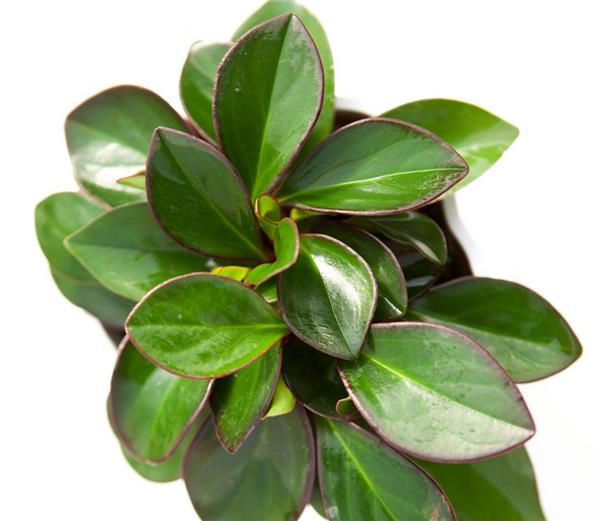
How to grow Peperomia clusiifolia 'Variegata'
Soil: Peperomia clusiifolia 'Variegata' requires loose, fertile, well-drained soil, which can be mixed from river sand, mud surface material, and leaf mold.
Fertilizer: Apply fertilizer once a month until overwintering.
Water: Peperomia clusiifolia 'Variegata' likes moisture, and during the growing period from May to September it should be watered more. In hot weather, spray or splash water on the leaf surface to maintain relatively high air humidity and keep the leaf patterns clear and the leaf color emerald green.
Light: Peperomia clusiifolia 'Variegata' avoids direct sunlight and is best grown in semi-shade.
Temperature: Peperomia clusiifolia 'Variegata' likes warmth, with an optimum growing temperature of around 25°C, and the overwintering temperature should not be lower than 10°C.
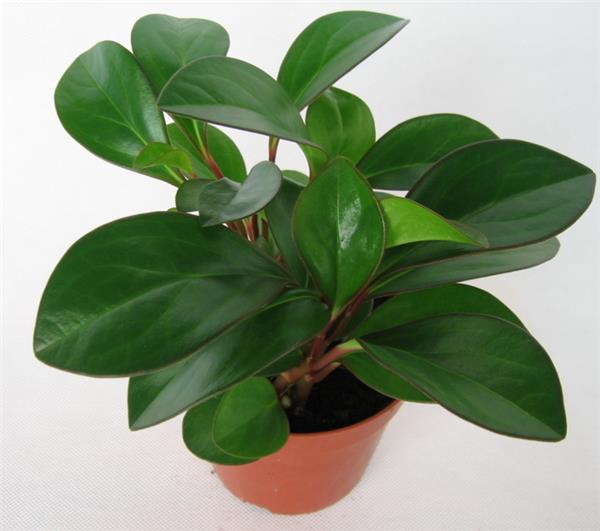
Propagation methods of Peperomia clusiifolia 'Variegata'
Peperomia clusiifolia 'Variegata' is generally propagated by division and leaf cuttings.
Divide in spring and autumn, and propagate by leaf cuttings between May and June. Use whole-leaf cuttings, with the cutting leaf bearing about 1 cm of petiole, and insert it to one third of the leaf. Use river sand and the like as the substrate. Under conditions of 20-25°C, roots can form in 15 days. Be careful to keep the substrate moist and maintain a certain level of air humidity, keeping the culture substrate moist and the environment at a certain humidity.
Peperomia clusiifolia 'Variegata' can also be propagated by leaf cuttings. Use a knife to cut off leaves with petioles, let them dry slightly, then insert them obliquely into a sand bed, and they will root in 10-15 days. In a greenhouse with temperature-control equipment, this can be done throughout the year. Division: mainly used for propagating colored-leaf varieties. The potting soil can be made from leaf mold, peat soil plus some perlite or sand, with an appropriate amount of base fertilizer added. During the growing period, apply a topdressing once every half month. For watering, water that has been left standing in a water tank for 1-2 days is best. Water sparingly in winter. Temperature changes directly affect leaf color. For colored-leaf types, the suitable winter temperature is 18-20°C; for green-leaf species, it is around 15°C. In midsummer it fears heat, so it can be placed under a shade shed and sprayed with water to cool it down, but note that both excessive heat and excessive moisture can cause the stems and leaves to turn black and rot. In winter, place it in a spot with ample light, and in summer avoid direct sunlight. Repot once every 2-3 years.