What are the cultivation methods and precautions for the Christmas cactus?
The Christmas cactus (Schlumbergera) is a plant in the cactus family, genus Schlumbergera. Because the shape of the joints where its segments connect resembles a crab's claw, it is called the Christmas cactus. Below, let us look at the cultivation methods and precautions for the Christmas cactus.
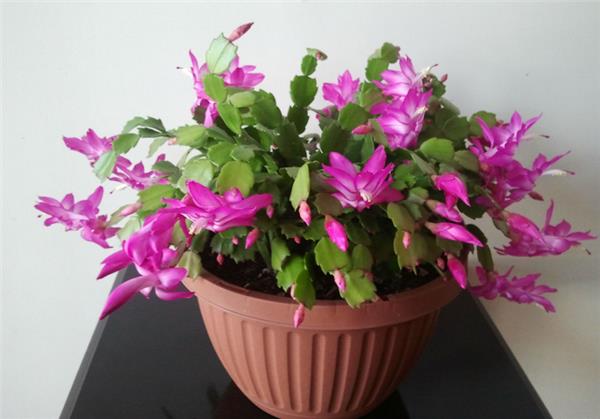
1. Choosing a flower pot for growing the Christmas cactus
(1) Requirements for pot material: Clay pots, plastic pots, porcelain pots, or ceramic pots can be used, but clay pots are the best. To coordinate with home decor, plastic pots in various colors can be used for growing it.
(2) Pot size: For the Christmas cactus, it is best to choose a pot whose diameter is 2/3 of the plant's crown diameter.
2. Preparing the potting soil for growing the Christmas cactus
The Christmas cactus likes fertile, loose soil.
At home, the following formulas can be used: garden soil : leaf mold : sand = 3:4:3; peat soil : leaf mold : sand : perlite (or volcanic rock) = 4:2:2:2. After mixing the soil, it is best to sterilize it with high temperature before use, or it can be sterilized by exposure to the sun.
3. Watering methods for growing the Christmas cactus
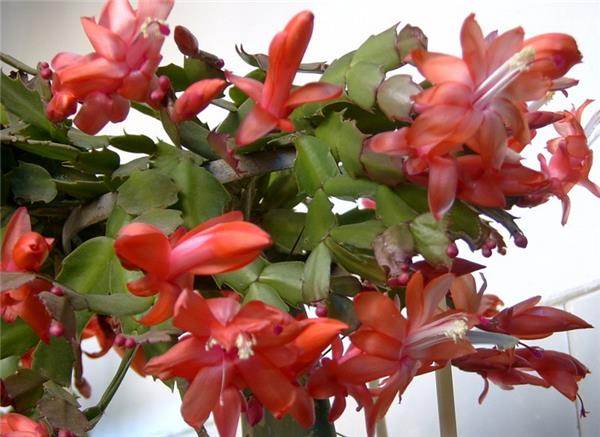
The Christmas cactus likes moist soil and dislikes soggy conditions. After leaf buds emerge in spring, the amount of watering can be gradually increased until the soil is kept moist; when watering, attention should be paid to alternating dryness and moisture. Spring and autumn are the seasons of vigorous growth for the Christmas cactus. In addition to watering, water should often be sprinkled around the plant to increase air humidity.
When summer temperatures are relatively high, if water cannot be supplied adequately, the Christmas cactus will show stagnant growth, so watering should be attended to in summer, but the potting soil should not be too wet, to prevent rot caused by high temperature and excessive moisture. However, attention should be paid to spraying water around it several times a day and strengthening ventilation, so as to achieve the purpose of increasing humidity and lowering temperature.
After the temperature gradually turns cooler in late autumn, pay attention to watering in a way that alternates dryness and moisture. In winter and early spring, when temperatures are relatively low and growth is slower, the potting soil should be kept on the dry side.
4. Fertilization methods for growing the Christmas cactus
The Christmas cactus likes fertilizer. When fertilizer is sufficient, it has more branches and more flowers. After the leaf buds emerge, start topdressing. During the growing season, every 15-20 days apply once a mixture of well-rotted liquid fertilizer diluted 10 times with an equal amount of 1000-times potassium dihydrogen phosphate solution, or 1000-times "Huaduoduo" general-purpose fertilizer.
In late autumn, the frequency of fertilization should be reduced, and fertilization should stop when the temperature is below 10°C. Do not fertilize when summer temperatures are relatively high or winter temperatures are relatively low.
When fertilizing the Christmas cactus, apply thin fertilizer frequently, and it should not be too concentrated. When fertilizing, use a fine-spouted watering can to apply it slowly along the edge of the pot. Do not splash the fertilizer solution onto the leaves, otherwise they are easily burned.
5. Light requirements for growing the Christmas cactus
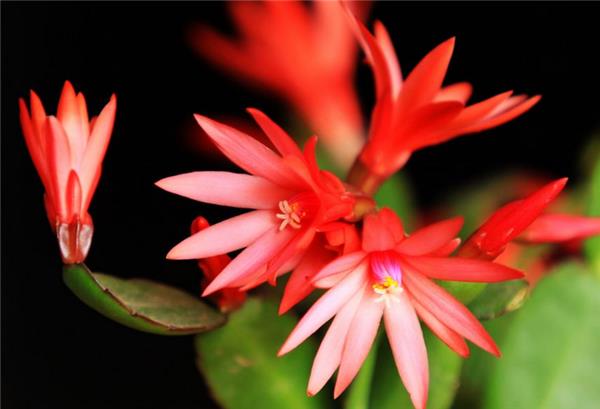
The Christmas cactus fears hot, high temperatures and dislikes exposure to strong sun and rain, so in summer it should be placed in a ventilated indoor spot or on a shaded balcony. After the Beginning of Autumn, the Christmas cactus gradually recovers its growth, and it should be placed in a spot that receives 50% light, such as a shade shed or a sunny window, to receive light and promote flower bud differentiation; as the weather turns cooler, gradually increase the light, and from late autumn to winter it should be given sufficient light.
6. Four-season management for growing the Christmas cactus
(1) Spring management
Repot every year in early spring before growth begins. Young plants should be repotted once a year, and mature plants once every 2-3 years. Before repotting, stop watering for 2-3 days so that the potting soil dries and the plant can be removed from the pot; handle it gently to prevent breaking. Newly planted Christmas cacti should not be watered for the time being; only spray 2-3 times a day or place them in a place with higher humidity, and after 7 days a small amount of water can be given. After the leaf buds begin to grow, watering can be increased until the soil is kept moist.
After repotting in spring and once the plant has survived, it should be placed on a windowsill with sufficient light. After the temperature rises and it begins to resume growth, the amount of watering can be gradually increased until the potting soil is kept moist; when watering, attention should be paid to alternating dryness and moisture. When the outdoor temperature is stable above 15°C, it can be placed on a balcony with light but without rain for cultivation. During the peak growing season, pay attention to the supply of water and fertilizer, but be sure not to let the soil become too wet; it is best to water after the soil has dried out. On rainy days, reduce the frequency of watering. In late spring, when the temperature is relatively high, shade it from the midday sun or move it to a semi-lit place for cultivation.
(2) Summer management
The Christmas cactus is not tolerant of sun exposure. In summer, it should be placed on a semi-shaded windowsill or balcony for cultivation, or it can be placed in a brightly lit room. Maintain a sufficient water supply. At the end of summer, when the temperature is cool, the water supply can be gradually increased and topdressing can be resumed.
(3) Autumn management
In autumn, the Christmas cactus should be placed in a spot with morning and evening light for cultivation. Water as soon as the soil dries, and at the same time pay attention to misting to supplement air humidity. After flower buds appear, pay attention to the supply of water and fertilizer. When the temperature drops to around 10°C, it should be moved promptly into a closed balcony or room with light, and the frequency of fertilization should be reduced.
Because the flower buds fall off very easily, care should be taken during handling to prevent knocking off the buds.
(4) Winter management
The Christmas cactus is not cold-tolerant, and the indoor temperature in winter should be kept above 10°C. The Christmas cactus should be placed on a windowsill or balcony with sufficient light for cultivation. Watering should not be frequent; water again after the soil dries, and do not fertilize.
(5) Flowering period management
After the Christmas cactus blooms, if it is moved to an indoor spot with diffused light at 5-8°C, the flowering period can be extended. Watering should not be excessive; it is best to water after the soil dries.
7. Precautions for growing the Christmas cactus
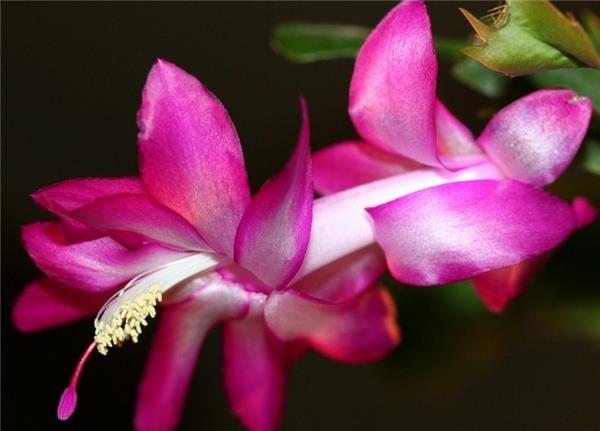
(1) After autumn turns cool, the Christmas cactus should be placed in a sunny spot indoors. If it cannot get sufficient sunlight in autumn and winter, the formed flower buds will fall off, and flowering will be reduced or it will not bloom.
(2) When the Christmas cactus plant grows relatively large, it is prone to being top-heavy, so it needs a support frame and tying; wire and similar materials can be used to build a support frame. After the Christmas cactus flowers fade, the remaining flowers should be cut off together with the flowering stem segments at the ends, and attention should be paid to controlling water. After new buds grow, water can be given to keep the potting soil moist.
(3) For grafted Christmas cactus seedlings, the potting soil can use 3 parts leaf mold, 4 parts garden soil, and 3 parts river sand, plus a small amount of organic fertilizer or bone meal as base fertilizer. Generally, repot once every 1-2 years. Repotting should preferably be done in spring after the flowers have faded.
(4) In early spring, after the Christmas cactus flowers fade, there is a dormancy period of about 40 days. At this time, watering should be controlled, but attention should be paid to loosening the soil and keeping the potting soil on the dry side; when new buds begin to sprout at the top, start watering, with the aim of keeping the potting soil moist, but be sure not to let water accumulate in the pot, so as to avoid root rot; when entering the high-temperature summer season, the Christmas cactus is in a dormant or semi-dormant state, so watering should be reduced to keep the potting soil semi-moist, and rain should be avoided; after autumn begins, as the weather turns cooler, the Christmas cactus gradually recovers its growth and normal watering begins to keep the potting soil moist; during the bud stage, mist frequently to keep the modified stems and flower buds moist, and watering should preferably keep the soil moist; after flowering, watering should be controlled to extend the flowering period.