What to Do When Lily Leaves Turn Yellow? Causes and Solutions
Lilies are not only beautiful but also very fragrant, making them extremely popular. What should we do when we encounter yellowing lily leaves during cultivation? Below, let us look at the causes and solutions for yellowing lily leaves.
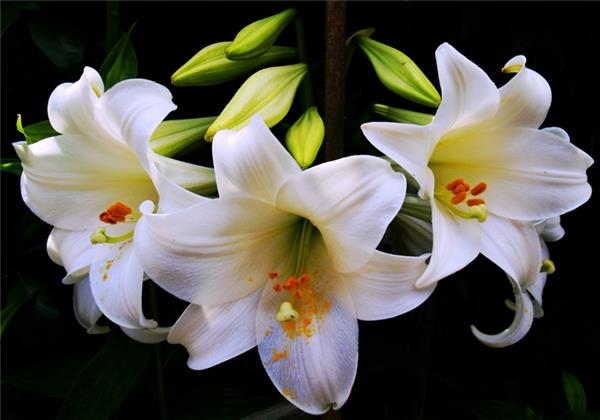
Causes and Solutions for Yellowing Lily Leaves
1. Water-induced yellowing. Overwatering easily causes the potting soil to stay wet for a long time, suffocating and rotting the roots, which leads to yellow leaves and even leaf drop; its characteristic is that old leaves show no obvious change while young leaves turn yellow. When yellowing is caused by overly wet soil, stop watering, loosen the soil, and let it ventilate and dry out.
2. Drought-induced yellowing. Caused by lack of water and drought, its characteristic is that old leaves turn yellow first from the bottom up. If the water shortage lasts a bit longer, the whole plant's leaves will turn yellow and it may even die. Water in a timely manner and stick to the principle of "water when dry, and water thoroughly when you do."
3. Fertilizer-induced yellowing. Caused by fertilizing too frequently or with too high a concentration; its characteristic is that young leaves are thick, glossy, and uneven. Reduce fertilizing, do shallow cultivation, and water; in summer, apply a dilute fertilizer once a week. If too much fertilizer has already been applied, water more to dilute it and flush the fertilizer salts out of the soil.
4. Starvation-induced yellowing. During the growing period of potted lilies, going a long time without fertilizing or with insufficient fertilizing can cause leaf yellowing. Its characteristic is that young leaves and tender stems turn yellow first. Lack of fertilizer also causes the potting soil to become compacted, with thin, long, yellow, tender branches. Fertilize immediately, and results will be seen within a week.
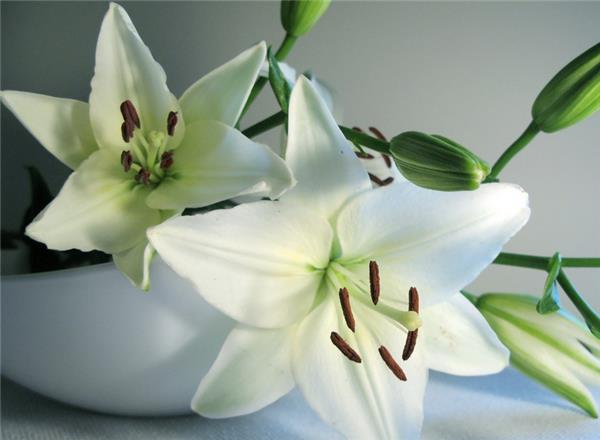
5. Nutrient-imbalance yellowing: Lilies have a relatively high demand for nitrogen and potassium fertilizers, and during the growing period they should be applied once every 10-15 days, while phosphorus fertilizer should be limited, because too much phosphorus fertilizer causes leaves to wither and turn yellow.
6. Iron-deficiency yellowing. Lilies are sensitive to soil salt, and the soil pH should be 5.5-6.5. High alkalinity will cause the physiological disease of iron-deficiency chlorosis. To monitor the pH of fertilizer and water, you can use wide-range PH test paper, sold at Western pharmacies and medical equipment stores (2 yuan per booklet, usable for a very long time).
7. Yellowing during the acclimation period: When newly potted or repotted, because the roots are damaged and the plant is not adapted to the new environment (potting soil, water quality, environmental humidity, and temperature), leaf yellowing is most likely to occur. At this time, it should be kept in shade, fertilizer should be withheld, watering should be done only when the soil has dried out and then watered thoroughly, and the leaves should be misted. Wait until new leaves grow before returning to normal care.
8. Pests and diseases: Damage from pests and diseases can also cause leaves to turn yellow. Remove pests and diseases promptly.
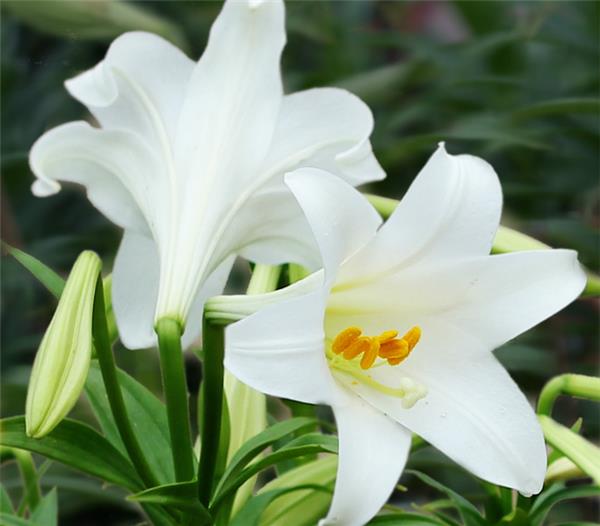
Finally, let us look at how to cultivate lilies.
Potting is best done in September and October. For the growing medium, use leaf mold, sandy soil, and garden soil mixed at a ratio of 1:1:1. At the bottom of the pot, apply sufficient fully decomposed compost and a small amount of bone meal and plant ash as base fertilizer. The planting depth is generally 2-3 times the diameter of the bulb.
Potted lilies must be repotted once a year, with new growing medium and base fertilizer. In addition, during the growing period, the pot should be turned once a week, otherwise the plant tends to grow lopsided, affecting its appearance.
Fertilizing: Lilies do not have very high fertilizer requirements. Usually, applying fertilizer when spring growth begins and at the early flowering stage is enough. Some growers abroad believe that lilies have the greatest demand for nitrogen and potassium fertilizers, and during the growing period they should be applied once every 10-15 days, while phosphorus fertilizer should be limited, because too much phosphorus fertilizer causes leaves to wither and turn yellow. During the flowering period, phosphorus-potassium fertilizer can be applied 1-2 additional times. To make the bulbs plump, spent flowers should be cut off promptly after blooming to reduce nutrient consumption.
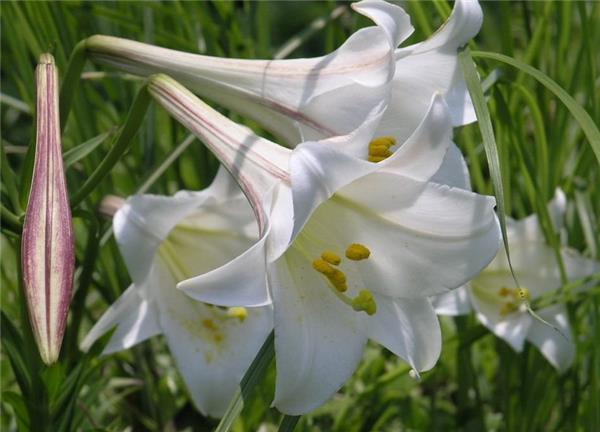
Watering: Just keep the potting soil moist, but during the peak growing season and in dry weather, water a bit more frequently, and often sprinkle water around the flowerpot to increase air humidity. The potting soil should not be too wet, otherwise the bulbs rot easily.
Pest and disease control: (1) Lily mosaic virus: also called lily latent mosaic disease. When it strikes, leaves show uneven chlorotic spots or necrotic spots, affected plants are stunted, leaf margins curl, and leaves become smaller; sometimes spindle-shaped light brown lesions appear on the petals, the flowers are deformed, and they open with difficulty. Control methods: 1) Select virus-free bulbs for propagation; 2) Strengthen control of aphids and leafhoppers; 3) Promptly pull up and destroy diseased plants when found.
(2) Leaf spot disease: At first, small faded spots appear on the leaves, which after expanding become brown spots with dark brown edges. Later, many small black dots form in the center of the lesions, and in severe cases the entire leaf turns black and dies. Control methods: Remove diseased leaves and spray once with a 500-fold dilution of 65% zineb wettable powder to prevent spread.