How to Grow Peperomia obtusifolia? Detailed Guide to Cultivation Methods and Precautions
Peperomia obtusifolia, also known as baby rubber plant, is a perennial herbaceous plant. It is relatively small, with an overall height of about 15 to 20 cm, making it very suitable for placing on a small indoor table, or for arranging several pots on an iron flower stand. Below we will introduce the cultivation methods and precautions for Peperomia obtusifolia.
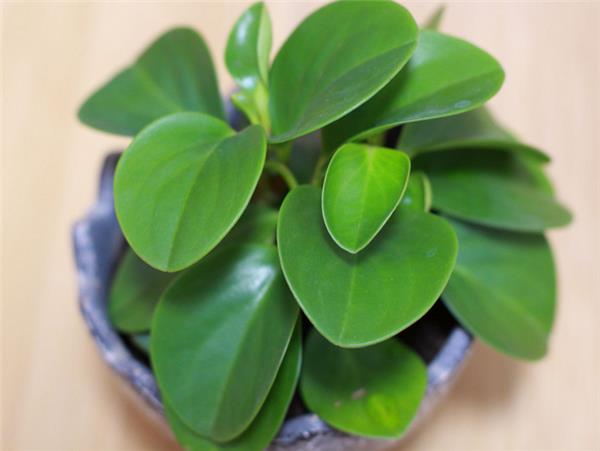
Cultivation Methods for Peperomia obtusifolia
Substrate: It prefers to grow in loose, fertile, well-drained sandy soil rich in humus, and grows poorly in clay. A general substrate mix can be made by combining leaf mold + river sand + a small amount of decomposed organic fertilizer. If conditions permit, a mix of peat soil and perlite can be used for cultivation.
Light: It prefers semi-shade or diffused light. Apart from winter, when it needs sufficient light, it requires some shading in other seasons, especially in summer when shading is even more necessary. If placed in a shaded environment, it tends to grow leggy, with increased internodal length and reduced ornamental value, which is also undesirable. Under semi-shade conditions, the leaf color is brighter and the gloss is better, especially for variegated varieties, which have a slightly higher demand for sunlight.
Temperature: It prefers a warm environment. The optimal growth temperature is between 20-30°C. The overwintering temperature should preferably be kept above 10°C. Growth stops below 10°C, and frost damage easily occurs below 5°C.
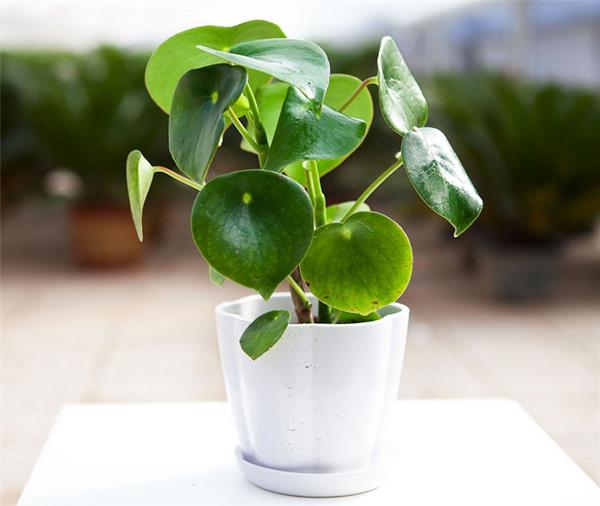
Humidity: It prefers a moist growing environment. Under high-humidity conditions, it grows luxuriantly with vivid leaf color. When temperatures are high or the air is dry, leaf misting should be increased or water should be sprinkled in the growing environment to maintain relatively high air humidity, which is extremely beneficial to plant growth. It can also adapt to short periods of dry conditions, but not for long. Generally, humidity should be maintained at around 70%.
Watering: It is relatively fond of water and cannot tolerate drought. During the growing period, it should be watered frequently. When the temperature is above 25°C or the air is dry, it should be watered more. However, waterlogging must also be prevented. When the temperature is below 25°C, water thoroughly only when the pot soil surface is dry. When the temperature is below 10°C, it can tolerate several days of dryness without watering.
Fertilizing: When the temperature is above 18°C, a small amount of fertilizer is needed. When the temperature is below 18°C or above 30°C, it is best to apply little or no fertilizer. Fertilizing is best done in small amounts and multiple times. Using diluted fertilizer solution instead of plain water for irrigation is optimal. It cannot tolerate raw fertilizer or concentrated fertilizer, which can easily cause fertilizer burn. Foliar spraying of fertilizer solution can also be used for fertilization, with good results. Fertilizers should be mainly nitrogen and potassium, with phosphorus as secondary.
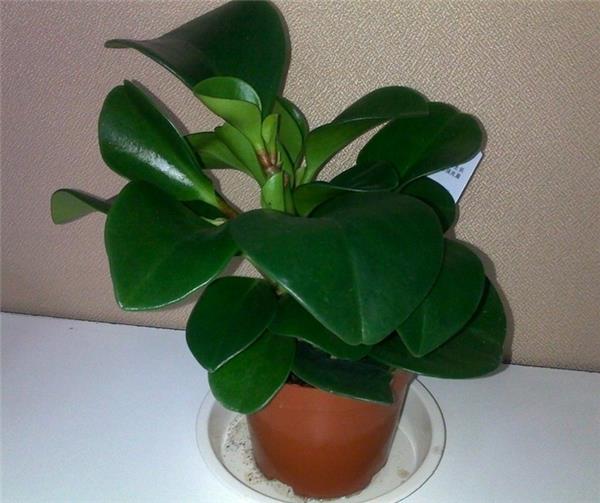
Precautions for Growing Peperomia obtusifolia
(1) In spring and summer, the growing points of the plant can be slightly pinched off to encourage more side branches and make the plant appear more luxuriant. However, be careful not to pinch off too many, otherwise the plant may not produce many flowers.
(2) High temperature and high humidity in summer. The leaves of Peperomia obtusifolia have a leathery surface that can prevent some water transpiration, so its requirements for environmental humidity are not too high. High temperature and high humidity are not conducive to its growth; in mild cases, spots appear on the leaves, and in severe cases, rot occurs.
(3) Watering Peperomia obtusifolia with cold water in winter will cause the stems and leaves to rot. Therefore, use lukewarm water. Cold tap water should be left to stand for one or two days before use.
(4) Peperomia obtusifolia is not cold-tolerant and should avoid low temperatures. The overwintering room temperature must not be lower than 10°C; otherwise, pitting will appear on the leaves and then rot will follow.
(5) Leaf tip and leaf margin dieback: sudden temperature drop. Cut off the diseased leaves and move the plant to a warm place.
(6) Leaf wilting, stem and leaf rot, or lesions on the underside of leaves: overwatering, especially in winter. Move the plant to a warm and well-lit place, cut off the diseased parts, reduce watering, and keep the pot soil slightly dry.
(7) Sudden leaf drop in thick-leaved varieties: the pot soil is too dry. Pay attention to watering before the leaves wilt; the pot soil should not be too dry.
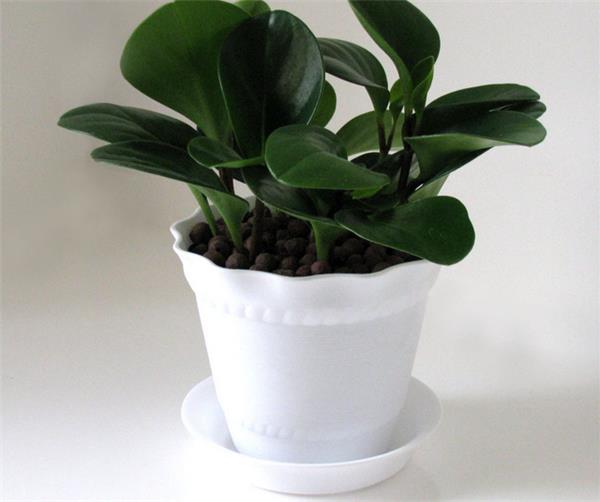
Pest and Disease Control for Peperomia obtusifolia
1. Peperomia obtusifolia leaf spot disease
Symptoms and damage: In the early stage of the disease, small chlorotic spots appear on the leaves, gradually expanding into nearly circular lesions with a diameter of 4-10 mm, brown in color; in the later stage, the lesions turn grayish-brown to grayish-white, with a light brown margin, and small black pycnidia form on the lesions.
Image of pest and disease control for Peperomia obtusifolia
Disease characteristics: The pathogen overwinters on diseased leaves or diseased residues; it spreads through wind, rain, or water droplet splash. Extensive management, water deficiency, nutrient deficiency, poor ventilation in the greenhouse, prolonged high humidity, and water droplets on leaf surfaces all favor disease development.
Control methods: Generally no control is needed; if necessary, refer to Cymbidium faberi leaf spot disease.
(2) Peperomia obtusifolia viral disease
Symptoms and damage: This disease causes plant stunting and affects commercial value. Mosaic patterns with alternating yellow, white, and green patches appear on the new leaves of Peperomia obtusifolia. A few leaves have chlorotic ringspots. Some leaves are severely chlorotic, with the entire leaf almost turning white. Leaf development is asymmetrical, and leaf margins curl upward. The plant is noticeably stunted.
Pathogen and disease characteristics: It is preliminarily inferred that this disease is a viral disease. In the planting area, only a few plants show these symptoms, and new plants propagated from cuttings still show these symptoms. Ringspot disease has also been reported abroad as a viral disease and is transmitted through grafting, but the specific virus is unknown.
Control methods: Spray with 50% carbendazim wettable powder at 1000 times dilution for control.
A few leaves have chlorotic ringspots. Some leaves are severely chlorotic, with the entire leaf almost turning white. Leaf development is asymmetrical, and leaf margins curl upward. The plant is noticeably stunted.Pathogen and disease characteristics: It is preliminarily inferred that this disease is a viral disease. In the planting area, only a few plants show these symptoms, and new plants propagated from cuttings still show these symptoms. Ringspot disease has also been reported abroad as a viral disease and is transmitted through grafting, but the specific virus is unknown.
Control methods: Spray with 50% carbendazim wettable powder at 1000 times dilution for control.