How to Grow a Peace Lily? Growing Methods and Precautions
Did you know? The peace lily is not just a symbol of good wishes; it also exists as a plant. Below we will share with you the growing methods and precautions for the peace lily.
Introduction to the Peace Lily
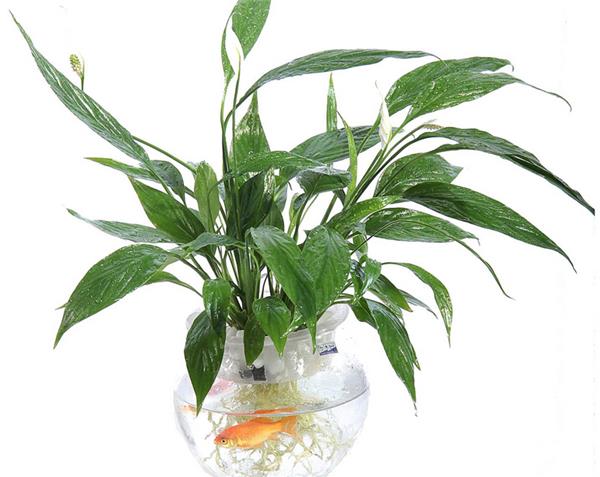
The peace lily, also known as: white sail, with the aliases: white palm and spathe lily, is a perennial herb native to tropical America that prefers high temperatures, high humidity and a semi-shaded environment. The peace lily has emerald green leaves and pure white spathes, and is very fresh and elegant, making it an important ornamental flower worldwide. It is also a capable filter of indoor exhaust gases, with certain effectiveness against ammonia, acetone, benzene and formaldehyde, and began to be used for potted ornamental cultivation in the early 20th century.
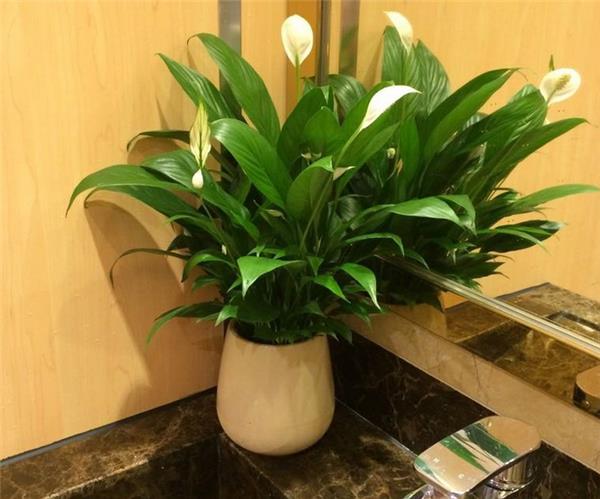
The peace lily's leaves are long, elliptic-lanceolate, tapering at both ends, with obvious veins and long petioles that form a sheath at the base; the flower scape is upright, rising above the foliage, and the spathe is upright, slightly curled, and white; the spadix is cylindrical and white.
Growing Methods for the Peace Lily
1. Propagation
Division propagation: best carried out in May to June; lift the entire plant out of the pot, cut the rhizome apart from the base of the clump, with each division having at least 3 to 4 leaves, then plant them separately and place them in a semi-shaded spot to recover.
Seed propagation: after flowering, seeds can be obtained through artificial pollination. After collecting the seeds, they must be sown immediately; the germination temperature is 30°C, and germination occurs 10 to 15 days after sowing.
Tissue culture propagation: using young inflorescences and lateral buds as explants, after disinfection they are inoculated onto MS medium supplemented with 10 mg/L 6-benzylaminopurine and 2 mg/L indoleacetic acid, and after 40 to 45 days callus tissue and adventitious buds grow. The adventitious buds are then transferred to MS medium supplemented with 2 mg/L indoleacetic acid, and after about 30 to 40 days roots are induced, forming complete plants.
2. Light
The peace lily is relatively shade-tolerant, so it is suitable for growing in a semi-shaded environment, and direct sunlight must be avoided. According to experiments, about 60% scattered light can meet the growth needs of the peace lily, so it can be grown year-round indoors in a spot with bright scattered light. If it is placed under strong light, the leaf surface will turn yellow and may even be directly sunburned. In greenhouse cultivation in northern winters, shading can be omitted or reduced; if the light is too dim for a long time, the peace lily will be unlikely to flower.
3. Temperature
The peace lily likes high temperatures and is especially afraid of cold; the most suitable growth temperature is 20-28°C. Once winter arrives it must be brought indoors. The lowest temperature it can withstand is 10 degrees, so attention must be paid in winter. Relatively speaking, growing conditions in the north are too poor; if the peace lily is kept at low temperatures for a long time, it will cause root rot, leaf drop or scorching, and in severe cases may even lead to death.
4. Soil
Soil is the foundation of cultivation. Potted peace lilies require loose soil with good drainage and aeration, and heavy clay soil must not be used. Generally, a substrate can be prepared by mixing leaf mold and peat soil with a small amount of perlite, and a small amount of organic fertilizer is added as a base fertilizer when planting.
5. Watering
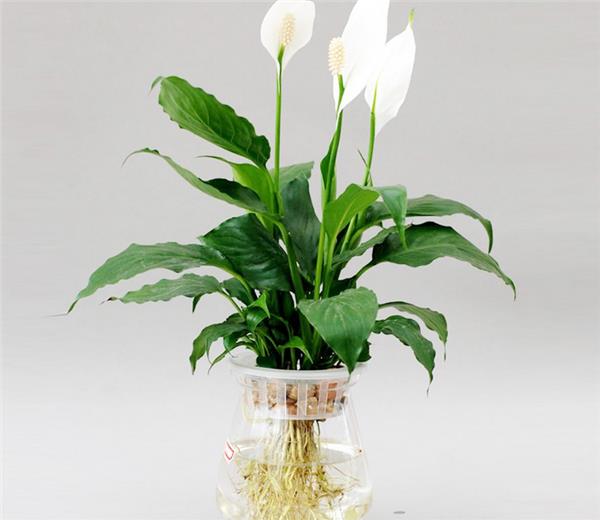
The peace lily has a relatively high demand for water, and the potting soil must be kept moist at all times. However, it must not become waterlogged; once watered too much, a large amount of water accumulates in the pot, which can easily cause root rot and yellowing and withering of the plant. In summer and during drought, water should be sprayed frequently on the leaves and the ground to increase air humidity, which helps its growth. In winter, watering should be controlled, and the potting soil should preferably be slightly moist.
6. Fertilizing
Because the peace lily grows quickly and has a relatively high fertilizer demand, liquid fertilizer must be applied once every 1-2 weeks during the growing season. Fertilizer should be applied thinly; do not apply concentrated or raw fertilizer, and after applying solid fertilizer, water once with clear water. It is best to use dilute fertilizer water instead of clear water for watering, as this generally will not cause fertilizer burn, and the plant will grow luxuriantly.
7. Diseases and Pests
This is a common problem for houseplants, and it can be avoided as long as care is proper. If there is harm from pest mites, the leaves will show adverse symptoms such as wilting, faded luster and yellowing and withering, and acaricides specific to mites can be sprayed for control, such as dicofol, hexythiazox and pyridaben.
Precautions for Growing the Peace Lily
1. The peace lily needs relatively high growing humidity; if the air is too dry, it will cause the leaves to wilt.
2. Master an appropriate light level. Generally speaking, growing the peace lily requires at least 73% shading; in summer, 80% shading is better. If the light level is too low, the leaf color of the peace lily will fade, and growth will be stunted.
3. The peace lily is easy to grow, but its demand for magnesium is much higher than that of many other foliage plants. When magnesium supply is insufficient, the edges of the peace lily's old leaves will turn withered and yellow.
4. Controlling root rot is critical; if the plant is infected with root rot, its root system will turn black and cause the old leaves to wither and die off, and in severe cases it will lead to the death of the plant.
5. Spraying gibberellic acid artificially induces the plant to flower, and the flowering time differs by variety. Note that too high a concentration of gibberellic acid will cause the plant's flowers to become deformed.
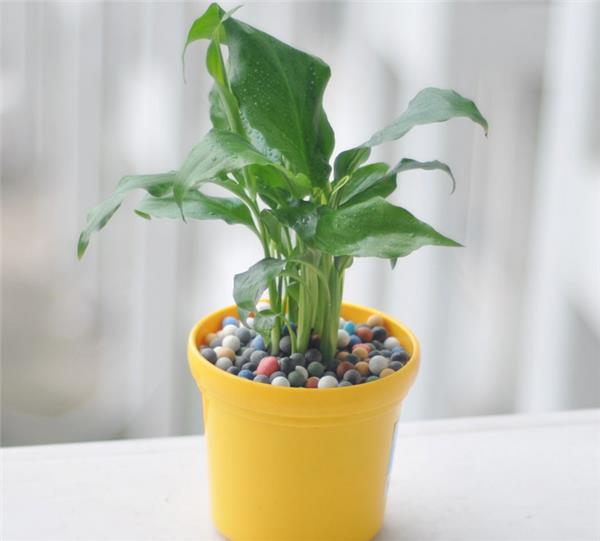
6. Choose a container of appropriate size according to the variety.
But its demand for magnesium is much higher than that of many other foliage plants. When magnesium supply is insufficient, the edges of the peace lily's old leaves will turn withered and yellow.4. Controlling root rot is critical; if the plant is infected with root rot, its root system will turn black and cause the old leaves to wither and die off, and in severe cases it will lead to the death of the plant.
5. Spraying gibberellic acid artificially induces the plant to flower, and the flowering time differs by variety. Note that too high a concentration of gibberellic acid will cause the plant's flowers to become deformed.
6. Choose a container of appropriate size according to the variety.