How to Grow Guzmania: Detailed Guide to Care Methods and Precautions
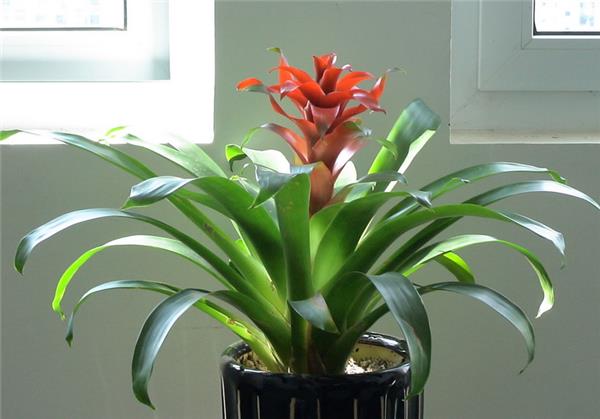
When people hear "Hongyun Dangtou" (Guzmania), many think it is an idiom or the name of a movie. In fact, the Guzmania we are talking about is a flowering plant in the Bromeliaceae family, and because its flower core is bright red, it is also called Guzmania. Below, let's learn about the care methods and precautions for Guzmania together!
Introduction to Guzmania
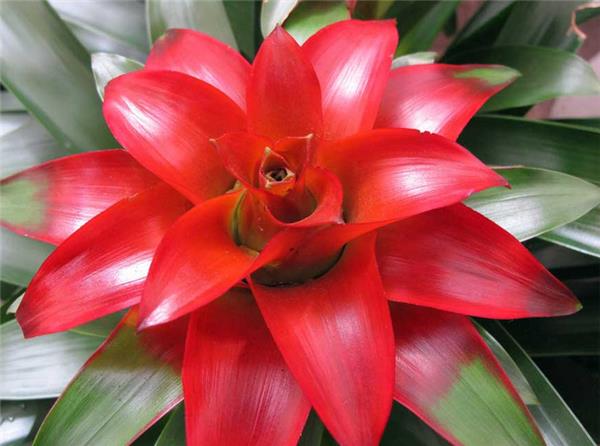
Guzmania is also called ornamental bromeliad. When it comes to bromeliad, many people may suddenly realize, isn't that just pineapple? In fact, bromeliads are divided into two types: one that can bear fruit, and another that cannot; the ones that can bear fruit are like the pineapples we usually see, and the ones that cannot bear fruit are like the Guzmania we are talking about now. Although ornamental bromeliads do not bear fruit, they are even more beautiful than edible pineapples, so as ornamental plants, they are very good. Guzmania is evergreen all year round, with diverse varieties. Whether flowers or leaves, they are very glossy, and the overall form presents a rosette shape, giving people a feeling that is both passionate and reserved, with excellent ornamental value; at the same time, in people's minds it also represents perfection and nobility.
Care Methods for Guzmania
The care methods for Guzmania mainly include the following aspects:
First, growing temperature
The most suitable growing temperature for Guzmania is 21-28°C during the day and 18-21°C at night, and its maximum temperature must not exceed 35°C. Of course, winter temperatures are lower, so the temperature can also be appropriately lower, but it must not be lower than 10°C, otherwise the plant will be frostbitten and its leaves will turn yellow, so attention must be paid to temperature control.
Second, sunlight
Plant growth cannot be separated from sunlight, but different plants have different sunlight requirements. Guzmania has quite high sunlight requirements. In summer, it should be placed in the shade of trees, and a shade net should be set up; in winter, it needs at least 4 to 5 hours of direct sunlight every day. Only when Guzmania receives a certain amount of sunlight can it remain evergreen and bloom normally.
Third, growing soil
The growing soil for Guzmania must be fertile and loose. If possible, you can mix peat soil and fine sand at a ratio of 2:1 to make your own potting soil.
Fourth, applying fertilizer
Guzmania generally blooms in winter. Because the climate in winter is relatively harsh, it has high fertilizer requirements. Usually, a diluted organic liquid fertilizer should be applied twice a month, such as water soaked with soybeans and fermented rice washing water.
Fifth, attention to watering
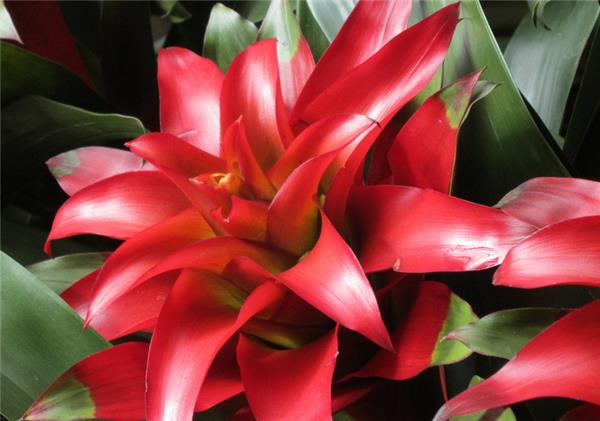
Guzmania likes a humid environment, so attention should be paid to maintaining the moisture of the potting soil, especially in hotter climates. On cloudy and rainy days, watering is usually not needed. When watering, do not directly use tap water; use water that has been left to stand. To maintain its beauty, it is best to spray clean water on the leaf surface once a day, which can remove dust, keep it clean, make it look more bright and beautiful, and at the same time help photosynthesis, promote healthy plant growth and improve the indoor environment.
Sixth, disease and pest control
If the temperature, humidity and other conditions where Guzmania is kept are too high, it is very easy for diseases and pests to breed, such as sooty mold and scale insects. Once disease is found, carbendazim should be sprayed in time; if pests are found, omethoate needs to be sprayed. One point to note here is that when spraying chemicals, never do it indoors, otherwise it will pollute the indoor environment.
Seventh, water preference
Guzmania likes water, but the watering time must be carefully noted. Do not water at noon; it is best in the morning. In summer, water in both the morning and evening. The watering location also requires special attention: it should be poured into the leaf cup, and never only into the potting soil. Some people like to water it with fertilizer water, which is also fine, but one point must be noted: after watering with fertilizer water, the water should be replaced with clean water after one week, otherwise the center of the plant will rot.
Eighth, air humidity
Guzmania also has high requirements for air humidity. The most suitable air humidity for its growth is 75-85%, and it must not be too dry. According to experiments, once the air humidity is lower than 50%, it will have a great impact on its growth.
Precautions for Growing Guzmania
In daily care, when Guzmania is blooming, remember not to apply fertilizer, otherwise it will cause excessive nutrients. Also, after flowering, the flowers can be cut off in time, and then fertilizer can be applied. Generally, cuttings are selected during the small plant growth period.
Guzmania blooms only once. After flowering, cuttings or transplanting should be carried out in time. Flowering generally occurs in the third year after the plant matures.
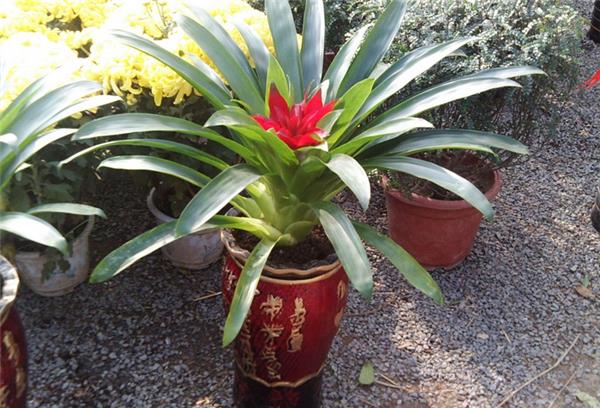
Its growing environment should be placed in a semi-shaded place with long-term ventilation, and it should always be kept moist, because it is an epiphytic plant and will not root very deeply in the soil. Too much fertilizer is actually harmful and will cause root rot. Therefore, for home cultivation, small pots are suitable.
Watering is generally done before noon or in the morning and evening, and it needs to be watered thoroughly. If watered again at night, photosynthesis cannot proceed, and it is instead easier for germs to survive. Also, if the temperature is too high, pests may occur, so it is recommended to control the temperature well.
Then apply fertilizer. Generally, cuttings are selected during the small plant growth period.Guzmania blooms only once. After flowering, cuttings or transplanting should be carried out in time. Flowering generally occurs in the third year after the plant matures.
Its growing environment should be placed in a semi-shaded place with long-term ventilation, and it should always be kept moist, because it is an epiphytic plant and will not root very deeply in the soil. Too much fertilizer is actually harmful and will cause root rot. Therefore, for home cultivation, small pots are suitable.
Watering is generally done before noon or in the morning and evening, and it needs to be watered thoroughly. If watered again at night, photosynthesis cannot proceed, and it is instead easier for germs to survive. Also, if the temperature is too high, pests may occur, so it is recommended to control the temperature well.