Complete Guide to Spider Plant Care and Cultivation Precautions
Although spider plants are very tenacious, various problems still arise during cultivation, such as issues with watering, light, and disease prevention. If handled properly, spider plants will grow healthy and lush; if not handled or handled incorrectly, it will inevitably have a negative impact on spider plant cultivation. So how do you grow spider plants?
I. Growth Habits of Spider Plants
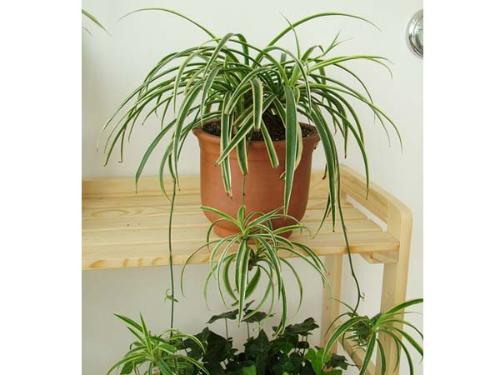
Spider plants, commonly known as hanging basket grass, originated in Africa and are now cultivated all over the world. Europeans call them spider grass or airplane grass. The most distinctive feature of spider plants is that mature plants periodically produce new stems, and these new stems in turn produce small plantlets. They prefer warm, humid, and semi-shaded growing environments and are well suited for long-term indoor cultivation. Spider plant flowers are mainly white, with several blossoms per cluster, looking fresh and delightful, and possessing high ornamental value.
II. Types of Spider Plants
There are many types of spider plants, each with different forms and characteristics. There are five common ones: spider plant, purple spider plant, flowered spider plant, golden-leaf spider plant, and silver-edge spider plant.
Spider plant: The stems and leaves are indistinguishable, the leaves droop, and the foliage is dark green. It blooms in June and July each year, with flowers in light yellow and white.
III. How to Grow Spider Plants
Spider plants can be propagated by cuttings, division, and sowing.
Cutting and division propagation can be done anytime from spring to autumn. Spider plants are highly adaptable with a high survival rate and are generally very easy to propagate. For cuttings, simply take a 5-10 cm stolon with new buds and insert it into the soil; roots will form in about a week, and after about 20 days it can be transplanted into a pot, watered thoroughly, and placed in a cool, shaded spot for care.
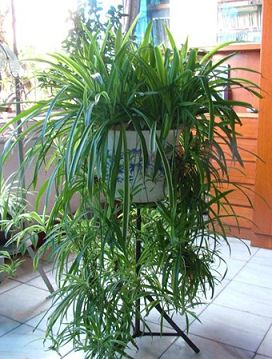
Spider plants are perennial evergreen herbaceous flowers with fibrous roots. They have graceful forms and are highly shade-tolerant and easy to manage. They are often used as hanging potted plants for indoor decoration or garden landscaping. Their management should follow these points:
1. Temperature control. Spider plants prefer warm and humid climates and are not cold-tolerant. They grow fastest at 20-24°C, stop growing above 30°C, and their leaves tend to turn yellow with dry tips.
2. Light regulation. When grown outdoors in summer, attention should be paid to shading to prevent light from being too intense, otherwise sunscald easily occurs.
3. Water and fertilizer regulation. During the peak growing seasons of spring and autumn, watering should be adequate, the potting soil should be kept moist at all times, and the leaves and branches should be frequently sprayed with clean water at a temperature close to room temperature to prevent dry tips, but waterlogging should be avoided.
4. Pruning and repotting. As the plant grows, old leaves at the base should be pruned frequently to maintain a good plant shape.
5. Pest control. Spider plants have dense foliage with poor ventilation, making them susceptible to scale insects. Prevention should be the priority.
IV. What to Do When Spider Plant Leaves Turn Yellow
The causes of spider plant leaves turning yellow and their solutions are as follows:
1. Over-fertilization exceeding the plant's needs. Stop fertilizing, water generously with clean water, or repot and clean the roots, replacing with new soil.
2. Long-term failure to repot and change soil, resulting in the depletion of various nutrients in the potting soil and the plant lacking nutrients. Timely replace with fertile loam soil.
3. Insufficient light exposure, causing decreased chlorophyll. Increase light exposure.
4. Poor air permeability and drainage of the potting soil, making root respiration difficult. Loosen the soil promptly.
5. Long-term lack of thorough watering, causing the spider plant's roots to lose water. Water thoroughly once and keep the potting soil warm and moist.
V. Benefits of Spider Plants
Spider plants have an extremely strong ability to absorb toxic gases. Generally, if 1-2 spider plants are grown in a room, the toxic gases in the air can be nearly completely absorbed. According to scientific analysis, spider plants can absorb 95% of carbon monoxide and 85% of formaldehyde in the air. Therefore, spider plants are not only excellent hanging foliage plants for indoor spaces but also good indoor air-purifying flowers, earning them the reputation of "green purifier."
VI. Propagation of Spider Plants
Spider plants can be propagated by division. Except in winter when temperatures are too low for division, it can be done in any other season. For plants potted for 2 to 3 years, during spring repotting, the dense clumps can have their old growing medium removed and be divided into two to several clumps, each potted separately to become new plants. In addition, spider plants can also be propagated using the small plantlets on the runners. During the growing season, cut off the small plantlets from the runners and plant them in growing medium or water. After the small plantlets develop roots, transplant them into pots to become new spider plant bonsai.
VII. The Flower Language of Spider Plants
The flower language of spider plants is "helpless yet giving hope." This is related to its growth habits. Normally it does not require much care and will not give people great surprises or expectations, but the helpless part is that it needs constant attention and always grows tenaciously and well, thus always bringing people hope.
Regarding the flower language of spider plants, there is also a legend. It is said that long ago there was a chief examiner who was jealous of talent. In order to let his godson pass the imperial examination, he tried every means to suppress a talented scholar named Lin Dexiang. But while grading Lin Dexiang's exam paper, the emperor happened to be traveling incognito. In a panic, the chief examiner hid the paper among the orchids on his desk. Unbeknownst to him, while the emperor was admiring the brilliantly blooming orchids, he inadvertently learned the truth. The emperor then dismissed the examiner from office. Not long after, the chief examiner died of melancholy, and the stems and leaves of that pot of orchids never stood upright again, gradually evolving into today's spider plant.
That is all for this article. If homeowners can follow the above requirements when growing spider plants, it would be hard for your spider plants to grow poorly. On one hand, your methods are on point; on the other hand, spider plants truly have very tenacious vitality. I hope that after reading my introduction, everyone can grow lush and beautiful spider plants.