What to Do When the Money Tree's Leaves Turn Yellow? Causes and Solutions
During cultivation, the money tree (Pachira aquatica) may develop yellowing leaves. So why do money tree leaves turn yellow? What should you do when money tree leaves turn yellow? Today I will give you a brief introduction, so let's take a look together.
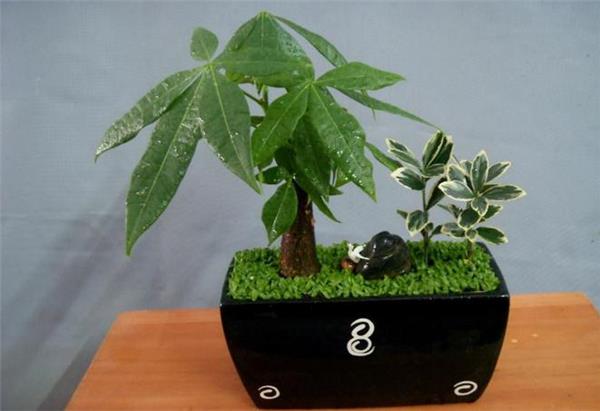
Causes and Solutions for Yellowing Leaves on the Money Tree
1. Improper watering: The money tree likes a warm and humid climate environment, and the potting soil is best kept moist, but for indoor cultivation, generally do not water until the soil is dry, and water thoroughly when you do. Because if you do not water thoroughly and only wet the top while the bottom stays dry, nutrient absorption will be affected, causing the leaf color to become dull and lusterless and gradually turn yellow and fall off from the bottom upward. In this case, you need to water lightly and spray water frequently, so that it gradually recovers and then returns to normal watering.
2. Unsuitable light: The money tree likes light, but it cannot tolerate strong direct sunlight, and semi-shade or scattered light is preferable. Only in winter does it need better light conditions to grow well. Starting in late April, you can choose a clear and warm midday, move the pot outdoors or onto a balcony to receive direct sunlight for 1-2 hours, and gradually extend the time, which will produce very good cultivation results. Being in shade or a dimly lit place for a long time will cause yellowing leaves and leaf loss, and in severe cases the plant may even wither and die.
3. Dust on the leaf surface: If dust on the leaf surface is too thick, it not only affects the appearance but also affects the plant's respiration and photosynthesis, thus causing the leaves to turn yellow. The dust should be wiped off promptly.
4. Incorrect repotting procedure: When repotting, incorrect operation can also cause the money tree's leaves to turn yellow. When repotting the money tree, try to damage the roots as little as possible, and the added growing medium should be sterile, breathable, fertile and slightly acidic. Also, firm the potting soil so that no gaps remain. If gaps remain, no matter how much water is poured, the plant will still experience water shortage, which leads to yellowing leaves.
5. Low ambient temperature: The money tree likes a warm and humid environment, and its optimum growth temperature is 20-30°C. Below 18°C the money tree stops growing, and it can adapt to temperatures as low as 10°C, but the temperature must not fall below 5°C, otherwise cold damage will occur: in mild cases the leaves turn yellow and drop, and in severe cases the plant dies.
6. Hot, high temperatures: For the money tree, which likes a warm and humid environment, if it is placed in high temperatures and exposed to scorching sun, the plant's transpiration will be excessive, and the roots will not be able to supply enough water and nutrients, very easily causing scorched leaf tips or yellowing and dropping leaves. It needs to be moved promptly to a well-ventilated, cool place.
7. Poor ventilation due to crowding: If the money tree's branches and leaves grow too densely and are not pruned for a long time, the inner branches and leaves will receive insufficient light, which very easily causes the leaves to turn yellow and fall off. Pruning should be strengthened promptly to allow ventilation and light penetration.
8. Alkaline soil and water: In most areas of the north, the soil and water contain more salt and alkali, and are not very suitable for planting the money tree, which likes acidity, because the soil lacks iron that the plant can absorb, so the money tree's leaves will gradually turn yellow. Therefore, when planting, be careful to choose acidic soil, and during the growing period often water with alum fertilizer water.
9. Excessive fertilizer: Generally, during the money tree's optimum growth temperature period, fertilizer should be applied regularly to ensure lush growth. Usually, a light fertilizer is applied once about every 20 days, and when repotting, well-rotted base fertilizer should be added. However, applying too much fertilizer, or applying fertilizer that has not been rotted, will cause the money tree's roots to burn, resulting in yellowing and falling leaves.
That is all for the introduction to the causes of yellowing leaves on the money tree and their solutions. I believe that after reading this, everyone will have a certain understanding of the money tree. I hope the relevant knowledge introduced today can be helpful to everyone.