What Are the Common Monocotyledonous Plants? Understand the Representative Species in One Article
There are many kinds of plants, and one of them is the monocotyledonous plants. So, what are the common monocotyledonous plants? Some friends may not be particularly familiar with this yet, so today we will give a brief introduction for everyone. Let us take a look together.

What Are Monocotyledonous Plants
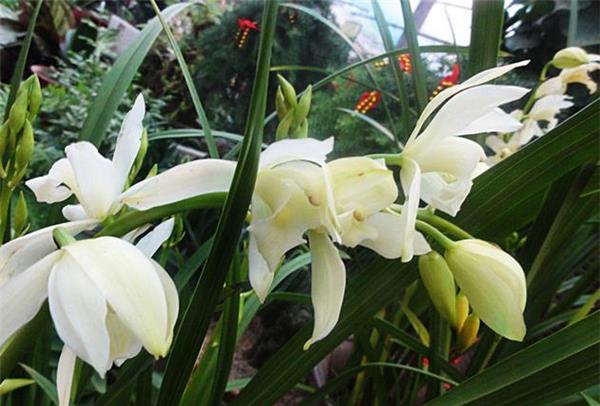
The so-called monocotyledonous plants, whose English name is Monocotyledons, abbreviated as monocots, formerly named Monocotyledoneae or Liliopsida, number about 59,300 species. Among them, the largest family is Orchidaceae, with more than 20,000 species. The leaf veins of this group of plants are usually parallel, the floral parts are basically in threes, and the seed is characterized by having 1 cotyledon.
The Difference Between Monocotyledonous and Dicotyledonous Plants
1. Monocotyledonous plants
Morphological characteristics: fibrous root system.
Primary structure: the outermost layer is the epidermis, the cortex is broad, the endodermal cells are thickened in a horseshoe shape, and the vascular cylinder is of the limited collateral type.
Secondary structure: monocotyledonous plants have no secondary structure.
Abnormal structure: the vascular bundles of the central cylinder are of the amphivasal type and the limited collateral type (root of Acorus tatarinowii), dicotyledonous plants.
2. Dicotyledonous plants
Morphological characteristics: taproot system.
Primary structure: the outermost layer is the epidermis, the cortex is broad, the endodermal cells have a Casparian strip, and the vascular cylinder is of the unlimited collateral type.
Secondary structure: the outermost layer is the periderm (including the cork layer, cork cambium, and phelloderm), and the vascular bundles are of the unlimited collateral type.
Abnormal structure: abnormal vascular tissue arranged in concentric rings (root of Achyranthes bidentata), accessory vascular cylinders (tuberous root of Fallopia multiflora).
What Monocotyledonous Plants There Are
1. Liliaceae
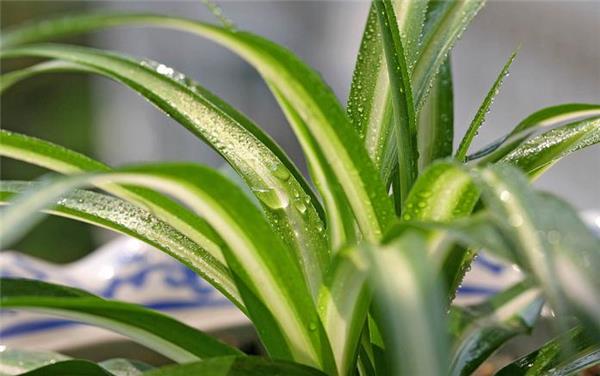
The representative of monocotyledonous plants is the Liliaceae family, containing 175 genera and about 2,000 species, but the number of genera and species varies greatly depending on the viewpoint; it is a family distributed worldwide. The vast majority of Liliaceae plants have large and brightly colored flowers and are ornamental flowers worldwide, such as lilies, tulips, hyacinths, daylilies, hostas, lily of the valley, spider plants, asparagus ferns, Asparagus cochinchinensis, Ophiopogon japonicus, Liriope, Fritillaria, Gloriosa, Ornithogalum, Sansevieria, Paris polyphylla, Aspidistra, and Polygonatum, all of which can be ornamental. In addition, monocotyledonous plants such as daylily buds, garlic, Chinese onion, onion, and scallion can be eaten as vegetables.
2. Poaceae
Poaceae monocotyledonous plants contain 750 genera and nearly ten thousand species, ranking fourth in species number among angiosperms. Except in deserts and ice and snow zones, they can grow everywhere; for example, reeds grow along temperate river and lake banks, and Poaceae plants have an extremely strong ability to regrow, quickly regenerating after mowing or grazing. Poaceae can be divided into 2 subfamilies, Bambusoideae and Pooideae, among which the representative plant is bamboo. Bamboo flowers only once in its lifetime and dies after flowering. Other common bamboos include Fendan bamboo, Qingpi bamboo, Chenggao bamboo, and Chetong bamboo; ornamental ones include Golden Stripe Bamboo, Buddha Belly Bamboo, mottled bamboo, and square bamboo, which can be used as hedges.

3. Spathiflorae
The monocotyledonous plants in this order are mainly herbaceous, with a few vines, climbing or epiphytic, with rhizomes, tubers, or corms; the plant body contains watery sap, sometimes with a pungent odor, which irritates mucous membranes and causes a burning sensation. The sap can cause skin allergies and itching, but this can be eliminated after roasting over fire. The main ones include Arisaema, Pinellia ternata, Acorus calamus, Homalomena occulta, and Alocasia macrorrhizos, as well as Monstera deliciosa, Calla lily, Caladium bicolor, Spathiphyllum, Anthurium, and Rohdea japonica, which are often used as ornamental plants.
That is all for the introduction to monocotyledonous plants. I believe that after reading this, everyone has gained a certain understanding of monocotyledonous plants. I hope the relevant knowledge introduced today can be of help to everyone.