What Is the Flower Language of Hyacinth? A Full Explanation of Its Meanings
Hyacinths come in many colors, and the flower language differs depending on the color. So what is the flower language of the hyacinth? Some friends may not be especially familiar with this yet, so today we will give a brief introduction and let us learn about it together.
Introduction to Hyacinth
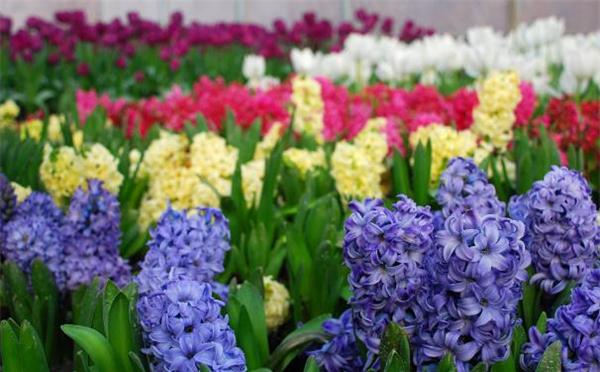
Hyacinth is a perennial herbaceous plant, often called "foreign daffodil" because it is one of the most fragrant flowering plants and comes from the region of southern Europe, which is why it is called Western daffodil.
There are many kinds of hyacinths, but the basic plant characteristics remain the same: it belongs to the bulbous plants, the stem resembles scale segments in shape and is egg-shaped. Before blooming, its flower shape looks like garlic, and it is a fleshy flower. The flowering period is generally about 1 month, mainly blooming in March-April. Because it has been cultivated artificially, many horticultural types have been produced, with much variation. According to statistics, there are more than 2000 varieties in the world, but generally the common hyacinth varieties can be roughly distinguished by flower color.
The Flower Language of Hyacinth
Purple hyacinth: sorrow, melancholy love. Apology, regret.
Light purple hyacinth: gentle temperament, romantic feelings. Sadness.
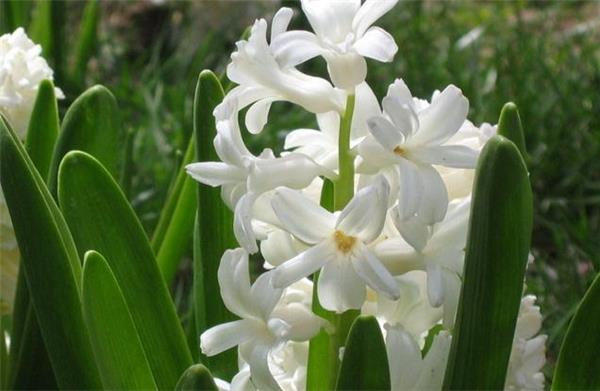
White hyacinth: secret love. Pure and light, or love that one dares not reveal.
Red hyacinth: thank you, love that moves people (your love fills my heart).
Peach-red hyacinth: represents passion.
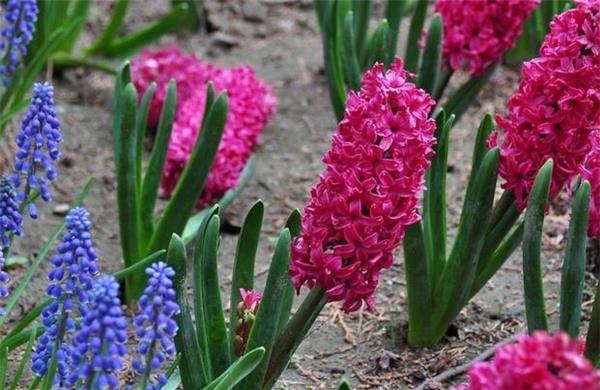
Pink hyacinth: admiration and romance.
Yellow hyacinth: with you, I am very happy.
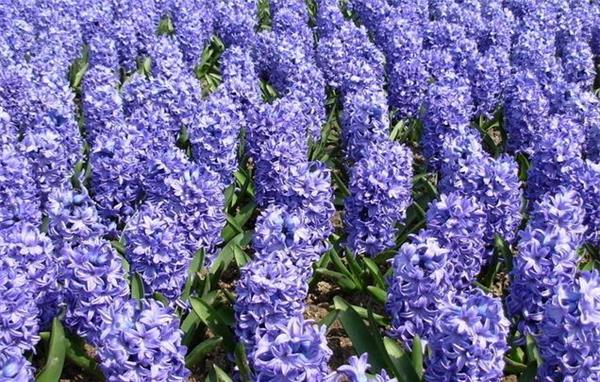
Blue hyacinth: noble and intense, constancy, chastity, as happy as seeing you.
Dark blue hyacinth: somewhat melancholy because of love.
Light green hyacinth: if you want to have no secrets, you must first have a kind heart.
How to Grow Hyacinth
1. Bulb selection: because the nutrients needed for hyacinth flowering mainly come from the nutrients stored in the scale leaves of the bulb, only by choosing bulbs with undamaged outer skin, fleshy scales that are not excessively shrunken, relatively hard and heavy, and plump, can they produce abundant and beautiful flowers.
2. Soil requirements: for growing hyacinth flowers, the soil is required to be fertile and high in organic matter, and it is best to use sandy soil with good drainage. Before planting, the soil should be moistened and left to stand for one day before planting. It is required to apply fertilizer frequently during the growth period. For field planting, loosen the soil in time after the seedlings emerge. You can choose to apply fertilizer once in winter, and apply fertilizer once each before flowering in spring and after the flowers fade.
3. Light: for growing hyacinths, sufficient sunlight must be maintained to ensure normal growth. If the light is too weak, it will cause the hyacinth plants to become thin and weak, the flower buds to be small, the flowers to fade early, and the leaves to turn yellow. At this time, an incandescent lamp can be used at about 1 m away to supplement light; but too strong light can also cause scorching of leaves and petals or shorten the flowering period. Before the bulb sprouts, it should not be placed under direct sunlight.
4. Temperature and humidity regulation: too high a temperature will lead to deformed growth of hyacinths and a high rate of blind flowers. It is best to keep it below 15°C. Humidity can be increased by spraying and sprinkling water on the ground, and ventilation and air exchange can also be used to reduce humidity; while too low a temperature will cause frost damage to the flower buds. During the growth of hyacinths, the root system grows best when the bulb is at a low temperature of 2-6°C. Soil humidity should be kept between 60-70%. If too high, root respiration is inhibited and rot easily occurs; if too low, the aboveground part wilts and may even die.
That is all for the introduction to the flower language of hyacinth. I believe that after reading this, everyone has gained some understanding of hyacinth. I hope the relevant knowledge introduced today can be helpful to everyone.