Is String of Pearls easy to grow? A detailed look at its care difficulty
Many friends are not particularly familiar with how to grow String of Pearls, and problems always come up during the process. So, is String of Pearls easy to grow? Today I will introduce the growing methods for String of Pearls, so let us take a look together.
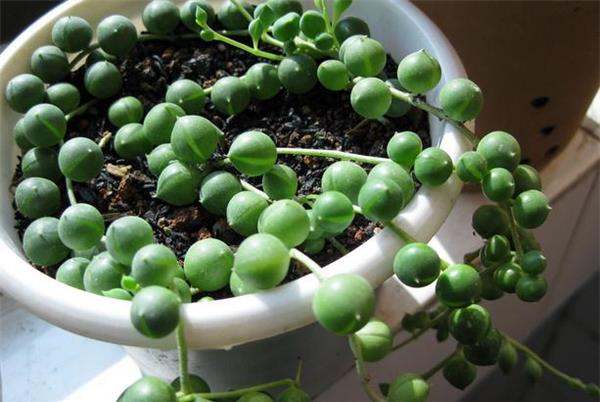
Introduction to String of Pearls
String of Pearls is also known as Jade Beads, Lover's Tears, String of Beads Succulent, Jade Beads, Green Bell, and Green Bells because it is made up of strings of plump, full, emerald-green oval little leaves. Its flowering period is generally from December of the current year to January of the following year.
String of Pearls likes soil rich in organic matter that is loose and fertile. It grows best in a warm environment with relatively high air humidity and strong indirect light. In summer, avoid high temperatures and high humidity, otherwise the stems rot very easily and the plant dies. Potted plants can be grown in a rain-sheltered, shaded place. After autumn arrives, the plant resumes growth, so light should be increased and liquid fertilizer applied as a top dressing.
Morphological characteristics of String of Pearls
String of Pearls has round, plump, fleshy, heart-shaped leaves, like strings of wind chimes swaying in the wind; these are its leaves. Because the leaves are alternate, rather sparse, heart-shaped, dark green, thick and juicy, and extremely bead-like, it has the elegant names Buddha's Beads, Buddha Beads, Green Grapes, and Green Bells. Some people also call it String of Beads Succulent and Lover's Tears. The scientific name of String of Pearls is Senecio rowleyanus, a perennial evergreen trailing succulent herb in the genus Senecio of the family Asteraceae. The stems are slender, and the whole plant is covered with a white powdery bloom. The flower heads are terminal, 3-4 cm long, curved-hook shaped, and white to light brown.
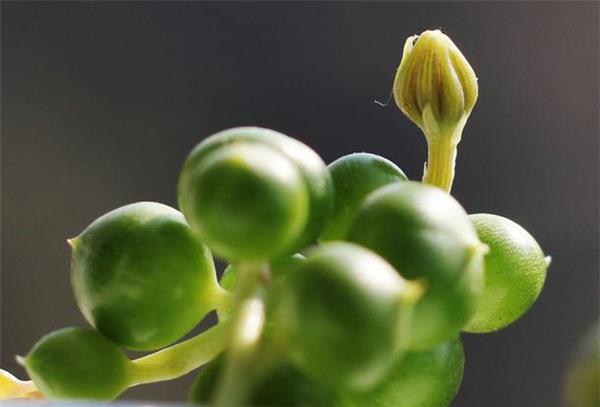
How to grow String of Pearls
1. Temperature control
String of Pearls likes a warm, humid climate and is not cold-tolerant. It grows fastest at 20-24°C, stops growing above 30°C, and its leaves easily turn yellow with dry tips. Therefore, in summer, prevent heat and lower the temperature with attention to ventilation; in winter, grow it in a greenhouse or indoors, with 10°C being suitable for overwintering, and do not let it go below 5°C.
2. Light regulation
When growing it outdoors in summer, pay attention to shading so the light is not too strong, otherwise sunscald occurs very easily. When overwintering in a greenhouse or indoors in winter, pay attention to light exposure to prevent the leaf color from fading due to insufficient light.
3. Water and fertilizer regulation
During the peak growing seasons of spring and autumn, watering should be sufficient, the potting soil should be kept moist often, and the leaves and stems should frequently be sprayed with clean water close to room temperature to prevent dry tips, but waterlogging must be avoided. During the peak growing season, apply a dilute liquid fertilizer once every half month; in winter, water less and stop top dressing.
4. Pruning and repotting
As the plant grows larger, to maintain a good plant shape, old leaves at the base should be pruned frequently. In addition, String of Pearls has strong sprouting ability and grows fast, easily filling the pot, so it should be repotted once every two years.
5. Pest control
String of Pearls grows in dense clumps with poor ventilation and is susceptible to scale insects, so prevention should come first. If scale insects occur, use a 50% malathion emulsifiable concentrate at 1000-1500 times dilution, spraying once every 7 days, for 2-3 consecutive sprays.
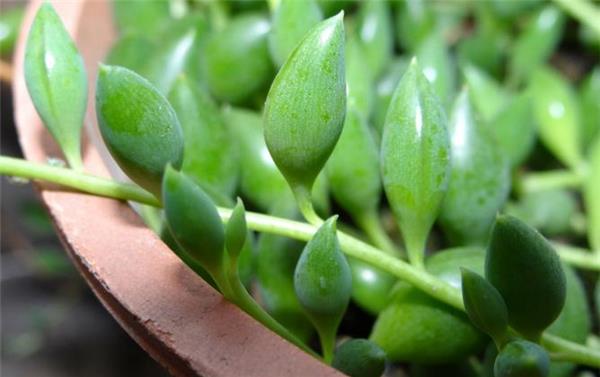
Can String of Pearls be grown hydroponically?
The answer is no. Spider plants that can be grown hydroponically are generally hydroponic spider plants. String of Pearls is mainly grown in soil. Because it likes warm, humid, and semi-shaded environments, one very unique trait of String of Pearls is that it is relatively drought-tolerant and cold-tolerant. It also likes soil rich in organic matter that is loose and fertile.
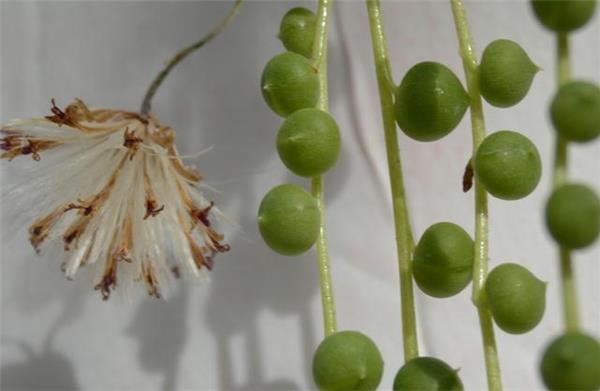
That is all for the introduction to how to grow String of Pearls. I believe that after reading this, everyone has gained some understanding of String of Pearls. If any friends want to grow String of Pearls, you can refer to the relevant points I have introduced for you.