Is the jade plant (Crassula ovata) toxic? A detailed explanation of the jade plant toxicity issue
Thanks to its own characteristics, the jade plant has won people's affection. So, is the jade plant toxic? Some friends may not yet be especially clear on this, so today I will give a brief introduction for everyone, and let us take a look together.
Introduction to the jade plant
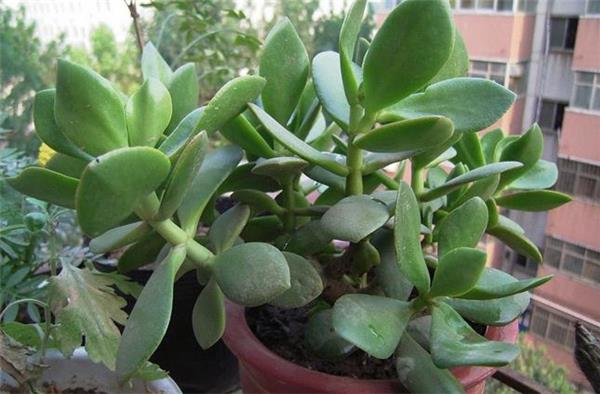
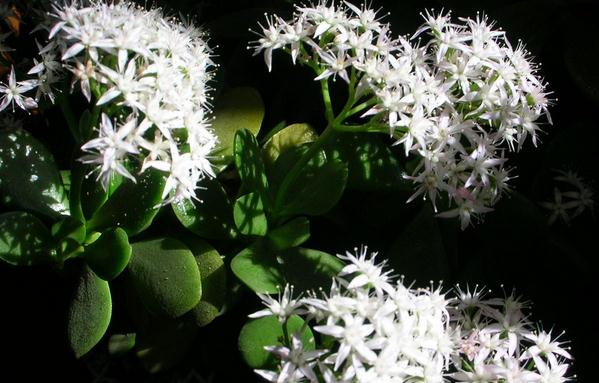
The jade plant has thick, fleshy branches and leaves, is emerald green all year round, has a peculiar leaf shape and a stately plant form, is easy to cultivate and simple to manage. It is suitable for pot cultivation and can be displayed on a balcony or as an accent on an indoor table, appearing very delicate and elegant. Its crown is tall and graceful, its stems and leaves are emerald green, and its white flowers borne at the tips are very elegant and distinctive. If matched with a pot stand and gravel and worked into a small bonsai, the jade plant is suitable for potting, and can also be trained into the posture of an old tree stump, making it even more attractive when decorating a tea table or desk. However, its leaf sap is toxic and can cause blindness. The latest research reports that medicine made from jade plant extract can effectively treat diabetes.
The jade plant is a green shrub plant, emerald green all year round, with a distinctive leaf shape and oval, fleshy leaf blades. It produces white or light pink flowers at the top, fresh and elegant, suitable for pot cultivation and easy to care for. Next, let's talk about the plant's cultivation methods.
1. Growth habits
The jade plant is suited to growing in a place with sufficient light, warmth and dryness. Its suitable temperature range is 12-32°C. In winter the temperature must be above 7°C, and the soil must be a sandy soil with good drainage. It is drought-tolerant but not cold-tolerant, and can be placed in a semi-shaded environment to receive scattered light, but must not be placed under strong light.
2. Propagation methods
Cuttings are usually used, taking about 8-10cm top branches during the vigorous growth period, and after they have dried a little, inserting them into a prepared sand bed; roots will grow after about 3 weeks. In addition, single-leaf cuttings can also be used for propagation: after cutting the leaf, use the same method, and roots will grow after about 4 weeks; when the roots have grown to 2-3cm, they can be put into a pot.
3. Cultivation methods
The jade plant grows very fast, so it must not be watered too much; during growth it only needs watering 2-3 times a week. Because it is relatively drought-tolerant, be sure to water less in weather with high temperature and high humidity. In summer it is prone to water shortage, which can cause yellowing and leaf drop, so please place it in a semi-shaded spot. In spring it needs repotting and additional soil; in autumn continuously reduce the amount of watering; from August to October, because it enters the growth period, it needs increased sunlight exposure. Before putting it into the greenhouse, always keep it in a lighted place and do not fertilize; it can be watered once every two weeks, with half the amount used in summer.
Is the jade plant toxic?
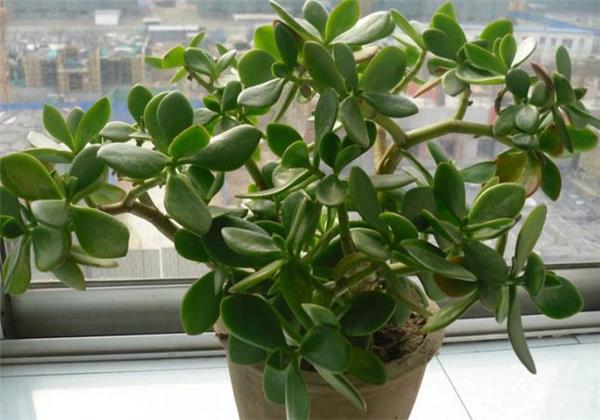
Some people say the sap of the jade plant is toxic, and that if young children accidentally eat the sap it will cause skin redness, swelling, pain and blistering, and if it accidentally splashes into the eyes it can cause blindness. This claim is a misinformation; a large amount of foreign material shows that no toxic record has been found. The jade plant is also called fleshy everbright, and perhaps some people confuse it with the everbright of the genus Rohdea. Because everbright contains toxic enzymes, and the sap of its stems and leaves is strongly irritating to the skin; if infants and young children accidentally bite it, it can cause throat edema and even paralyze the vocal cords and cause loss of voice, thus creating the misinformation about the jade plant's toxicity.
Can the jade plant purify the air?
As a green plant, the jade plant can play a partial role in purifying the air, and placing it indoors can also prevent part of radiation. During the day it closes the stomata on its leaf surface, and at night it absorbs CO2 from the air and stores it for photosynthesis during the day, and releases O2. In addition, medicines developed from its extract are of some help in treating diabetes.
That is all for the related introduction to the jade plant. I believe that after reading it, everyone has gained some understanding of the jade plant. I hope the related knowledge introduced today can be helpful to everyone.