How to Grow Succulent Plants: Cultivation Methods for Succulent Plants
Succulent plants have won widespread popularity thanks to their own special characteristics. So how should succulent plants be cultivated? Some friends may not yet have a particularly clear understanding of this, so let us take a look together.
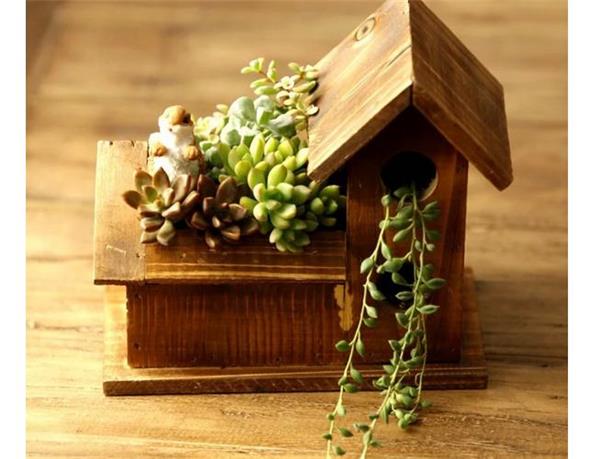
Introduction to Succulent Plants
1. White Peony (Graptoveria 'Titubans')
In sunlight, the leaf tips of White Peony have a slight pink color, the leaves are arranged in a rosette pattern, with an obovate leaf shape, and the leaves look like a blooming peony flower. The open flowers extend from the leaf axils, with thick yellow petals, and all 5 petals have fine red dots.
2. Hongzhilian (Echeveria 'Hongzhilian')
It has long key-shaped green leaves arranged in a rosette pattern. After the cool of autumn, following direct sunlight, the stems and leaves turn red, some turning entirely red, making it quite beautiful to view. Over long periods of growth it becomes trailing, and its small white flowers bring even more beauty to enjoy.
3. Jiwalian (Echeveria 'Chihuahuaensis')
The small plant's rosette leaf disc is very compact. The small pointed leaves are ovate and rather thick, surrounded by a white powdery coating over blue-green, with the leaf margins a beautiful deep pink. The red leaf tips are especially beautiful, making it a highly ornamental succulent plant.
4. Jinhongxing (Echeveria pulvinata)
The plant has branches. The leaves are thick and fleshy, oblanceolate; the green leaves lie flat, their surface covered with fine short white hairs, and both the leaf margins and the upper part of the leaves are deep red. It bears a spike inflorescence, blooming bell-shaped small flowers in winter and early spring, with green perianth and inner petals ranging from orange-red to red, making the flowers extremely bright and vivid.
5. Shuangzhichao (Echeveria 'Frosty Morn')
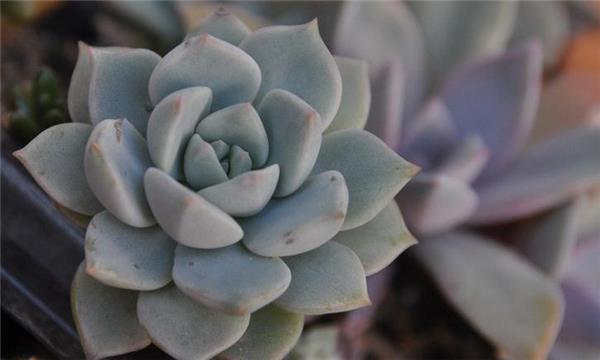
Because Frosty Morn is especially easy to grow, it is ordinary; because Frosty Morn has a beautiful appearance, with thick leaves that are flat and elongated in a spindle shape, the leaf surface covered with a white powder, and plump leaves that take on a hazy, dreamy pale pink-purple, with a blush of red at the leaf tips and margins, it is also extraordinary.
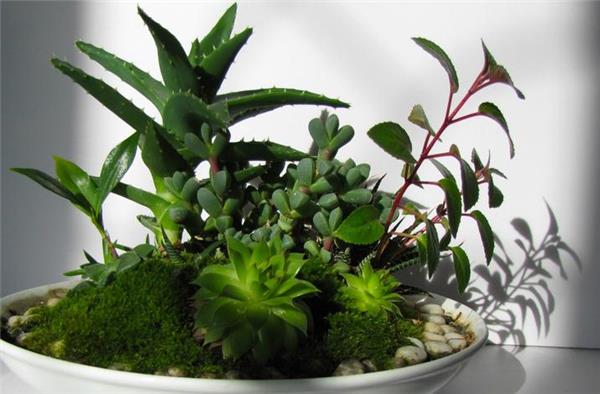
Planting Succulent Plants
The growing medium requires soil that is loose and airy, with good drainage, but with a certain water-holding capacity, and neutral or slightly acidic. For highland globular types (Echinocereus, Echinocactus, and Gymnocalycium) and Ariocarpus, a little more rice-hull ash and small weathered rock particles can be added. For tall columnar types, coarse quartz sand can be mixed in to anchor the plant.
Transplanting and planting should generally be carried out during the recovery period just after the plant's dormancy has ended. Before planting, the roots should be trimmed. After trimming the roots, let them dry for a few days, then plant in moist growing medium; after planting, provide appropriate shade and do not rush to water, and do not fertilize within one month.
Regulation of temperature and light: Cacti and succulents generally prefer warmth and a large temperature difference between day and night. Except for epiphytic types of cacti and species of the genus Haworthia, light should be sufficient but soft. For this reason, except for a few flat-stemmed jointed and tall columnar species and certain Agave plants, they should generally be cultivated in a greenhouse year-round.
Watering and fertilizing: Watering should be carried out according to their growth state. Whether a type is dormant in winter or dormant in summer, watering into the pot should be stopped during the dormant period. However, types dormant in summer must have water exposed in walkways and other places to maintain a certain air humidity. For plants in vigorous growth, their water needs should be fully met.
Pest and disease control: Pest and disease control should mainly focus on prevention. First, the environment must be clean and tidy. Strict checks must be made on introduced plants, and they may be placed in the shed only once it is confirmed that there are no pests or diseases. Concentrated pesticide spraying in the shed during the three periods of early winter, early spring, and before the plum rain has twice the result with half the effort. In addition, disinfecting the growing medium has a very good preventive effect.
That is all for the related introduction to succulent plants. I believe that after reading this, everyone has gained some understanding of succulent plants. I hope the related knowledge introduced today can be helpful to everyone.