When Does Night-blooming Cereus Bloom? A Detailed Guide to Its Flowering Period
Night-blooming jasmine (Cestrum nocturnum) is a vine-like shrub, not the rose-like plant with stems and leaves that we usually imagine. Its petals are yellow-green, and whenever a summer night falls, clusters of small bell-shaped flowers quietly bloom. When the moon rises above the treetops, it sends out waves of delicate fragrance, not only delighting the bustling world but also driving away mosquitoes, which is why this flower is always praised and sung about. Everyone loves night-blooming jasmine, and there is also a rather interesting bit of trivia: many people have heard of night-blooming jasmine, and many have also heard of tuberose, but many do not know that they refer to the same plant.
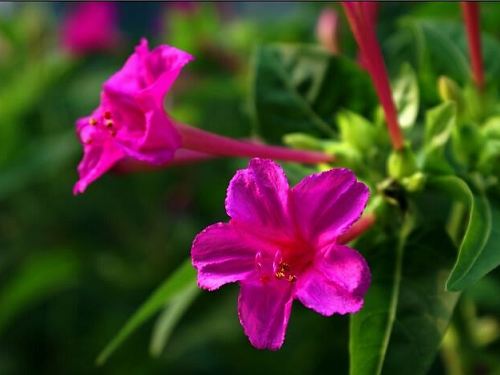
Generally speaking, the flowering period of night-blooming jasmine is from May to October. The reason for such a wide span is that it is affected by variety, temperature, humidity, soil and the climate of the north and south, thus presenting different seasons. But we can already see that night-blooming jasmine blooms on summer nights, and this is precisely what makes it hazy and elusive. In the north, the peak blooming season is in late June, while in the south it is mostly in August to September. This is because the summer heat in the south causes very high air humidity, which is suitable for night-blooming jasmine to bloom profusely.
So why does night-blooming jasmine choose to bloom in the pitch-dark night? There are two main reasons. The first is that this plant relies on ugly-looking moths for pollination, unlike other flowers that rely on bees and other small creatures, and moths only appear at night. So in order to attract night moths to pollinate it, night-blooming jasmine chose to be overwhelmingly fragrant at night. This is the plant's ability to adjust itself to its environment. But having heard this, do you still have the habit of picking one and holding it to the tip of your nose for a light sniff?
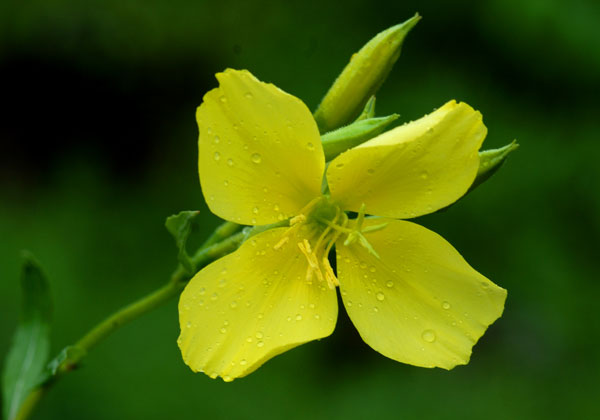
Another reason is that the stomata of night-blooming jasmine are completely opposite to those of many flowers. For other flowers, when air humidity is high, the stomata close somewhat; when air humidity is low, they open wide. Night-blooming jasmine is the reverse. If the air humidity is very high, its stomata open very wide, and the aromatic substances inside can spread out more quickly, producing a strong fragrance. At night, because there is no sun to cause evaporation, the ground temperature drops sharply, cold air descends, and humidity suddenly increases, which is also the reason fog easily forms at night. In such a humid environment, night-blooming jasmine naturally opens more easily, and opens even more intensely.
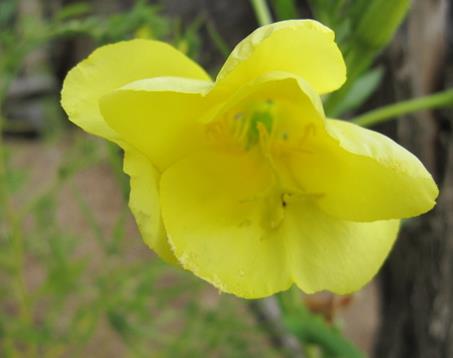
How to grow night-blooming jasmine
Night-blooming jasmine prefers loose, well-drained, organic-rich, slightly acidic soil. So the soil we choose is generally made from peat soil or leaf mold, or even a small amount of farmyard manure, that is, the droppings of various animals. When potting, the bottom should be filled with granular crushed brick pieces to facilitate drainage. A well-ventilated environment should also be chosen. From early May to the end of September, it is suitable to keep it in a sunny spot in the yard or on a balcony. Although it likes plenty of sunlight, it should be protected from harsh midday sun in summer.
If it is the peak growing season in summer, in addition to applying sufficient fertilizer, the potting soil must be kept consistently moist, and if necessary, watered twice a day. If it is a seedling, spray water on the leaves once or twice a day. After winter arrives, it should be moved indoors. If the temperature is below 5°C, the leaves will turn yellow and fall off until the plant dies, so friends in the north should think twice before proceeding. During this process, also note that it is best to fertilize once every two or three months, and pay attention to the prevention and control of pests and diseases.
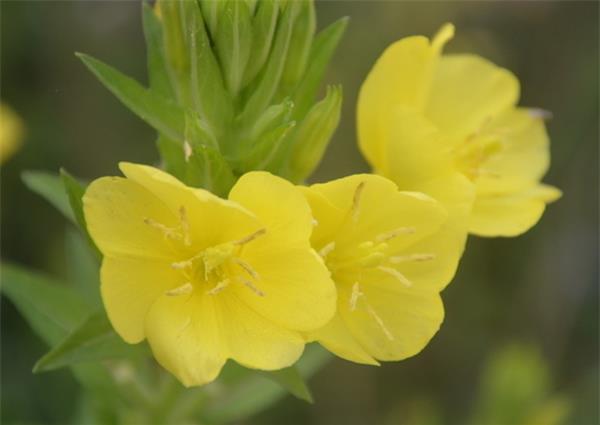
The flowering time of night-blooming jasmine
Night-blooming jasmine is a plant that "sleeps" during the day and blooms at night, releasing fragrance, which is how it got the name "night-blooming jasmine." Does that mean night-blooming jasmine can only bloom and release fragrance at night?
Scientists have proven through experiments that this is not the case. The blooming and fragrance release of night-blooming jasmine is actually more closely related to air humidity. Whether day or night, as long as the humidity in the air is high, night-blooming jasmine will release a rich fragrance. Let us do an experiment. During the day, place basins full of water around the night-blooming jasmine to maintain the humidity of the surrounding air. After a few hours, the stomata of the night-blooming jasmine petals will open and release a rich floral fragrance. Experienced flower growers also know that night-blooming jasmine will also release fragrance on relatively humid, rainy and overcast days. It can be seen that night-blooming jasmine does not only release fragrance at night; it is simply that because the air at night is somewhat more humid, there are more opportunities for the flowers to open and release fragrance.
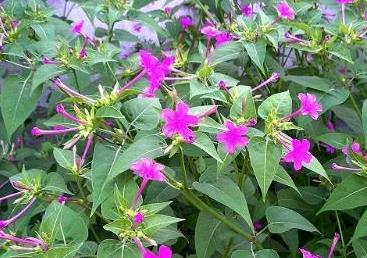
Biologists point out that every living organism is controlled by a complex innate physiological rhythm regulation mechanism, and this regulation mechanism is what is called the "biological clock" within the organism. Since a French scientist discovered this physiological function in plants in 1729, people have gradually mapped out the flowering patterns of some plants. For example, distinguished by month: in January, wintersweet blooms; in February, plum blossoms bloom in full glory; in March, winter jasmine announces spring; in April, peonies display national beauty and heavenly fragrance; in May, Chinese peonies put forth stamens; in June, lilacs release fragrance; in July, wild lilies bloom; in August, garden balsam vies in beauty; in September, osmanthus sends hidden fragrance as the moon floats; in October, hibiscus emerges from the water to compete in beauty; in November, chrysanthemums bloom with fragrance throughout the city; in December, coral bean stands prettily on the branches. If distinguished by time of day: at 3 a.m., cnidium flowers open; at 4 a.m., morning glories blow their trumpets; at 5 a.m., roses come over the wall; at 6 a.m., black nightshade flowers open; at 7 a.m., Chinese peonies put forth stamens on a thousand branches; at 8 a.m., lotuses open; at 9 a.m., globeflowers bloom; at 10 a.m., purslane flowers open; at 12 noon, purslane appears; at 17:00, jasmine blooms; at 20:00, night-blooming jasmine releases fragrance; at 21:00, the night-blooming cereus "flashes briefly"; at 24:00, cacti open. These "biological clocks," under normal circumstances, absolutely will not "strike" the wrong time.
However, just as the blooming of night-blooming jasmine is not restricted by darkness, the flowering patterns of flowers of its kind are not only restricted by internal genetic factors such as the "biological clock," but are also affected by external environmental conditions. Therefore, their flowering times are not unchanging either.