Amaryllis and Complete Care Guide: Is Amaryllis Toxic?
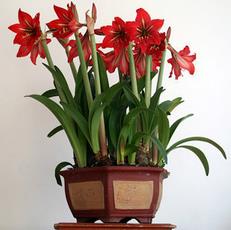
Amaryllis, also known as Barbados lily, trumpet lily, amaryllis lily, belladonna lily, and oxblood lily, is a perennial herbaceous plant of the genus Hippeastrum in the Amaryllidaceae family. There are many different cultivars of amaryllis, with thick glossy leaves and a wide range of soft, vivid flower colors, and large, full blooms. It is suitable for pot culture displayed in living rooms, studies, and on windowsills.
Morphological characteristics:
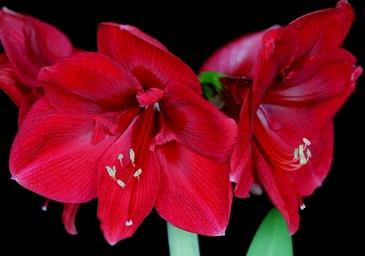
The amaryllis flower scape is hollow and covered with a white powdery bloom, bearing 2-6 flowers at the top. The flowers are trumpet-shaped. The flowering period includes late autumn and spring to early summer, and some cultivars even bloom from early autumn to the Spring Festival (the striped Barbados lily). Most modern cultivated forms are hybrids with large blooms and vivid colors, including bright red, rose red, orange-red, pale red, white, blue-purple, green, pink with white, and red with yellow; apart from pure blue, pure black, and pure green, their flower colors can cover all other colors in the spectrum. The largest flower diameter can reach more than 20 cm, and there are also double-flowered cultivars. Amaryllis has as many cultivars as tulips; its range of flower colors exceeds that of hyacinths; its flower shapes are so unusual that even lilies are outdone; and its combination of ornamental flowers and foliage is rare among bulbous plants.
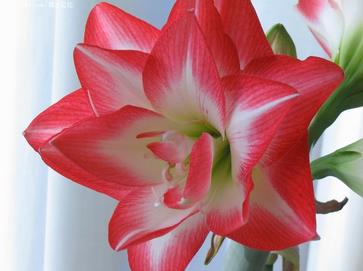
Common cultivars:
Common cultivated amaryllis cultivars include:
1. Red Lion, with deep red flowers.
2. Hercules, with orange-red flowers.
3. Rilona, with pale orange-red flowers.
3. Telstar, a large-flowered type, with bright red flowers.
4. Flower Record, with orange-red flowers and broad white longitudinal stripes.
5. Souvereign, with orange flowers.
6. Minerva, a large-flowered type, with red flowers and a white center.
7. Picotee, with white flowers tinged with pale green and red edges.
New cultivars introduced in Europe that are suitable for pot culture:
1. Las Vegas, a bicolor cultivar of pink and white.
2. Calimero, a small-flowered type, with bright red flowers.
3. Amigo, a late-flowering type, with deep red flowers, considered the best pot cultivar.
4. Nagano, with orange-red flowers and a snow-white center.
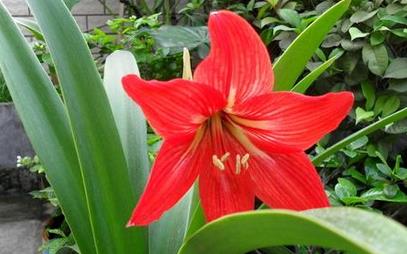
Application value:
Amaryllis is mainly used for ornamental purposes. Its leaves are thick and glossy, its flower colors are soft and vivid, and its blooms are large and full. It is suitable for pot culture displayed in living rooms, studies, and on windowsills.
In addition, the bulb of amaryllis can also be used as medicine, with the effects of promoting blood circulation and detoxifying, and dispersing blood stasis and reducing swelling. It can be used to treat various unnamed swellings and toxicities, bruises and injuries, and blood stasis with redness, swelling, and pain.
Origin and distribution:
Amaryllis is native to the Peru and Brazil region and is widely cultivated in various countries.
Growth habits:
Amaryllis prefers a warm and humid climate. The suitable growing temperature is 18°C-25°C. It dislikes extreme heat, and sunlight should not be too intense, so it should be kept under a shade frame. It is afraid of waterlogging. During the winter dormant period, it requires a cool climate, ideally 10°C-12°C, and must not go below 5°C. It prefers humus-rich, well-drained sandy loam.
Amaryllis cultivation is simple. In most cases, it can grow luxuriantly just by planting it in soil, and even a bare bulb forgotten in a corner can stubbornly bloom. Amaryllis cultivation is difficult, and during planting one often encounters various obstacles such as bulb rot, degeneration, and pests and diseases. This is especially true for planting imported bulbs, which require more careful treatment; otherwise, after one splendid bloom there may be a long period of silence. Below is a brief introduction to several key steps in amaryllis cultivation:
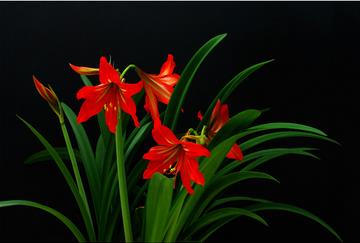
I. Amaryllis planting
The suitable growing temperature for amaryllis is around 20-25°C, which can be used to decide the planting time. For home pot cultivation, you can refer to the following steps:
(1) Clean the bulb. Cut off roots that have already rotted or dried out, while retaining the remaining healthy roots. If the outside of the bulb has multiple layers of brown dried skin, part of it can be peeled off to maximize the elimination of hidden causes of rot.
(2) Rehydrate the bulb. If the bulb has lost a lot of water due to a long storage period, it is best to rehydrate it by soaking the lower-middle part of the bulb in clean water slightly warmer than the ambient temperature for 1 or 2 hours. Experienced growers may add some plant hormones such as gibberellin to the water, which helps rooting and later bulb enlargement, but attention should be paid to the concentration and soaking time, otherwise it may backfire.
(3) Disinfection. This is a key step in planting. Generally, common disinfectants such as carbendazim, chlorothalonil, and thiophanate-methyl can be used according to the instructions. After planting, the used disinfectant solution can be used for watering to disinfect the soil.
(4) Medium selection. With limited planting space, the choice of medium is very important. Amaryllis is best planted in a loose, permeable, slightly acidic medium. The recommended medium is peat : vermiculite : perlite = 2:1:1 or peat : perlite = 1:1. If these are inconvenient, ordinary humus soil can replace peat and river sand can replace perlite. It is best to mix in 10% base fertilizer such as bone meal or superphosphate.
(5) Planting depth. When the bulb is first planted, at least more than half of the bulb should be exposed, and the condition of the bulb should be checked frequently, because during this period the bulb is very prone to rot. After this period has passed and the roots and leaves have grown, cover the bulb with soil up to 1/2 or 2/3 of its height.
(6) Watering. Water thoroughly once after planting, then water again after the potting soil has basically dried out. Before the bulb produces leaves, do not apply additional fertilizer other than the base fertilizer.
(7) Placement environment. After planting, first place it in a cool place at 10-15°C to encourage rooting, then after two weeks move it to a warmer place at 20-25°C so that the flower scape can emerge.
In short, what is done at this stage is mainly for two purposes: preventing rot and achieving successful rooting. If everything is normal, proceed to the next stage.
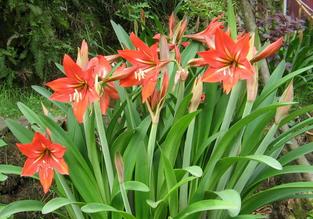
II. Daily care of amaryllis
The first priority in care is still preventing bulb rot, and only after that comes the question of how to make it grow better.
(1) About bulb rot. Bulb rot commonly occurs in two situations, namely rot at the base of the bulb and rot at the center of the bulb. The former is caused by poor water absorption by the bulb in the early planting stage or by carrying pathogens, while the latter mostly occurs during growth due to excessive water accumulation in the center of the bulb or contamination. Compared with the former, the latter is harder to detect and inconvenient to treat, and once it appears, the bulb is usually beyond saving. The best way to prevent bulb rot is frequent inspection and early detection. Once phenomena such as softening of the bulb or abnormal growth of new leaves are found, one must be on guard.
(2) Key points of daily care. Once amaryllis has passed the dangerous period of bulb rot, daily care is very easy, but attention should be paid to the following points:
1. Provide plenty of sunlight. Although amaryllis growth is not demanding regarding sunlight, more sunlight is very beneficial to bulb development.
2. Apply more phosphorus and potassium fertilizer. Amaryllis is naturally fond of fertilizer, and phosphorus and potassium fertilizers should be applied continuously throughout the year to ensure the bulb regains vigor. Especially during the flower bud differentiation period in July and August each year, quick-acting phosphorus and potassium fertilizers should be applied more frequently.
3. Handling of "stuck scape." Amaryllis can also show a phenomenon similar to that of clivia, where the flower scape blooms before it has fully elongated. Apart from poor development of the bulb itself, this can be regulated by creating a day-night temperature difference of 8-10°C.
4. Handling of rootless flowering. If the flower scape has emerged but the bulb has not rooted, the flower scape should be decisively cut off and placed in water, to prevent further depletion of the bulb.
5. Timing of removing the flower scape after flowering. After amaryllis flowers fade, if seed is not wanted, general cultivation books require cutting off the flower scape to avoid nutrient consumption. However, practice has shown that it is more reasonable not to cut off the flower scape but only remove the spent flowers, and then remove the scape after it has completely dried out: first, the flower scape can still carry out photosynthesis and continue to produce nutrients; second, it avoids pouring water into the shortened flower scape and causing heart rot; third, cutting off a fresh flower scape loses a considerable amount of nutrients.
III. Prevention and control of amaryllis pests and diseases
Amaryllis almost never suffers from insect pests. There are two common diseases: red spot disease and mosaic disease.
(1) Red spot disease. Light red or vermilion patches appear on the affected parts, and after continued expansion they become brown patches with red edges. After infection, the diseased parts grow slowly, affecting plant growth and flowering. This disease is caused by fungi and is a common disease. It can be prevented and controlled with general disinfectants such as carbendazim and thiophanate-methyl.
(2) Mosaic disease. Diseased plants show chlorotic stripes of varying lengths on the leaves, especially obvious on new leaves. Although infection does not immediately affect growth and flowering, the flowers, leaves, and bulbs of diseased plants will become smaller year by year, and it spreads at an alarming rate through contact, soil, and other routes. This disease is caused by a virus, and there is currently no effective prevention or control method; it is equivalent to plant "cancer." When symptoms first appear or are mild, applying antiviral agents such as Virus-Bike can provide some degree of relief. The fundamental response is to isolate diseased plants to prevent transmission.
Common problems with amaryllis bulbs
1. Bulb rot: There are often two situations, rot at the base of the bulb and rot at the center of the bulb. The former is caused by poor water absorption by the bulb in the early planting stage or by carrying pathogens. Once discovered, clean the rotted area, apply a disinfectant, and keep it dry to cure it; the latter is mostly caused by excessive water accumulation in the center of the bulb during growth, and once it occurs there is almost no remedy.
2. Rootless flowering: If the flower scape has already emerged before the bulb has rooted, cut off the flower scape when the buds have opened but not yet bloomed (it can be placed in water as a cut flower), to avoid excessive nutrient depletion of the bulb affecting reflowering the following year.
3. Removal of the flower scape: After amaryllis flowers fade, if seed is not wanted, promptly cut off the spent flowers and keep the flower scape until it dries out before removing it. This can avoid the danger of cutting off the flower scape directly after flowering and water flowing into the shortened flower scape and causing heart rot of the bulb.
Is amaryllis toxic?
Amaryllis belongs to the Amaryllidaceae family, and the bulbs of Amaryllidaceae plants all contain lycorine and narcissine. It is best to keep it in a high place where children cannot reach it. Amaryllis has vivid flower colors and graceful leaves, and is a flower with high ornamental value. It should not be abandoned for cultivation just because it is slightly toxic. In fact, many flowers are toxic, such as narcissus, jasmine, croton, and crown of thorns. We should not give up eating for fear of choking. As long as care is taken not to touch its sap, and hands are washed promptly after contact, there is no problem.
Can amaryllis be placed indoors?
Amaryllis should not be placed in the room where you sleep, because in sunlight plants carry out photosynthesis, taking in carbon dioxide and releasing oxygen, while without sunlight plants also need oxygen. Amaryllis can be placed in the living room.
After two weeks, move it to a warmer place at 20-25°C so that the flower scape can emerge.In short, what is done at this stage is mainly for two purposes: preventing rot and achieving successful rooting. If everything is normal, proceed to the next stage.
II. Daily care of amaryllis
The first priority in care is still preventing bulb rot, and only after that comes the question of how to make it grow better.
(1) About bulb rot. Bulb rot commonly occurs in two situations, namely rot at the base of the bulb and rot at the center of the bulb. The former is caused by poor water absorption by the bulb in the early planting stage or by carrying pathogens, while the latter mostly occurs during growth due to excessive water accumulation in the center of the bulb or contamination. Compared with the former, the latter is harder to detect and inconvenient to treat, and once it appears, the bulb is usually beyond saving. The best way to prevent bulb rot is frequent inspection and early detection. Once phenomena such as softening of the bulb or abnormal growth of new leaves are found, one must be on guard.
(2) Key points of daily care. Once amaryllis has passed the dangerous period of bulb rot, daily care is very easy, but attention should be paid to the following points:
1. Provide plenty of sunlight. Although amaryllis growth is not demanding regarding sunlight, more sunlight is very beneficial to bulb development.
2. Apply more phosphorus and potassium fertilizer. Amaryllis is naturally fond of fertilizer, and phosphorus and potassium fertilizers should be applied continuously throughout the year to ensure the bulb regains vigor. Especially during the flower bud differentiation period in July and August each year, quick-acting phosphorus and potassium fertilizers should be applied more frequently.
3. Handling of "stuck scape." Amaryllis can also show a phenomenon similar to that of clivia, where the flower scape blooms before it has fully elongated. Apart from poor development of the bulb itself, this can be regulated by creating a day-night temperature difference of 8-10°C.
4. Handling of rootless flowering. If the flower scape has emerged but the bulb has not rooted, the flower scape should be decisively cut off and placed in water, to prevent further depletion of the bulb.
5. Timing of removing the flower scape after flowering. After amaryllis flowers fade, if seed is not wanted, general cultivation books require cutting off the flower scape to avoid nutrient consumption. However, practice has shown that it is more reasonable not to cut off the flower scape but only remove the spent flowers, and then remove the scape after it has completely dried out: first, the flower scape can still carry out photosynthesis and continue to produce nutrients; second, it avoids pouring water into the shortened flower scape and causing heart rot; third, cutting off a fresh flower scape loses a considerable amount of nutrients.
III. Prevention and control of amaryllis pests and diseases
Amaryllis almost never suffers from insect pests. There are two common diseases: red spot disease and mosaic disease.
(1) Red spot disease. Light red or vermilion patches appear on the affected parts, and after continued expansion they become brown patches with red edges. After infection, the diseased parts grow slowly, affecting plant growth and flowering. This disease is caused by fungi and is a common disease. It can be prevented and controlled with general disinfectants such as carbendazim and thiophanate-methyl.
(2) Mosaic disease. Diseased plants show chlorotic stripes of varying lengths on the leaves, especially obvious on new leaves. Although infection does not immediately affect growth and flowering, the flowers, leaves, and bulbs of diseased plants will become smaller year by year, and it spreads at an alarming rate through contact, soil, and other routes. This disease is caused by a virus, and there is currently no effective prevention or control method; it is equivalent to plant "cancer." When symptoms first appear or are mild, applying antiviral agents such as Virus-Bike can provide some degree of relief. The fundamental response is to isolate diseased plants to prevent transmission.
Common problems with amaryllis bulbs
1. Bulb rot: There are often two situations, rot at the base of the bulb and rot at the center of the bulb. The former is caused by poor water absorption by the bulb in the early planting stage or by carrying pathogens. Once discovered, clean the rotted area, apply a disinfectant, and keep it dry to cure it; the latter is mostly caused by excessive water accumulation in the center of the bulb during growth, and once it occurs there is almost no remedy.
2. Rootless flowering: If the flower scape has already emerged before the bulb has rooted, cut off the flower scape when the buds have opened but not yet bloomed (it can be placed in water as a cut flower), to avoid excessive nutrient depletion of the bulb affecting reflowering the following year.
3. Removal of the flower scape: After amaryllis flowers fade, if seed is not wanted, promptly cut off the spent flowers and keep the flower scape until it dries out before removing it. This can avoid the danger of cutting off the flower scape directly after flowering and water flowing into the shortened flower scape and causing heart rot of the bulb.
Is amaryllis toxic?
Amaryllis belongs to the Amaryllidaceae family, and the bulbs of Amaryllidaceae plants all contain lycorine and narcissine. It is best to keep it in a high place where children cannot reach it. Amaryllis has vivid flower colors and graceful leaves, and is a flower with high ornamental value. It should not be abandoned for cultivation just because it is slightly toxic. In fact, many flowers are toxic, such as narcissus, jasmine, croton, and crown of thorns. We should not give up eating for fear of choking. As long as care is taken not to touch its sap, and hands are washed promptly after contact, there is no problem.
Can amaryllis be placed indoors?
Amaryllis should not be placed in the room where you sleep, because in sunlight plants carry out photosynthesis, taking in carbon dioxide and releasing oxygen, while without sunlight plants also need oxygen. Amaryllis can be placed in the living room.