How to grow baby's breath? Learn the cultivation methods in one article
Many friends are not particularly familiar with the cultivation methods of baby's breath, and problems always arise during the growing process. Today I will briefly introduce the cultivation methods of baby's breath for everyone, let's take a look together.
Introduction to baby's breath
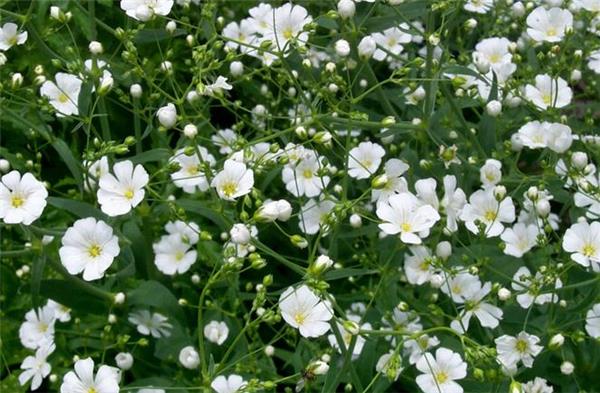
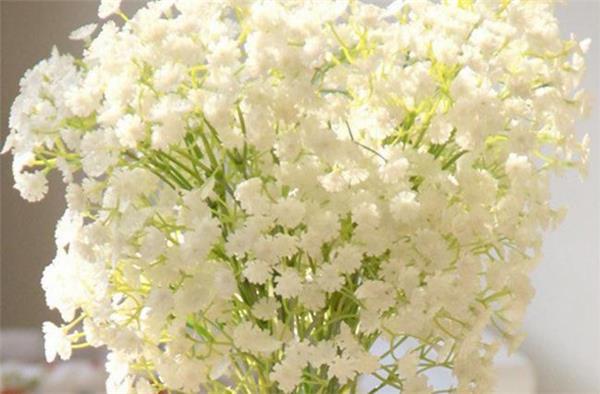
Baby's breath, also called baby's breath flower, is a flowering ornamental plant belonging to the Caryophyllaceae family, Gypsophila genus. Its flowers are delicate and small, with a fluffy feel, giving people a hazy beauty. Whether in appearance or temperament, it presents an elegant and refined posture. Especially when baby's breath flowers grow in a cluster, the ornamental effect is very good. As today's most popular cut flower, its expensive price tag cannot hinder its popularity.
Native to Europe, northern Africa and central and western Asia, baby's breath by nature loves a cool and sunny environment, and grows best especially in a ventilated environment with moderate temperature. Its most suitable temperature is 15-25°C; exceeding this range will cause a rosette-like clustering phenomenon, with only stems growing and no flowers.
How to grow baby's breath
Fertilizer and water: Baby's breath loves heavy fertilization but has high requirements for water and cannot take too much. In the early stage of growth, apply more nitrogen fertilizer, and in the later stage mainly phosphorus and potassium fertilizer. After planting is completed, topdressing should be done in stages. Water control must be strict, and absolutely not excessive, otherwise water accumulation will cause slow growth or even root rot and death. Therefore, baby's breath planted in the open field should also have a shed built to shelter it from rain to prevent death.
Pests and diseases: What baby's breath is most prone to is stem rot, which is also the most fatal disease. Disease prevention and control should focus on prevention, so before planting it should be sprayed with formaldehyde solution for disinfection to prevent the occurrence of disease. As for insect pests, common pests such as mites and aphids are more numerous, and prevention and control are relatively convenient; spraying with 1000 times dilution of dicofol and 1500 times dilution of fenvalerate is sufficient.
Propagation methods of baby's breath
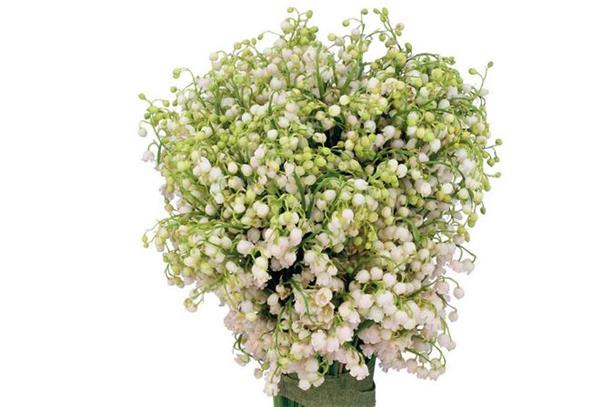
The propagation of baby's breath mainly includes seed sowing propagation and cutting propagation.
The so-called seed sowing propagation method is to take the fruit after the seeds mature, then sow them, generally sowing immediately after harvesting; sowing in mid-September is most beneficial, and sowing in March of the following year is also acceptable. Of course, autumn sowing produces higher quality flowers and a longer flowering period.
The so-called cutting propagation method refers to selecting vigorously growing plants for tissue culture, then pinching the tips multiple times to promote side branches. Then, after the temperature is suitable, cut 5 to 6 cm branches from the mother plant as cuttings, then control the temperature and humidity within a certain range and provide shading treatment; generally roots will form after half a month. It should be noted that the control of temperature and humidity must be accurate; generally the relative humidity should be kept above 95%, and the temperature controlled above 15°C.

Varieties of baby's breath
'Fairy': Can also be cultivated in summer, can bloom year-round, flower color pure white.
'Perfect': Not tolerant of low-temperature weather, flowers are relatively large, crystal clear and white, suitable for making corsages and dried flowers.
'Diamond': The plant is relatively short, vigorous and easy to grow, blooms in autumn, flower color pure white.
'Flamingo': Stems and branches are slender, blooms in spring, flower color light red.
'Red Ocean': The stem is thick and sturdy, can bloom from spring to autumn, flower color peach red.
That is all for the related introduction to baby's breath cultivation methods. I believe that after reading it, everyone has gained some understanding of baby's breath cultivation methods. I hope the related knowledge points introduced today can be helpful to everyone.