How do you grow Ice Lantern Haworthia cooperi? Growing methods and precautions
Nowadays many succulent growers like to plant Ice Lantern Haworthia cooperi, and my favorite succulents are the Haworthia cooperi series. Ice Lantern Haworthia cooperi is the finest among the Haworthia cooperi family, named for its fleshy leaves that are as crystal clear and transparent as an ice lantern. Today I will introduce the growing methods and precautions for Ice Lantern Haworthia cooperi.
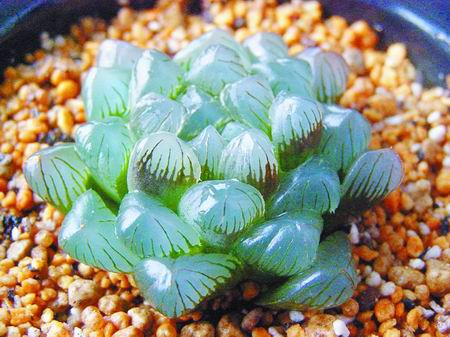
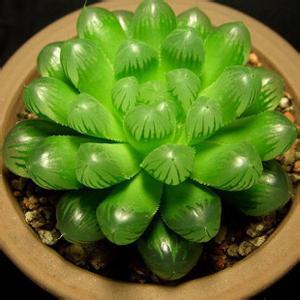
Ice Lantern Haworthia cooperi is a succulent of the Liliaceae family, genus Haworthia (also called the genus Haworthia). There are many kinds of Haworthia cooperi, but Ice Lantern Haworthia cooperi is another variety among them, and also the finest of all. Its fleshy leaves are crystal bright, as clear and transparent as an ice lantern, small and exquisite, very lovely.
Ice Lantern Haworthia cooperi is somewhat similar to the common Haworthia cooperi 'Hime', but there is still a big difference in ornamental value. Ice Lantern Haworthia cooperi has a larger plant form, with a single plant diameter of 7 to 10 cm, and it almost never produces side shoots, let alone grows into a clustered plant. The tip of its fleshy leaf is very transparent, as clear as ice. Its leaves are large and have no tip hairs, only a slight bit when it is a small seedling; the plant form is flat, not like a steamed bun, and Ice Lantern Haworthia cooperi turns purple under strong light.
1. Light
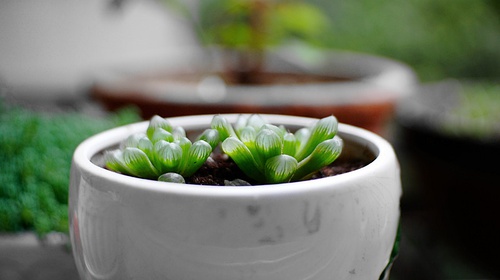
Ice Lantern Haworthia cooperi originates from South Africa and naturally loves a cool environment; its growing season is spring and autumn. It is drought-tolerant but not cold-tolerant, so do not expose it to a hot, humid, scorching environment. Even so, it cannot be placed in too dark a place, as this will cause the plant to become loose in shape with thin, elongated leaves, which is not good for viewing. Therefore, Ice Lantern Haworthia cooperi should be placed in a semi-shaded spot.
2. Watering
Like most plants, when watering Ice Lantern Haworthia cooperi you should follow the principle of "do not water until dry, and water thoroughly when you do." To avoid root rot, the pot should be kept free of standing water and prolonged rain. Once the soil is dry, it needs to be watered immediately; if the soil is too dry, the plant's leaves will shrivel and lose their vitality. Note that to judge whether the potting soil is already dry, you need to dig down about 3 cm with your finger; if it is dry, it needs watering.
3. Humidity
Ice Lantern Haworthia cooperi likes humid air. When the surrounding air is relatively dry, you can use a sprayer to spray water around it, thereby increasing the humidity of its growing environment. If this still does not achieve an obvious effect, you can cover it with a plant cover and spray a suitable amount of water mist inside the cover. To let Ice Lantern Haworthia cooperi breathe, you need to uncover the cover every day and let it breathe for about ten minutes. Note that in the hot summer weather, closed growing cannot be carried out.
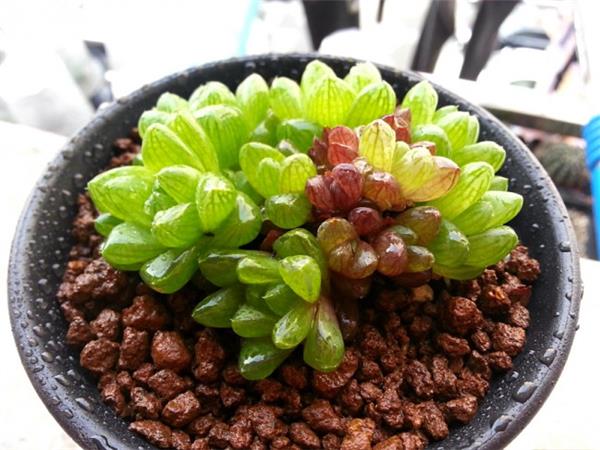
Ice Lantern Haworthia cooperi does not like fertilizer; if you want to repot it, you do not need to fertilize it. If you want the plant to grow a bit faster, you can apply two light fertilizations during its growing seasons of spring and autumn. Note that newly potted plants and weaker Ice Lantern Haworthia cooperi are forbidden to be fertilized, so as to avoid burning the plant to death.
5. Repotting
Unlike many plants, Ice Lantern Haworthia cooperi needs repotting almost every year. This is because the roots of Ice Lantern Haworthia cooperi secrete an acidic substance, which gradually acidifies the soil it relies on for survival and adversely affects the plant's growth. Generally we set its repotting time in spring or autumn. If during the growing season you find that Ice Lantern Haworthia cooperi basically does not grow and its leaves have low water content, it is very likely caused by the soil being too acidic, and it should be repotted immediately.
Precautions for Ice Lantern Haworthia cooperi
Because Ice Lantern Haworthia cooperi has thick cells and dissipates heat slowly, in summer you must be careful not to expose it to prolonged high-temperature sun; usually place it in a cool place with good scattered light, and when watering, pay attention to watering only when dry and watering thoroughly when you do; the most suitable growing temperature for Ice Lantern Haworthia cooperi is 15-28 degrees, and exceeding 35 degrees or falling below 5 degrees will harm its growth.
Ice Lantern Haworthia cooperi has more water in its leaf flesh, so on summer nights pay attention to ventilation and cooling. When planting Ice Lantern Haworthia cooperi, choose soil that drains well and does not easily clump.
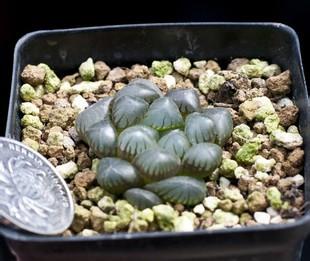
Propagation methods for Ice Lantern Haworthia cooperi: basically by division, sowing, leaf cuttings, beheading and other methods.
Haworthia cooperi propagation can be done by division together with repotting, or in the growing season you can dig up the young plants beside the mother plant; both those with roots and those without roots can survive. Plant those with roots directly, and dry the seedlings without roots for 1 to 2 days, then plant after the wounds have dried. Newly planted plants should not be watered too much, to avoid causing rot, and normal management should be carried out after new roots grow. You can also in the growing season choose healthy, plump fleshy leaves for leaf cuttings; after inserting, keep the potting soil slightly moist, and they will easily root at the base and grow small buds; once the small buds are a bit larger, plant them separately.
Sowing is also one of the propagation methods for Haworthia cooperi, but it requires artificial pollination. The seeds can be sown as soon as they are collected. The sowing soil can be mixed with 3 parts vermiculite and 2 parts leaf mold or peat soil. Before sowing, it is best to sterilize the soil at high temperature to eliminate pathogens and insect eggs inside. After sowing, cover with a piece of glass, and seedlings emerge in about 20 days. After the seedlings emerge, remove the glass, pay attention to ventilation, do not let the soil become too dry, and when the seedlings are too crowded, take care to separate and transplant them. Among the sown seedlings, some variant plants may appear; you can select the young plants with compact plant form, thick fleshy leaves, high transparency of the "window," and prominent vein patterns as seed plants to keep. If you find small seedlings with a leaf color different from the others, also pick them out; perhaps when they grow up they will be a precious variegated variant plant.
You can also in the growing season dig up the young plants beside the mother plant; both those with roots and those without roots can survive. Plant those with roots directly, and dry the seedlings without roots for 1 to 2 days, then plant after the wounds have dried. Newly planted plants should not be watered too much, to avoid causing rot, and normal management should be carried out after new roots grow. You can also in the growing season choose healthy, plump fleshy leaves for leaf cuttings; after inserting, keep the potting soil slightly moist, and they will easily root at the base and grow small buds; once the small buds are a bit larger, plant them separately.
Sowing is also one of the propagation methods for Haworthia cooperi, but it requires artificial pollination. The seeds can be sown as soon as they are collected. The sowing soil can be mixed with 3 parts vermiculite and 2 parts leaf mold or peat soil. Before sowing, it is best to sterilize the soil at high temperature to eliminate pathogens and insect eggs inside. After sowing, cover with a piece of glass, and seedlings emerge in about 20 days. After the seedlings emerge, remove the glass, pay attention to ventilation, do not let the soil become too dry, and when the seedlings are too crowded, take care to separate and transplant them. Among the sown seedlings, some variant plants may appear; you can select the young plants with compact plant form, thick fleshy leaves, high transparency of the "window," and prominent vein patterns as seed plants to keep. If you find small seedlings with a leaf color different from the others, also pick them out; perhaps when they grow up they will be a precious variegated variant plant.