How to Grow Geraniums: Tips from Experienced Growers
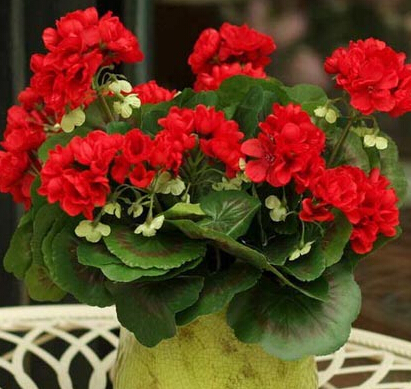
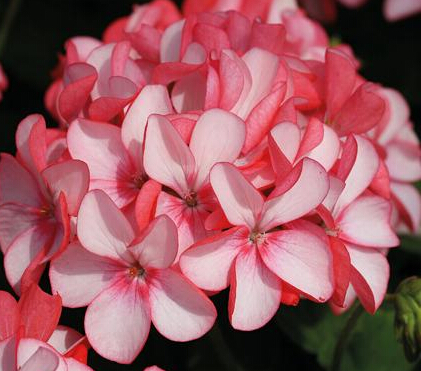
Geranium, also known as zonal geranium, fish geranium, and storksbill, is a perennial herbaceous plant in the family Geraniaceae. It has a long flowering period; except during the hot summer weather, it can bloom from October through the following spring until April-May, with bright and varied flower colors, making it an excellent potted flower. It prefers a warm climate and fertile, loose soil, is drought-tolerant but dislikes waterlogging, and grows poorly during the hot summer high-temperature period, entering a semi-dormant state.
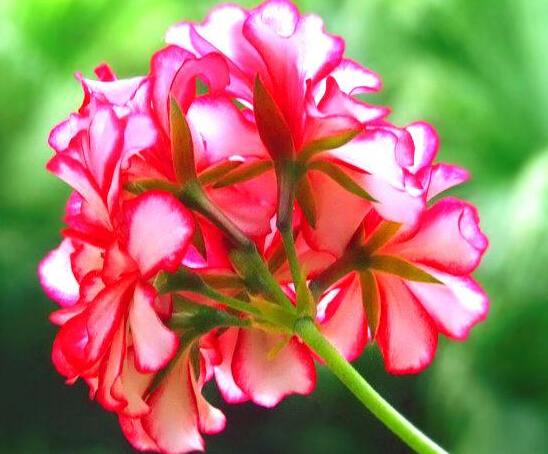
How to Grow Geraniums:
1. Soil: Geraniums are highly adaptable and can grow in various soil types, but grow best in sandy loam rich in humus.
2. Watering: Geraniums prefer dry conditions and dislike excessive moisture. In winter, do not water too much; water only when the soil is dry, keeping it alternately dry and moist. When the soil is wet, the stems become soft and tender, which is unfavorable for the sprouting and opening of flower branches. Prolonged excessive moisture will cause the plant to grow leggy, the flower branch nodes to move upward, and the leaves to gradually yellow and drop off.
3. Sunlight: Geraniums need ample sunlight during the growing season, so in winter they must be placed in a sunny spot. Insufficient light leads to leggy stems and leaves, thin and weak flower stalks, and poor inflorescence development. Flower buds under weak light often fail to open properly and wither prematurely.
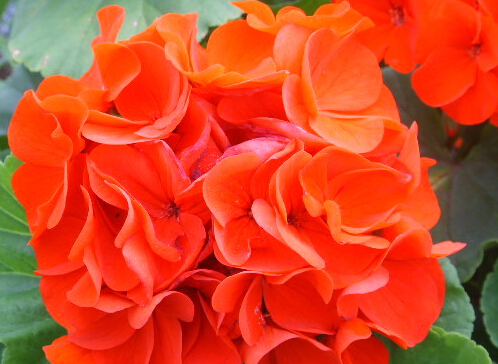
4. Temperature: Geraniums prefer warm winters and cool summers. Indoors in winter, maintaining 10-15°C during the day and above 8°C at night allows them to bloom normally. However, the optimal temperature is 15-20°C.
5. Fertilizing: Geraniums do not like heavy fertilization; too much fertilizer will cause excessive vegetative growth and hinder flowering. To achieve abundant blooms, apply a dilute fertilizer solution (decomposed soybean cake water) once every 1-2 weeks. Applying 800 times diluted potassium dihydrogen phosphate solution every 7-10 days can promote normal flowering.
6. Pests and diseases: When geraniums are poorly ventilated and too humid, they are prone to leaf spot disease and flower wilt disease. Upon discovery, attention should be paid to ventilation, immediately remove diseased flowers and leaves to prevent infection, and spray equal-ratio Bordeaux mixture for control. Main pests include red spider mites and whiteflies that damage leaves and flower branches; they can be controlled by spraying 40% omethoate emulsifiable concentrate at 1000 times dilution.
7. Pruning: To encourage more branching and more blooms in geraniums, pinch the growing tips of the plant multiple times to promote increased branching and flower bud formation. After flowers fade, promptly cut off spent flowers and remove overly dense and weak branches to avoid excessive nutrient consumption. However, in winter when it is cold, heavy pruning is not advisable.
Winter Care for Geraniums
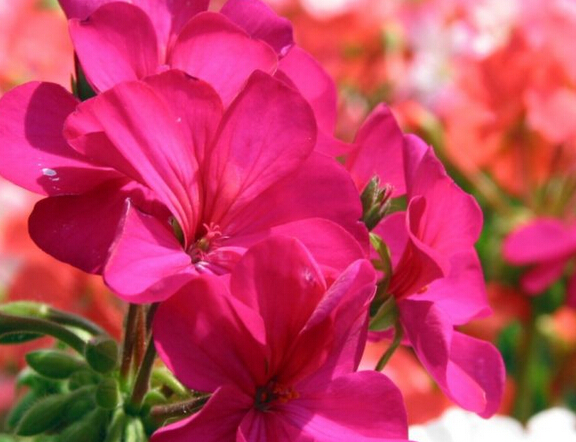
Temperature control and light maintenance: Geraniums like warmth and fear cold. In winter, cold protection measures should be taken. Indoor temperatures should be maintained at 15°C-20°C, and should not drop below 10°C at night. In environments with temperatures that are too low, the plant grows weakly, which is unfavorable for flower bud differentiation, resulting in fewer flowers or even no flowers. However, temperatures above 25°C are also unfavorable for its growth and development. Normally, place the potted plant by a sunny window to allow it to receive sufficient light. If light is insufficient, the plant tends to grow wildly, affecting flower bud formation and even causing already-formed flower buds to wither.
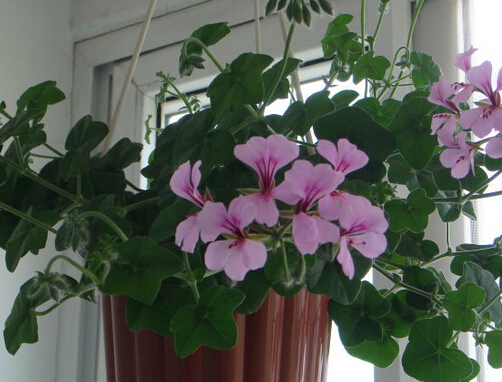
Moderate water and fertilizer: Geraniums fear moisture and tolerate drought. Daily watering should be moderate, generally once every 5-7 days, keeping the potting soil on the dry side with slight moisture. Overwatering can cause leaves to yellow and drop, affecting flowering, and can even cause root rot and death. Regularly spray the leaf surfaces with clean water to keep them clean, which is beneficial for photosynthesis. To keep geraniums blooming continuously after winter begins, sufficient nutrients must be supplied. Apply a dilute liquid fertilizer once every 10 days or so, which can be made from a mixture of soybean cake, hoof pieces, and fish waste water, fermented and then diluted with water before use.
Pruning and pinching: To encourage more branching and more blooms in geraniums, pinch the growing tips of the plant multiple times to promote increased branching and flower bud formation. After flowers fade, promptly cut off spent flowers and remove overly dense and weak branches to avoid excessive nutrient consumption. However, in winter when it is cold, heavy pruning is not advisable.
Main Disease Control for Geraniums:
1. Leaf spot disease. In the early stage, needle-tip-sized, round or irregular brown spots appear on the leaves, which gradually expand into dark brown or reddish-brown lesions. In severe cases, the entire leaf is covered with lesions until it dries up and drops off. The stems and branches also turn black, shrink and rot, and even the leaves on the stems wither and die, leaving only a few leaves at the top.
Preventive measures: a. When cultivating in a greenhouse, do not plant too densely, and pay attention to regular ventilation and light penetration.
b. When watering, avoid pouring water onto the plants and avoid water droplets splashing.
c. Avoid taking cuttings from diseased plants. If diseased leaves and branches are found, promptly cut them off and burn them.
d. During periods of high temperature and humidity, spray 200 times diluted equal-ratio Bordeaux mixture once every 2 weeks, for 3 consecutive times.
2. Gray mold. This disease is mainly caused by overwatering, and is more severe during cold, damp weather. It first affects the flowers, causing the petal edges to darken and wither. When air humidity is too high, gray mold layers appear, and the small flowers twist and clump together. When affected petals fall onto the leaves, they can also cause leaf disease. Water-soaked brown lesions appear on the leaf surface, which shrink after drying and are covered with a light gray mold layer.
Control measures: a. Promptly remove diseased leaves and flowers. When watering, avoid splashing onto the plants. Promptly remove moisture from leaves and flowers, and always pay attention to ventilation and light penetration.
b. In the early stage of the disease, promptly spray 75% chlorothalonil at 500 times dilution, for 3 consecutive times.
The above are the geranium growing methods shared by the author based on experience, along with winter care precautions and some pest and disease control measures. I believe that since we want to grow them, we should grow them well, so learning more knowledge is still very necessary. If you have any other questions, you can leave a message for the author, and I will definitely reply to everyone.
In severe cases, the entire leaf is covered with lesions until it dries up and drops off. The stems and branches also turn black, shrink and rot, and even the leaves on the stems wither and die, leaving only a few leaves at the top.Preventive measures: a. When cultivating in a greenhouse, do not plant too densely, and pay attention to regular ventilation and light penetration.
b. When watering, avoid pouring water onto the plants and avoid water droplets splashing.
c. Avoid taking cuttings from diseased plants. If diseased leaves and branches are found, promptly cut them off and burn them.
d. During periods of high temperature and humidity, spray 200 times diluted equal-ratio Bordeaux mixture once every 2 weeks, for 3 consecutive times.
2. Gray mold. This disease is mainly caused by overwatering, and is more severe during cold, damp weather. It first affects the flowers, causing the petal edges to darken and wither. When air humidity is too high, gray mold layers appear, and the small flowers twist and clump together. When affected petals fall onto the leaves, they can also cause leaf disease. Water-soaked brown lesions appear on the leaf surface, which shrink after drying and are covered with a light gray mold layer.
Control measures: a. Promptly remove diseased leaves and flowers. When watering, avoid splashing onto the plants. Promptly remove moisture from leaves and flowers, and always pay attention to ventilation and light penetration.
b. In the early stage of the disease, promptly spray 75% chlorothalonil at 500 times dilution, for 3 consecutive times.
The above are the geranium growing methods shared by the author based on experience, along with winter care precautions and some pest and disease control measures. I believe that since we want to grow them, we should grow them well, so learning more knowledge is still very necessary. If you have any other questions, you can leave a message for the author, and I will definitely reply to everyone.