How to grow a rubber plant? Cultivation methods, propagation techniques and precautions
The rubber plant (Ficus elastica) likes a hot, humid environment with plenty of sunlight. It is also shade-tolerant but not cold-tolerant, so in the cold winter you must move the rubber plant indoors for it to keep surviving. Next, let us look at how to grow a rubber plant:
Rubber plant cultivation methods and precautions:
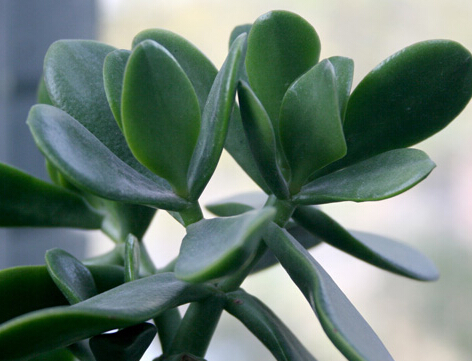
1. Temperature requirements for growing a rubber plant:
The rubber plant likes warmth, and the most suitable temperature for growth is 20-25°C. It tolerates high temperatures, and can still grow well when the temperature is above 30°C. It is not cold-tolerant, and the safe overwintering temperature is 5°C. Variegated varieties are slightly less cold-tolerant, and the overwintering temperature is best kept above 8°C. When the temperature is low, it will drop a large number of leaves.
2. Light requirements for growing a rubber plant:
The rubber plant likes bright indirect light and has a certain shade tolerance. It does not tolerate exposure to strong sunlight; when the light is too strong, the leaves will be scorched, turning yellow and burnt at the edges. It should not be kept in too dark a spot either, otherwise it will drop a large number of leaves and the beautiful markings of variegated varieties will fade. From May to September, shade should be provided, or the plant should be placed in a spot with plenty of indirect light. At other times, it should be given plenty of sunlight.
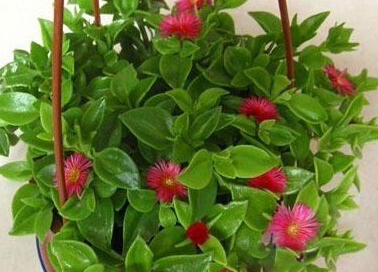
3. Watering control for growing a rubber plant:
The rubber plant likes a moist soil environment, and during the growing period water should be supplied fully to keep the potting soil moist. In winter, watering needs to be controlled; when the temperature is low and the potting soil is too wet, the roots easily rot.
4. Environmental humidity determines the growth of the rubber plant:
The rubber plant likes a humid environment. During the growing season, when the weather is clear and the air is dry, spray water frequently on the branches, leaves and surrounding area to raise the relative air humidity.
5. Fertilizing the rubber plant during growth:
Because the rubber plant grows quickly, nutrients should be supplied in time so the plant can grow vigorously. A nitrogen-based fertilizer should be applied 2-3 times a month. Varieties with colored markings grow relatively slowly, so the number of fertilizations can be reduced, while increasing the application of potassium fertilizer to make the markings on the leaves brighter and more colorful. If too much nitrogen fertilizer is applied, or only nitrogen fertilizer is used, the color of the markings will fade and may even disappear. In September, nitrogen fertilizer should be stopped and only phosphorus and potassium fertilizer applied to improve the plant's cold resistance. In winter the plant goes dormant, so fertilizing should be stopped.
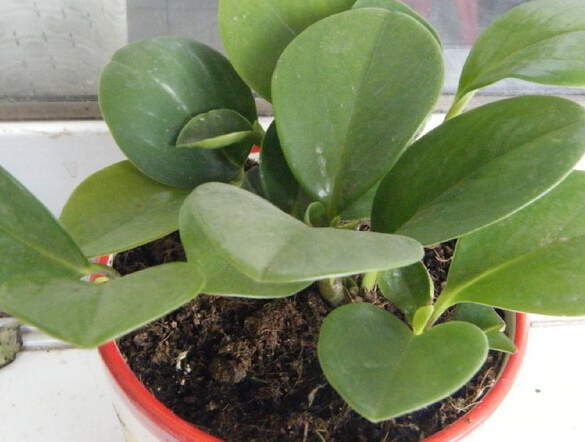
6. Daily pruning techniques for the rubber plant:
In spring, prune when moving the plant out of the shed: remove the forked branches, inward-growing branches, dead branches and thin weak branches inside the canopy, and shorten the rampant shoots that stick out beyond the canopy, so that the inside of the plant has good ventilation and light and the tree shape stays round and neat. If the canopy is too large, the surrounding branches can be shortened as a whole. During the growing period, remove overly dense branches at any time and shorten long branches.
7. Repotting requirements for growing a rubber plant:
Usually it needs repotting once every 2 years. It likes fertile, loose, well-drained sandy loam; the growing medium can be made from garden soil, leaf mold and plain sand, mixed with farmyard manure as a base fertilizer.
8. Common pests and diseases of the rubber plant:
It is often affected by anthracnose, leaf spot and gray mold; spray with a 500-fold dilution of 65% zineb. Pests include scale insects and thrips; spray with a 1000-fold dilution of 40% omethoate emulsifiable concentrate to kill them.
Rubber plant propagation methods:
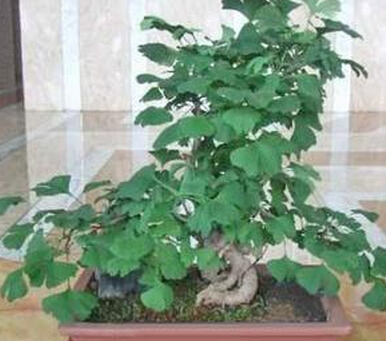
It is mostly propagated by cuttings. Cuttings are best taken in spring and autumn. If cuttings are taken in summer and watering is improper, the cuttings easily rot. When taking cuttings, cut a one-year-old semi-lignified branch, cut off the tender part at the tip, and choose the middle section as the cutting, which has the highest survival rate. The cutting should be 2-3 nodes long; keep 1 leaf at the top and cut that leaf in half, or roll the retained leaf upward and tie it with string, to make sticking easier and reduce water transpiration. Before sticking the cutting, seal the upper and lower cut ends with clay to prevent too much sap from flowing out and affecting survival, then insert the cutting into plain sand; at temperatures above 20°C, it will root about 40-50 days after sticking.
Besides the above method of propagation by cuttings, it can also be propagated by single-bud cuttings, air layering on high branches, or water cuttings.
Four-season care of the rubber plant:
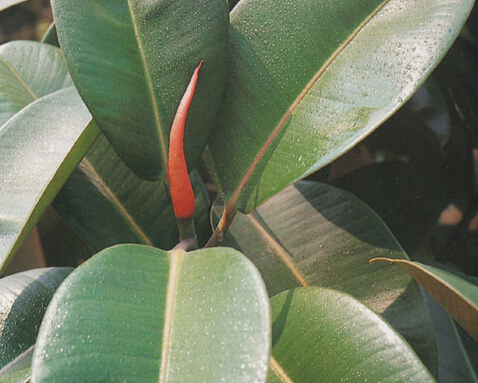
(1) Spring care
Each spring, when the temperature steadily stays around 15°C, repot it, and prune appropriately before repotting.
The rubber plant is naturally robust and easy to care for. In spring it should be placed in a spot with light, keep the potting soil moist, and often sprinkle and spray water around it to increase air humidity. Young plants can start being fertilized once new leaves appear. When the temperature is higher in late spring, move it to a spot with partial light or to an indoor spot with indirect light for display and growing on.
(2) Summer care
The rubber plant tolerates high temperatures and strong sun, but when the light is too strong the leaves easily lose their luster, which is not good for viewing. The rubber plant can be placed in a bright indoor spot. A dim indoor spot is not good for its growth.
Because the rubber plant has many large leaves, it uses a lot of water; water it in time to keep the potting soil moist, and at the same time spray its leaves and surroundings often to meet its air humidity requirements.
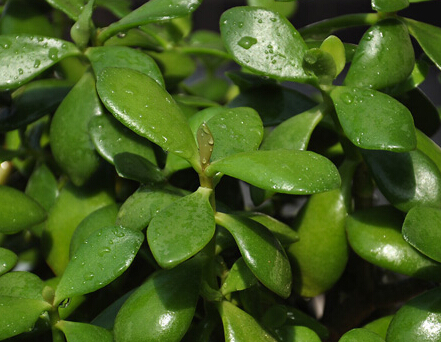
(3) Autumn care
In autumn, move the potted plant to a sunny windowsill or balcony to grow, keep the potting soil moist, and when the temperature is higher at noon, sprinkle and spray water around it and on its leaves to increase air humidity.
In autumn, to strengthen its cold resistance, it can be left to toughen up outdoors at low temperatures for a period, but it must not be exposed to frost; before frost falls, move it indoors to a spot with light in good time.
(4) Winter care
The rubber plant is not cold-tolerant, but it can withstand short periods of low temperature down to 0°C. However, the indoor temperature should be kept around 5°C; at this time the rubber plant's growth is at a standstill, so plenty of light should be ensured, the potting soil should be kept moist but on the dry side, since overly wet potting soil easily causes root rot, and when the temperature is higher at noon, sprinkle and spray water around it and on its leaves several times.
(1) Spring care
Each spring, when the temperature steadily stays around 15°C, repot it, and prune appropriately before repotting.
The rubber plant is naturally robust and easy to care for. In spring it should be placed in a spot with light, keep the potting soil moist, and often sprinkle and spray water around it to increase air humidity. Young plants can start being fertilized once new leaves appear. When the temperature is higher in late spring, move it to a spot with partial light or to an indoor spot with indirect light for display and growing on.
(2) Summer care
The rubber plant tolerates high temperatures and strong sun, but when the light is too strong the leaves easily lose their luster, which is not good for viewing. The rubber plant can be placed in a bright indoor spot. A dim indoor spot is not good for its growth.
Because the rubber plant has many large leaves, it uses a lot of water; water it in time to keep the potting soil moist, and at the same time spray its leaves and surroundings often to meet its air humidity requirements.
(3) Autumn care
In autumn, move the potted plant to a sunny windowsill or balcony to grow, keep the potting soil moist, and when the temperature is higher at noon, sprinkle and spray water around it and on its leaves to increase air humidity.
In autumn, to strengthen its cold resistance, it can be left to toughen up outdoors at low temperatures for a period, but it must not be exposed to frost; before frost falls, move it indoors to a spot with light in good time.
(4) Winter care
The rubber plant is not cold-tolerant, but it can withstand short periods of low temperature down to 0°C. However, the indoor temperature should be kept around 5°C; at this time the rubber plant's growth is at a standstill, so plenty of light should be ensured, the potting soil should be kept moist but on the dry side, since overly wet potting soil easily causes root rot, and when the temperature is higher at noon, sprinkle and spray water around it and on its leaves several times.