What are the side effects of Lysimachia christinae? Things to know before taking it
Lysimachia christinae has many effects and benefits, so what side effects does it have? Some friends may not be particularly familiar with this, so today I will give a brief introduction for everyone, let us take a look together.
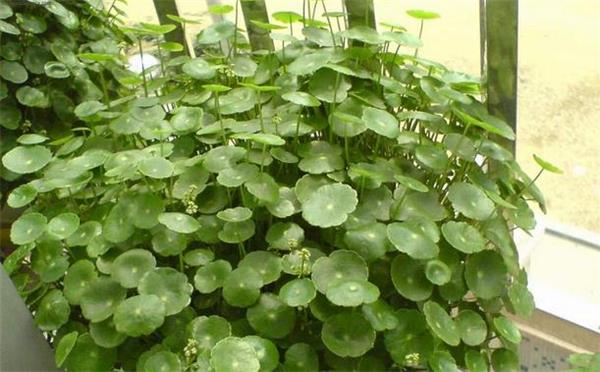
Morphological characteristics of Lysimachia christinae
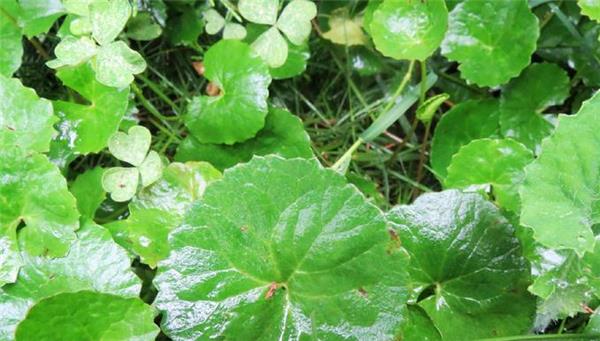
Lysimachia christinae is a perennial creeping small herb, with slender stems covered in gray short soft hairs, rooting at the nodes. Leaves are kidney-shaped to round, 4-25 mm in diameter, with a broad rounded or slightly notched tip, a broad heart-shaped base, slightly hairy on the upper surface, appressed short soft hairs on the underside, and entire margins; they have long petioles, with petioles (1.5) 3-6 (6) cm long. Flowers are solitary in the leaf axils, with pedicels shorter than the petioles, thread-like; sepals are obovate-oblong to spoon-shaped, blunt, 2-3 mm long, hairy on the back and margins; the corolla is bell-shaped, shorter than to slightly longer than the calyx, yellow, deeply 5-lobed, with the lobes oblong-lanceolate and hairless; 5 stamens are inserted at the sinuses between the 2 corolla lobes, with short filaments of equal length; the ovary is sparsely soft-hairy, 2-locular, with 4 ovules, and 2 styles with capitate stigmas. The capsule is nearly spherical, small, shorter than the calyx, about 1.5 mm in diameter, and membranous. Seeds are 1-2, yellow to brown, and hairless.
Effects of Lysimachia christinae
Used for liver and gallbladder stones and urinary tract stones, heat strangury, and jaundice. Lysimachia christinae has a good effect of draining dampness and reducing jaundice and of expelling stones and freeing strangury. To treat liver and gallbladder stones and jaundice, the product can be used alone, decocted in soup and taken as tea, or combined with Yinchen (Artemisia capillaris), Yujin (Curcuma aromatica), Dahuang (rhubarb), etc., to enhance the effects of clearing and disinhibiting the liver and gallbladder and expelling stones.
To treat stone strangury and heat strangury, it can also be used alone for effect or used together with Haijinsha (Lygodium japonicum), Jineijin (chicken gizzard lining), Shiwei (Pyrrosia lingua), etc., to enhance the effects of clearing lower-jiao damp-heat, freeing strangury, and expelling stones. For stone strangury accompanied by signs of kidney deficiency, it can be combined with kidney-tonifying Sangjisheng (Taxillus chinensis), Hetaoren (walnut kernel), etc.
Used for sore toxins and swollen abscesses, breast abscess, erysipelas, venomous snake bites, and traumatic injuries. Lysimachia christinae has the effects of removing toxin and dispersing blood stasis, reducing swelling, and relieving pain. The fresh product is often taken internally or applied externally; the fresh herb can be used alone, pounded to extract juice and drunk, or pounded and applied to the affected area, and it can also be used together with Yejuhua (wild chrysanthemum), Pugongying (dandelion), Wannianqing (Rohdea japonica), etc., to strengthen the effects of clearing heat and removing toxin.
Side effects of Lysimachia christinae
Every medicine has some toxicity, and no medicine can be taken long term. Lysimachia christinae is a medicine that promotes urination and frees strangury; it itself has no function of expelling or dissolving stones. It only uses the effects of promoting urination and freeing strangury to pull stones out. Long-term use will damage healthy qi, and not only fail to expel stones, but instead affect stone expulsion and lead to continued stone formation.
Cultivation methods for Lysimachia christinae
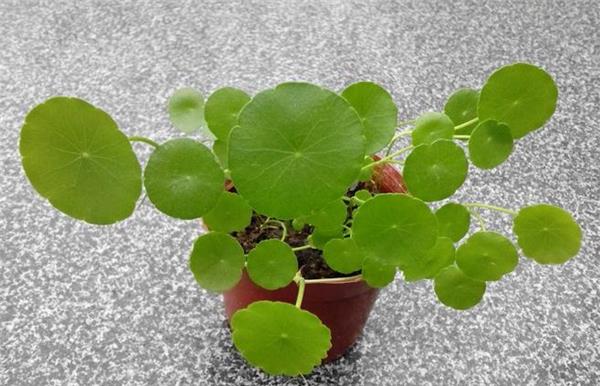
It can be propagated by seed or by cuttings. However, because Lysimachia christinae seeds are very small and not easy to collect, and the seedlings grow slowly, cutting propagation is mostly used. From March to April each year, cut off the creeping stems and cut every 3-4 nodes into a section as a cutting. On a prepared seedbed, open 1 shallow furrow on each side of the bed surface, each with cm added, for row planting, with furrow depth 6-8 cm, and plant 2 rows per bed. In the opened shallow furrows, insert cuttings at a plant spacing of 10 cm, with 2-3 nodes in the soil. After planting, cover with a thin layer of soil, press gently and firmly, and water to settle the roots.
It is suitable to choose fertile sandy loam and cool, moist plots for planting. It can also be grown sporadically in idle shaded and wet places such as corners beside houses, pond dams, and ditch sides. Before land preparation, apply sufficient base fertilizer, 2500-3000 kg of decomposed organic fertilizer per mu. After plowing, rake the soil fine, make beds at 1.2 m, with a bed surface width of 90 cm, furrow width of 30 cm, and furrow depth of 20 cm.
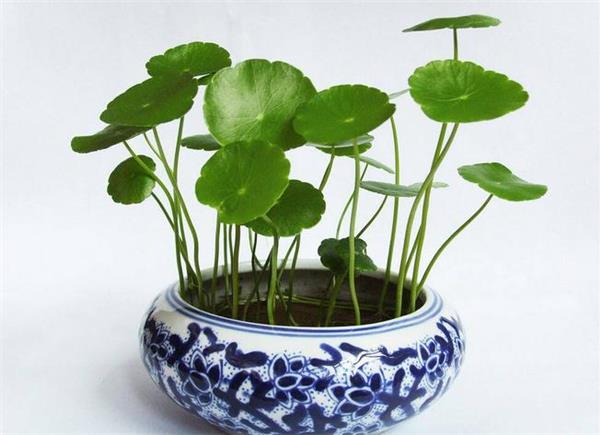
That is all for the related introduction to the side effects of Lysimachia christinae. I believe that after reading this, everyone has gained some understanding of the effects of Lysimachia christinae. If any friends want to grow Lysimachia christinae, you can refer to the related knowledge points I have introduced for everyone.