A Comprehensive Analysis of Agave Cultivation Methods
Many friends are not particularly familiar with agave cultivation methods, and problems always arise during the growing process. Today, let me give you a brief introduction to agave cultivation methods. Let's take a look together.
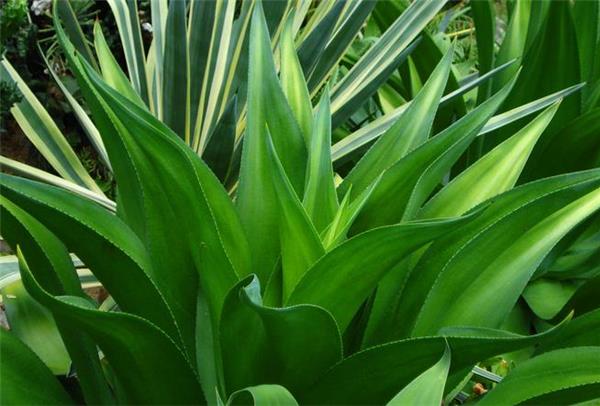
Basic Information About Agave
Agave (Agave americana), also known as dragon tongue palm, sisal hemp, and century plant, is a perennial evergreen large herbaceous plant native to Mexico. Because its leaves are firm and it stays green all year round, it is one of the important materials for landscaping in the south, and in the Yangtze River basin and areas to the north it is often grown in pots in greenhouses. It prefers well-drained, fertile and moist sandy loam. In its place of origin it generally takes several decades to bloom, and after blooming the mother plant dies; cross-pollination is required for it to set seed.
The Uses of Agave
1. Beautifying the environment
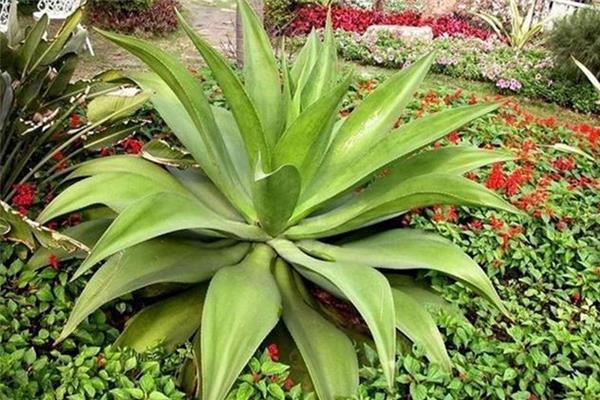
Agave has firm, attractive leaves and stays green all year round, and there are many horticultural varieties. It is often used for potted or flower trough display, suitable for decorating small courtyards and halls, and planted in the center of flower beds or in a corner of the lawn, it can add a tropical scene.
2. Matching furniture
Agave is very suitable for placing in the home living room. It is simple yet noble, and regardless of the decoration style, you can choose an appropriately sized agave to place on a table cabinet or at the corner of the sofa. You can also use hanging potted agave to hang in these places in the living room. You can see greenery without it appearing messy or obstructing the family's activities.
3. Treating decoration pollution
Agave has a relatively large effect on purifying the air. According to statistics, in a room of about 10 sq m, it can eliminate 70% of benzene, 50% of formaldehyde and 24% of trichloroethylene, and its effect on purifying and improving household air is relatively large.
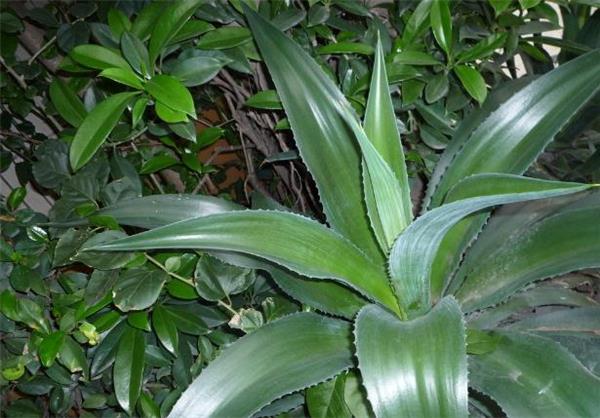
Agave Cultivation Methods
1. Soil: Agave is not very strict about soil requirements, but loose, fertile, well-drained soil is best. When potting, usually mix leaf mold with coarse sand.
2. Watering: Agave is very vigorous by nature and is not demanding about water. However, during its growing period it must be given sufficient water to grow well. In addition, during the winter dormant period, agave should not be watered too much, otherwise it is prone to root rot.
3. Sunlight: Agave prefers light and should often be placed outside to receive sunlight, but variegated varieties need appropriate shading in summer to keep their colors fresh and tender. In winter, if the light in its location is dim, then it should be kept at low temperature, not watered, and kept dry, otherwise it will rot. In spring, light should be restored immediately.
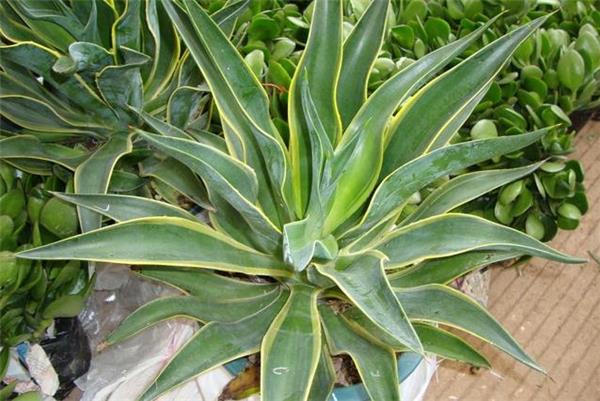
4. Temperature: The suitable growing temperature for agave is 15-25°C, and it grows best at 10-16°C at night. Cool, dry conditions in winter are most favorable for its growth, and the overwintering temperature should be kept above 5°C.
5. Fertilizing: Agave has a very strong ability to adapt to the environment. Even growing in fairly poor soil, it will not affect the plant's development. However, fertile medium will still make agave grow better. Fertilizing once a year is appropriate; do not spray fertilizer frequently, otherwise it is prone to fertilizer damage.
6. Pests and diseases: Agave often suffers from leaf spot, anthracnose and gray mold, which can be sprayed with a 1000-fold solution of 50% Tuzet wettable powder. When there is damage from scale insects, spray with a 1000-fold solution of 80% dichlorvos emulsifiable concentrate to kill them.
That is all for the related introduction to agave cultivation methods. I believe that after reading this, everyone has gained some understanding of agave cultivation. If any friends want to grow agave, you can refer to the related points I have introduced for you.