How to Care for Spider Plants? A Complete Guide to Care Methods
Many friends are not particularly familiar with how to care for spider plants, and problems always seem to arise when growing them. So, how should spider plants be cared for? Let's take a look together.
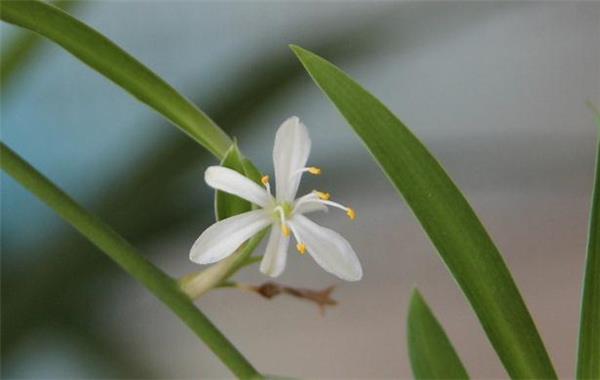
The Benefits of Spider Plants
When it comes to the benefits of spider plants, they are truly remarkable. Spider plants can absorb more than 80% of harmful gases indoors, absorb 86% of formaldehyde, and can also completely absorb the carbon monoxide and nitrogen oxides released by stoves, electrical appliances, and plastic products. For those of us living in modern cities, who constantly face radiation emitted by all kinds of digital devices, placing 1-2 pots of spider plants nearby means the toxic gases in the air are all absorbed, making it the equivalent of an air purifier. That is why the spider plant also has the reputation of being a "green purifier."
Types of Spider Plants
Golden Spider Plant
Golden spider plants are generally divided into golden-edged spider plants and golden-hearted spider plants. The former has yellow lines running around the edges of its green leaves, somewhat like a border, giving it a unique shape that looks very attractive when paired with other plants; the golden-hearted spider plant, as its name suggests, has yellow longitudinal stripes in the center of its leaves, looking refined and elegant. It is the most common variety on the market today, and hanging it on a wall is a great choice.
Silver Spider Plant
Silver spider plants come in the same types as golden spider plants, also including silver-edged spider plants and silver-hearted spider plants. The silver-edged spider plant has silver stripes around its edges, looking simple, elegant, and serene, able to purify one's spirit; the silver-hearted spider plant has silver in the middle of its leaves, with no distinction between stems and leaves, and its leaves droop. The leaves are dark green, and it blooms in June and July each year, with flowers in light yellow and white. The white central stripes make the leaf color look even more vivid and distinctive.
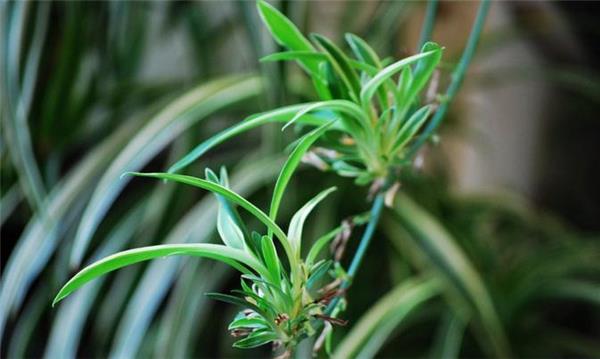
Spider Plant Care Methods
1. Repotting and Soil Replacement: For potted spider plants, to achieve lush stems and leaves, the soil should be replaced and the pot changed once every March. If the pot is relatively deep and the base fertilizer is sufficient, repotting can be done once every two years. When repotting, knock the plant out of the pot, trim off dead and rotten roots and excess root systems, replace with new humus-rich potting soil, and apply livestock hoof and horn pieces or decomposed cake fertilizer as base fertilizer. After planting, place it in a semi-shaded, warm spot to recover. The optimal growing temperature for spider plants is around 25°C. Once the plant has recovered and resumed vigorous growth, hang the pot under a corridor eave or in a suitable indoor location. Generally, the height should be such that it does not bump your head, and attention should be paid to ventilation.
2. Watering: Spider plants prefer a moist environment, and the potting soil should be kept moist regularly. However, the fleshy roots of spider plants can store a large amount of water, giving them strong drought resistance, so they will not dry out and die even without watering for several days. When the temperature drops below 5°C in winter, water less, and do not let the potting soil become too wet, otherwise the leaves tend to turn yellow.
3. Fertilizing: Apply liquid fertilizer once every two weeks during the growing season. For variegated varieties, apply less nitrogen fertilizer, otherwise the white or yellow markings on the leaves will become less pronounced. Stop fertilizing when the ambient temperature is below 4°C.
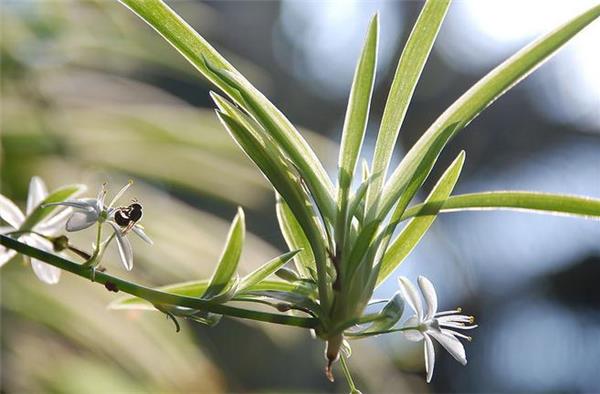
4. Pests and Diseases: Spider plants have few pests and diseases, mainly physiological disorders, with leaf tips turning yellow, in which case fertilizer and water management should be strengthened. Check regularly and promptly remove scale insects, whiteflies, and others on the leaves. Spider plants are not prone to pests and diseases, but if the potting soil is waterlogged and ventilation is poor, besides causing root rot, root rot disease may also occur, and pesticide spraying should be used for prevention and control.
5. Light: Spider plants prefer semi-shaded environments and can be grown year-round in bright indoor conditions. Spider plants grown outdoors can also grow well under strong direct sunlight in summer. However, spider plants grown indoors for a long time should avoid strong direct sunlight and need 50-70% of sunlight to be blocked.
6. Pruning: Remove yellow leaves at any time. Repot once every March, trimming off old roots, rotten roots, and excess fibrous roots. In early to mid-May, cut off some of the old leaves of the spider plant, which will encourage more new leaves and small spider plantlets to sprout.
That concludes our introduction to spider plant care methods. I believe that after reading this, everyone has gained some understanding of how to care for spider plants. If any friends want to grow spider plants indoors, you can refer to the relevant points I have introduced for you.