What are the effects of plantain? A comprehensive summary in one article
Plantain has many effects, and some friends may not be particularly familiar with them yet. Today I will briefly introduce the effects of plantain for everyone, and let us take a look at what they are.
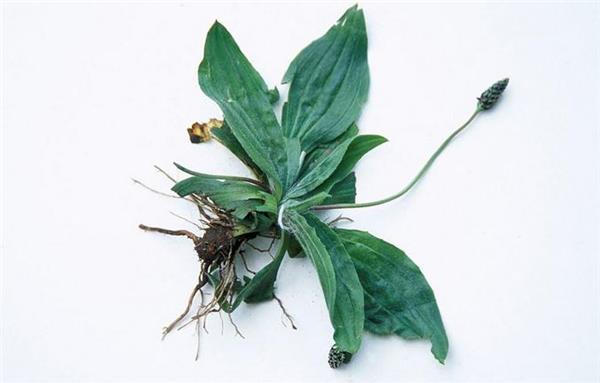
Introduction to plantain
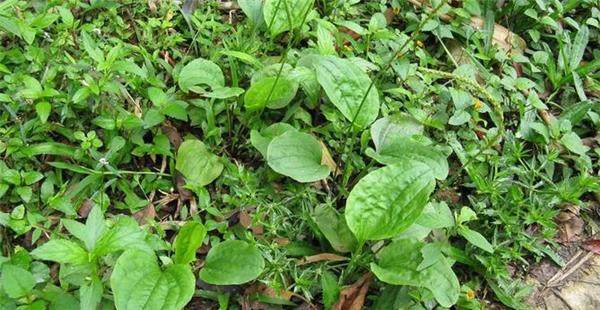
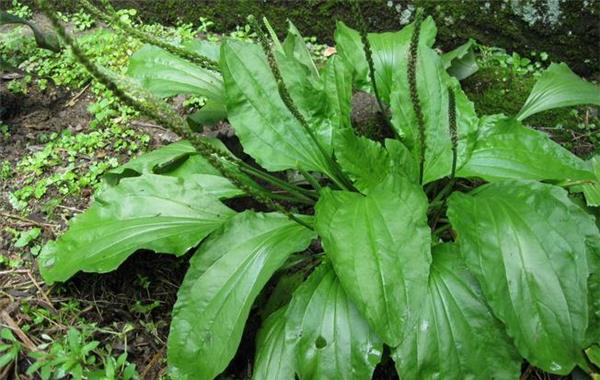
Plantain is a perennial herbaceous plant, reaching 10-30 cm in height. The leaves grow at the base, have long petioles, and are equal in length to or longer than the leaf blade. The leaf blade is generally ovate or elliptical, 4-12 cm long and 2-7 cm wide, with a smooth surface, generally has 5-7 arcuate veins, and the leaf margin is entire or has irregular wavy shallow teeth. There are several flowering stems, 12-50 cm tall. It blooms pale green flowers in June-July, the inflorescence is spicate, and the seeds form a club shape. The seeds are called plantain seed. The fruiting period is September-October. Generally, the tender leaves are picked in spring and summer for consumption. The whole plant is best harvested in summer, washed clean, and used fresh or dried in the sun for medicinal use.
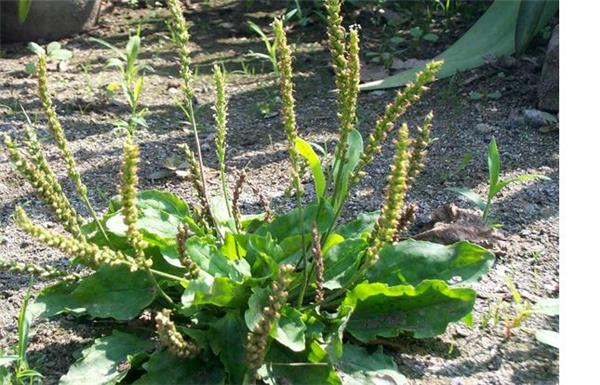
What are the effects of plantain?
1. Effects on the urinary system: Plantain has a certain diuretic effect, can increase water excretion in dogs, rabbits and humans, and increase the excretion of urea, uric acid and sodium chloride.
2. Antitussive, antiasthmatic and expectorant effects: When plantain decoction was given to cats by gavage at both high and low doses, both doses significantly raised the threshold of electrical stimulation for inducing coughing in cats, and the effect strengthened as the dose increased.
3. Anti-pathogenic microorganism effects: Plantain water infusion has varying degrees of inhibitory effect in test tubes on Trichophyton concentricum, Microsporum lanosum, Nocardia asteroides, etc.
4. Effects on the stomach and intestinal tract: When Pavlov pouch dogs and dogs with gastric disease were given plantain water extract or infusion 0.5 g/kg by gavage, it had a bidirectional regulatory effect on gastric juice secretion. It had antagonistic effects on both excessive gastric juice secretion caused by pilocarpine and reduced gastric juice secretion caused by epinephrine. Plantain has an inhibitory effect on the working stomach, but no effect on the resting stomach. Plantain can also temporarily increase intestinal juice secretion, while having no obvious effect on intestinal movement.
5. Anti-inflammatory effect: When rats took plantain pectin 0.5 g/kg or 1 g/kg orally, it had a significant inhibitory effect on inflammatory edema caused by formaldehyde or dextran.
Dosage of plantain
1. Plantain for treating chronic bronchitis
Take 30-60 grams of dried plantain daily, double the amount if fresh, first soak in cold water for 30 minutes, then decoct over high heat 2 times for consumption, 1 dose daily. Symptoms can be reduced or recovery achieved after 3-5 consecutive days. This formula is especially effective for cough and asthma due to lung heat.
2. Plantain for treating whooping cough
Take 30-60 grams of dried plantain daily, double the amount if fresh, decoct into a thick juice, remove the residue, add 30 grams of honey and mix well, and take it in 3-4 divided doses daily. Clinical verification on 20 cases of whooping cough showed that mild cases recovered within a week, and severe cases recovered in about half a month.
3. Plantain for treating mumps
Take 30-60 grams of dried plantain daily, double the amount if fresh, decoct in water 2 times. For the first decoction add 300 milliliters of water and decoct to 100 milliliters; for the second add 200 milliliters of water and decoct to 100 milliliters. Mix the two decoctions, divide into 2 doses and take. Generally, after 3-5 consecutive days of use, symptoms can be reduced or recovery achieved. For severe cases, the dosage may be appropriately increased.
4. Plantain for treating acute icteric hepatitis
Take 60 grams of dried plantain daily, double the amount if fresh, decoct in water twice for consumption. The author used this medicine to treat cases of acute icteric hepatitis (that is, hepatitis A), with a total effective rate of 98.8%, appetite recovery time of 5-7 days, and jaundice disappearance time of 14 days.
5. Plantain for treating gouty arthritis
Take 30-60 grams of dried plantain, double the amount if fresh, decoct in water twice for consumption, 1 dose daily, taken continuously. After medication, symptoms were relieved within 12-15 days of use in each case. To prevent recurrence, 10-15 doses were taken every 20 days thereafter, and there was no recurrence.
That concludes the related introduction to the effects of plantain. I believe that after reading this, everyone has gained some understanding of plantain. I hope the relevant knowledge introduced today can be helpful to everyone.