What is the flower language and symbolic meaning of the pansy?
The pansy is a common wildflower species in Europe and is also the national flower of Poland. Each flower usually has three colors: purple, white and yellow, hence the name pansy. Do you know the blooming period and flower language of this beautiful flower? Below, the editor will introduce the blooming period and flower language of the pansy. Let's take a look together!
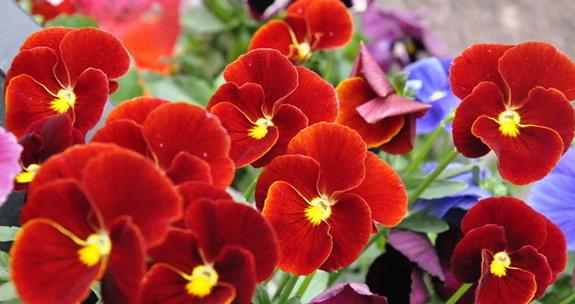
The flower language of pansies of different colors
Symbolism: seeking a happy ending.
Flower language: daydream, contemplation, longing, missing someone, happiness, let us be together.
Red pansy: a beautiful red flower, its flower language is "concern, longing", element fire.
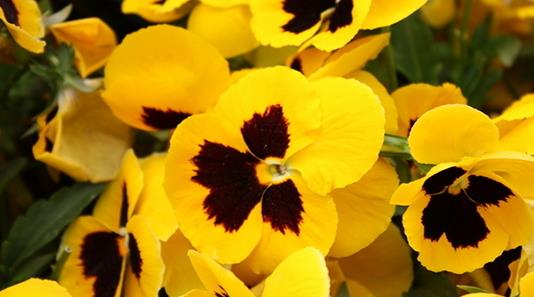
Yellow pansy: a pansy with yellow petals, its flower language is "mixed sorrow and joy", element earth.
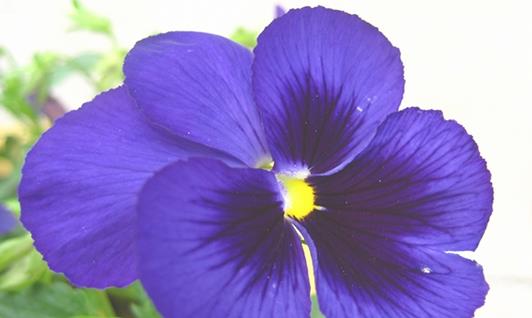
Purple pansy: a pansy with purple petals, its flower language is "silence", "unconditional love", element darkness.
Pansy (birth flower of 7/16)
Flower language: Restrain
The large pansy is a climbing plant, about three meters tall, which climbs and holds onto any nearby object and then grows strong, as if tightly entwining the object it attaches to. Therefore, its flower language is restraint.
Anyone born under the blessing of this flower has a particularly strong desire for possession. Whether it is friends or lovers, they want to possess them all for themselves. In fact, this overly possessive way will produce the opposite effect. Understanding this shortcoming, one should reflect in good time and improve properly, and love should also be readjusted!
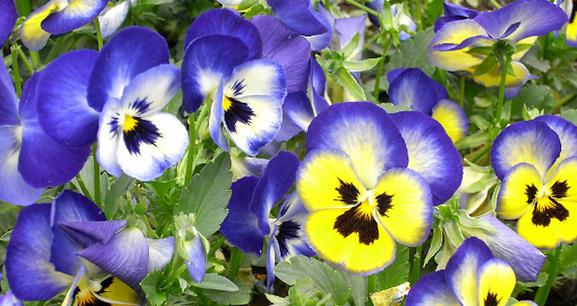
The flower language of pansies in different countries
Europeans believe that the pansy can stimulate the function of love. Whomever you like, you only need to squeeze out its juice and drip it into his (her) eyes while he (she) is asleep, then wait for him (her) to wake up and appear before him (her) at the first moment, and he (she) will madly fall in love with you.
Italians define the flower language of the pansy as "longing" and "miss me". This has led many young men to give pansies to their sweethearts to express heartfelt love. Some religious people also use it as the Easter flower of Jesus and send it to the church as a gesture of respect.
Germans call the pansy the "stepmother", because they can see three faces in the petals: at the bottom is a fashionably dressed round face, which is the stepmother; in the middle is also a very beautiful face, which is the stepmother's biological daughter; at the top is a pale, wilted face, representing the daughter of the husband's former wife.
In France, the pansy symbolizes mutual loyalty between lovers. In Poland, girls give it only to their fiances. In the UK, it is a very important flower on Valentine's Day.
The pansy carries deep longing, symbolizes the Passion of Christ, the Trinity (referring in Christianity to the unity of the Father, the Son and the Holy Spirit), and profound remembrance. People's gaze upon the pansy flower is full of romance, and it was given the name "think of me". It blooms in summer and sets seed within the flower buds. The English call it "jump up and kiss me".
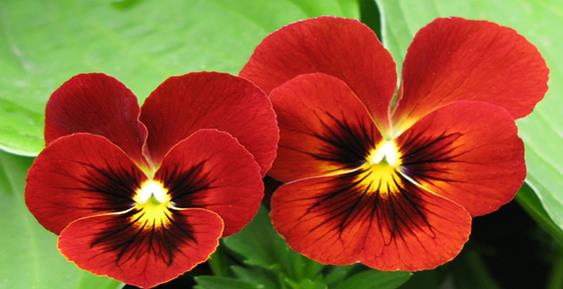
An introduction to the pansy
The pansy is also called butterfly flower, butterfly violet and monkey face. It is a flowering plant that blooms in spring and summer, with flower colors including yellow, purple and white. We can often see it in open-air flower beds as well; it is colorful and very beautiful. So what is the flower language of the pansy? What legends about the pansy are there? Let's take a look:
Pansy plant profile
The pansy (scientific name: Viola tricolor L.) is a biennial or perennial herbaceous plant of the genus Viola in the family Violaceae of the order Malpighiales. The basal leaves are long ovate or lanceolate with long petioles; the stem leaves are ovate, oblong or oblong-lanceolate, with rounded or obtuse tips, and the margins have sparse rounded teeth or obtuse serrations. It is a common wildflower species in Europe and is also often cultivated in parks. It is the national flower of Iceland and Poland. Each flower usually has three colors: purple, white and yellow, hence the name pansy. This species is relatively cold-tolerant, prefers cool conditions, and its flowering is greatly affected by light. Pansies are best planted outdoors, and are suitable for flower beds, courtyards and pots, but are not suitable for indoor planting. As a Chinese medicinal herb, the pansy can also sterilize and treat skin problems such as acne, pimples and allergies. Pansy medicinal baths also have a good breast-enhancing effect.
Chinese scientific name: pansy
Latin scientific name: Viola tricolor L.
English name: Pansy
Other names: tricolor violet, cat face, butterfly flower, human face flower, cat face flower, sun butterfly flower, monkey face
Binomial name: Viola tricolor
Kingdom: Plantae
Phylum: Angiosperms
Class: Dicotyledons
Order: Parietales
Family: Violaceae
Genus: Viola
The blooming period of the pansy
The pansy blooms in spring and summer, with the blooming period generally between April and July each year. Each flower usually has three colors such as yellow, purple and white, hence the name pansy.
Pansies are mostly propagated by sowing, and the best sowing period is from late August to early September. Generally, seedlings emerge about 10 days after sowing, and the seedlings can be fully out in 20 days, after which the covering should be removed. When the seedlings grow to 5 leaves, they can be transplanted, with a plant and row spacing of about 20 cm. Covering with plastic sheeting before freezing allows them to overwinter safely. After the Awakening of Insects in early March of the following spring, remove the cold protection materials and they can grow normally; sufficient water and fertilizer should be given during the growing period. Seed selection work should not be neglected. When flowering begins early, mark those varieties with large flowers, short plant type, early flowering and many flowers, collect them as they ripen, and store them properly.
Pansies have relatively strong cold resistance. They will not suffer frost damage during short periods of minus 5 to 6°C, and can begin slow growth when the temperature is above 10°C. It is particularly worth mentioning that in recent years, pansies not sown by humans have been found in gardens and nurseries, and without any cold protection measures, they can overwinter safely even in cold winters and also bloom with bright flowers in April.
The legend of the pansy
Legend of the pansy one:
A very, very long time ago, it is said that the violet flower was pure white, like clouds in the sky. The mischievous Cupid, the god of love, was a little naughty boy. The bow and arrow in his hand had the magic power of love; whomever he shot, that person would involuntarily fall in love with the first person he saw. Unfortunately, the god of love was both mischievous and inaccurate in archery, so love stories in the human world often went wrong. One day, the god of love found another unlucky fellow and prepared to shoot an arrow at him. Who would have thought that just as the arrow was shot, a gust of wind suddenly blew over, and the arrow unexpectedly hit a white violet flower. From the heart of the white violet flower flowed blood and tears, and after this blood and these tears dried, they could never be wiped away again. From then on, the white violet became today's pansy. This is the origin of the pansy in mythology.
Legend of the pansy two:
In heaven there was a very, very large garden. Every year when spring warmed and flowers bloomed, many beautiful and rare flowers and plants would grow in the garden, attracting the gods to come and admire the flowers. That year, the time for flower viewing came again.
That morning, Venus, the goddess of beauty, got up very early, washed and dressed carefully, put on clothes of fine silk and satin, wore dazzling jewelry, and then brought her precious son Cupid, the god of love, and happily came to the garden. By this time, many gods had already arrived. Everyone was gathered in a circle, and no one knew what they were enjoying with such relish. Even when the beautiful Venus arrived, no one bothered to greet her. Feeling neglected, Venus was a little unhappy. Before, wherever she went, she would draw exclamations of admiration from others. What was going on today? She squeezed in to take a look, and it turned out that everyone was busy admiring the violet flowers. This year the violet flowers were blooming very luxuriantly and were especially eye-catching, and all the gods praised them endlessly.
Venus had always been very jealous. She always believed that the most beautiful in heaven and on earth should of course be the goddess of beauty, and she feared above all that others would say something was more beautiful than she was. So she asked her son Cupid: "Good son, take a careful look for me. Compared with mother, which of these violet flowers is more beautiful?" Unexpectedly, the innocent Cupid blurted out without thinking: "Of course the violet flowers are!" The gods all laughed heartily when they heard this. As soon as Venus heard it, she flew into a rage and was furious, and did not speak to anyone again for the whole day.
When it got dark, the gods went home one after another. Venus walked up to the violet flowers, looked them over again and again, and the more she thought, the angrier she became. So she raised a leather whip and lashed the violet flowers, saying hatefully as she beat them: "I'll teach you to be more beautiful than me! I'll teach you to be more beautiful than me!" She only stopped when she was tired from beating. Because it was dark, Venus could not see clearly either, and thought that this time the violet flowers must surely die, so she went home smugly. Unexpectedly, the violet flowers had quite strong vitality. Although badly injured, they did not die and still lived on strongly. It was only because they had been whipped that their faces were bruised blue and purple, leaving marks of varying depth, becoming a "flower cat face".
The next spring, the violet flowers bloomed again. They changed from their original single color into the "pansy" with several colors on one flower. But unexpectedly, this "flower cat face" made them look even more beautiful and moving than before, and they won even more praise from the gods at the flower-viewing gathering.
It turns out that the brown pattern on the pansy was left when an angel came to the gathering and kissed it three times. Some also say that when the angel kissed the pansy flower, her face was imprinted on the petals, so everyone who sees a pansy will have a happy ending.
The blooming period is generally between April and July each year. Each flower usually has three colors such as yellow, purple and white, hence the name pansy.Pansies are mostly propagated by sowing, and the best sowing period is from late August to early September. Generally, seedlings emerge about 10 days after sowing, and the seedlings can be fully out in 20 days, after which the covering should be removed. When the seedlings grow to 5 leaves, they can be transplanted, with a plant and row spacing of about 20 cm. Covering with plastic sheeting before freezing allows them to overwinter safely. After the Awakening of Insects in early March of the following spring, remove the cold protection materials and they can grow normally; sufficient water and fertilizer should be given during the growing period. Seed selection work should not be neglected. When flowering begins early, mark those varieties with large flowers, short plant type, early flowering and many flowers, collect them as they ripen, and store them properly.
Pansies have relatively strong cold resistance. They will not suffer frost damage during short periods of minus 5 to 6°C, and can begin slow growth when the temperature is above 10°C. It is particularly worth mentioning that in recent years, pansies not sown by humans have been found in gardens and nurseries, and without any cold protection measures, they can overwinter safely even in cold winters and also bloom with bright flowers in April.
The legend of the pansy
Legend of the pansy one:
A very, very long time ago, it is said that the violet flower was pure white, like clouds in the sky. The mischievous Cupid, the god of love, was a little naughty boy. The bow and arrow in his hand had the magic power of love; whomever he shot, that person would involuntarily fall in love with the first person he saw. Unfortunately, the god of love was both mischievous and inaccurate in archery, so love stories in the human world often went wrong. One day, the god of love found another unlucky fellow and prepared to shoot an arrow at him. Who would have thought that just as the arrow was shot, a gust of wind suddenly blew over, and the arrow unexpectedly hit a white violet flower. From the heart of the white violet flower flowed blood and tears, and after this blood and these tears dried, they could never be wiped away again. From then on, the white violet became today's pansy. This is the origin of the pansy in mythology.
Legend of the pansy two:
In heaven there was a very, very large garden. Every year when spring warmed and flowers bloomed, many beautiful and rare flowers and plants would grow in the garden, attracting the gods to come and admire the flowers. That year, the time for flower viewing came again.
That morning, Venus, the goddess of beauty, got up very early, washed and dressed carefully, put on clothes of fine silk and satin, wore dazzling jewelry, and then brought her precious son Cupid, the god of love, and happily came to the garden. By this time, many gods had already arrived. Everyone was gathered in a circle, and no one knew what they were enjoying with such relish. Even when the beautiful Venus arrived, no one bothered to greet her. Feeling neglected, Venus was a little unhappy. Before, wherever she went, she would draw exclamations of admiration from others. What was going on today? She squeezed in to take a look, and it turned out that everyone was busy admiring the violet flowers. This year the violet flowers were blooming very luxuriantly and were especially eye-catching, and all the gods praised them endlessly.
Venus had always been very jealous. She always believed that the most beautiful in heaven and on earth should of course be the goddess of beauty, and she feared above all that others would say something was more beautiful than she was. So she asked her son Cupid: "Good son, take a careful look for me. Compared with mother, which of these violet flowers is more beautiful?" Unexpectedly, the innocent Cupid blurted out without thinking: "Of course the violet flowers are!" The gods all laughed heartily when they heard this. As soon as Venus heard it, she flew into a rage and was furious, and did not speak to anyone again for the whole day.
When it got dark, the gods went home one after another. Venus walked up to the violet flowers, looked them over again and again, and the more she thought, the angrier she became. So she raised a leather whip and lashed the violet flowers, saying hatefully as she beat them: "I'll teach you to be more beautiful than me! I'll teach you to be more beautiful than me!" She only stopped when she was tired from beating. Because it was dark, Venus could not see clearly either, and thought that this time the violet flowers must surely die, so she went home smugly. Unexpectedly, the violet flowers had quite strong vitality. Although badly injured, they did not die and still lived on strongly. It was only because they had been whipped that their faces were bruised blue and purple, leaving marks of varying depth, becoming a "flower cat face".
The next spring, the violet flowers bloomed again. They changed from their original single color into the "pansy" with several colors on one flower. But unexpectedly, this "flower cat face" made them look even more beautiful and moving than before, and they won even more praise from the gods at the flower-viewing gathering.
It turns out that the brown pattern on the pansy was left when an angel came to the gathering and kissed it three times. Some also say that when the angel kissed the pansy flower, her face was imprinted on the petals, so everyone who sees a pansy will have a happy ending.