What are the benefits of the variegated spider plant? This article summarizes them clearly for you
Many people place some plants indoors to purify the air, and the spider plant is a top choice. So, what benefits does the variegated spider plant have? How should we grow the variegated spider plant? Let us take a look together below.
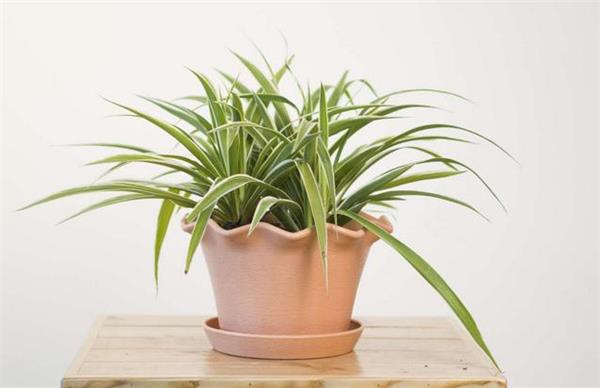
Introduction to the variegated spider plant
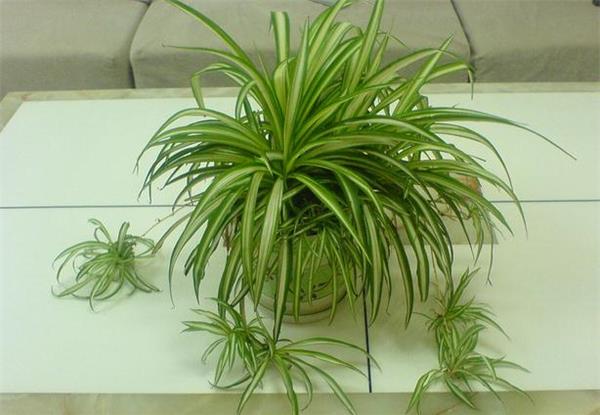
The variegated spider plant (Chlorophytum comosum 'Variegatum') belongs to the Liliaceae family and is a perennial evergreen herbaceous plant with thick, fleshy, cylindrical roots. Its leaves are broadly linear and tender green, growing on short stems. The raceme is 30 to 60 cm long, curved and drooping, with small white flowers; it often produces several clusters of rooted plantlets formed from bulbils on the flower stems, which is very interesting.
It grows fast and is easy to cultivate, and can be grown and enjoyed year-round in a relatively bright room. It can be placed in small spaces such as bathrooms and windowsills, or on top of cabinets or on a flower stand, choosing a suitable position. Its slender, graceful foliage can effectively absorb formaldehyde released by curtains and other items, and fully purify the air.
The benefits of the variegated spider plant
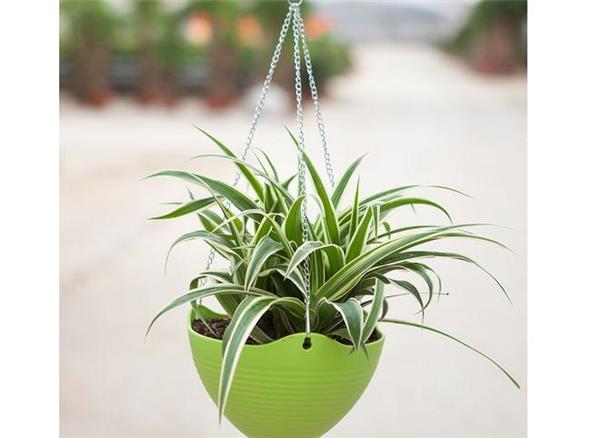
1. Ornamental value: The variegated spider plant is one of the traditional hanging houseplants. Its leaves are slender and soft, and the trailing stems that emerge from the leaf axils bear small plantlets, hanging down from the edge of the pot, spreading and drooping freely, like flowers, evergreen all year round; it is both firm and soft, shaped like a crane spreading its wings to leap, hence the ancient name "crane-orchid."
2. Air purification: The spider plant has an extremely strong ability to absorb toxic gases, which has been proven by experiments and confirmed through long-term practice. Generally, keeping 1 to 2 pots of spider plants in a room can absorb almost all toxic gases in the air. After renovation, keep ventilating more, and grow a few pots of spider plants and other greenery while using Mayala blue; a new house left vacant for three to six months can basically reach the standard for moving in.
3. Medicinal value: The spider plant is sweet in taste, slightly bitter, and cool in nature; it mainly treats resolving phlegm and relieving cough, dissipating blood stasis and reducing swelling, and clearing heat and detoxifying. It has fairly good effects on phlegm-heat cough, traumatic injuries, fractures, carbuncles, hemorrhoids, burns and so on. It is used for lung-heat coughing with blood and bronchitis; externally it treats boils and swellings, hemorrhoid swelling and pain, fractures, and burns.
How to grow the variegated spider plant
The spider plant is a perennial evergreen herbaceous flowering plant with fibrous roots. It has varied forms and is also highly shade-tolerant and easy to manage, often used for hanging pot cultivation, as indoor decoration or in garden landscaping. When growing spider plants, you should master the following points:
1. Temperature control. The spider plant likes a warm, humid climate and is not cold-tolerant. It grows fastest at 20 to 24°C, stops growing above 30°C, and its leaves easily turn yellow with dry tips.
2. Light regulation. When cultivated outdoors in summer, pay attention to shading so the light is not too strong, otherwise sunscald is very likely to occur.
3. Water and fertilizer regulation. During the peak growing seasons of spring and autumn, watering should be sufficient, the potting soil should be kept moist regularly, and the leaves and branches should often be sprayed with clean water close to room temperature to prevent dry tips, but there must be no waterlogging.
4. Pruning and repotting. As the plant grows larger, to maintain a good plant shape, the old leaves at the base should be pruned frequently.
5. Pest control. The spider plant's clumps are dense and poorly ventilated, making it susceptible to scale insects, so prevention should be the priority.
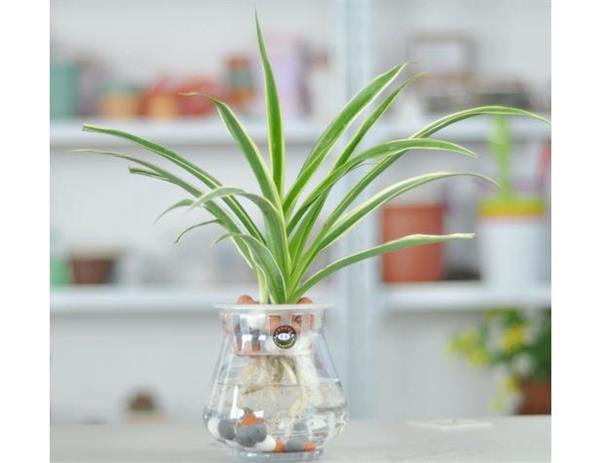
Daily care of the variegated spider plant
1. The variegated spider plant likes a semi-shaded environment. If exposed to direct sunlight, plus dry air, it is most likely to cause scorched leaf tips. So the spider plant must be placed in a relatively cool and ventilated spot, and especially be sure to spray water on the leaves often to increase environmental humidity.
2. Although the variegated spider plant likes moisture, if watered too much or if the potting soil drains poorly, root rot can indirectly cause the leaves to wither and scorch. Improper watering and fertilizing can also cause the leaves to dry up.
3. The variegated spider plant likes fertilizer. If fertilizer and water are insufficient, the leaf color will fade and the leaf tips will scorch. But fertilizing should not be excessive either.
4. In winter, be sure to watch out for freeze damage. When the ambient temperature is below 4°C, it will suffer freeze damage.
That is all for the introduction to the benefits of the variegated spider plant. I believe that after reading this, everyone has gained some understanding of the variegated spider plant. If any friends want to grow the variegated spider plant, you can refer to the relevant points I have introduced for you.