What are the cultivation methods for Lysimachia?
Many friends are not particularly familiar with the cultivation methods for Lysimachia, and problems always arise during the growing process. Today I will introduce the cultivation methods for Lysimachia, so let us learn about them together.
Morphological characteristics of Lysimachia
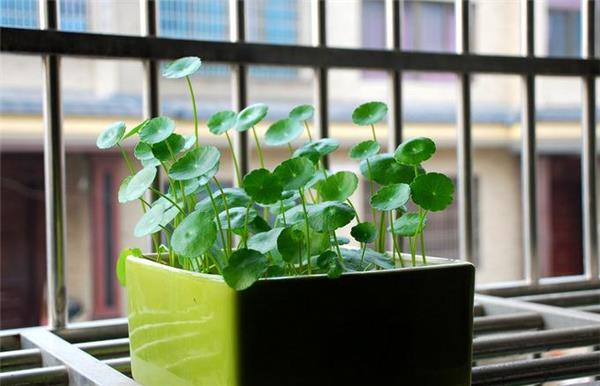
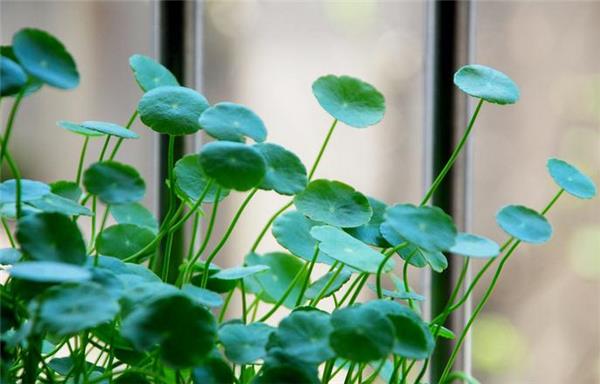
A perennial creeping small herb, with slender stems covered in gray short soft hairs, rooting at the nodes. Leaves are kidney-shaped to round, 4-25 mm in diameter, with a broadly rounded or slightly notched tip, a broad heart-shaped base, slightly hairy on the upper surface, appressed short soft hairs on the underside, and entire margins; with long petioles, petioles (1.5)3-6(6) cm long. Flowers are solitary in the leaf axils, with pedicels shorter than the petioles, thread-like; sepals obovate-oblong to spoon-shaped, blunt, 2-3 mm long, hairy on the back and margins; corolla bell-shaped, shorter than to slightly longer than the calyx, yellow, deeply 5-lobed, lobes oblong-lanceolate, hairless; 5 stamens, inserted at the sinuses between the 2 corolla lobes, filaments short, equal in length; ovary sparsely soft-hairy, 2-locular, with 4 ovules, 2 styles, stigma head-shaped. Capsule nearly spherical, small, shorter than the calyx, about 1.5 mm in diameter, membranous. Seeds 1-2, yellow to brown, hairless.
Medicinal effects of Lysimachia
Lysimachia is not only a plant but also a traditional Chinese medicinal herb. The main medicinal effects of Lysimachia are in preventing stones and promoting bile flow and stone expulsion, with good therapeutic and preventive effects on stones; it promotes water metabolism and treats strangury; clears heat and detoxifies; dissipates blood stasis and reduces swelling, clears damp-heat, treats sand strangury, painful difficult urination, jaundice with dark urine, carbuncles, swellings and boils. It mainly treats liver, gallbladder and urinary tract stones; heat strangury; nephritis edema; damp-heat jaundice; sore toxin and carbuncle swelling; venomous snake bites; and traumatic injuries. Its whole plant can be used medicinally. The effects of Lysimachia are in clearing heat and promoting urination, dispelling wind and relieving pain, stopping bleeding and promoting tissue regeneration, reducing inflammation and detoxifying, and killing parasites. It can treat acute and chronic hepatitis, icteric hepatitis, cholecystitis, nephritis, urinary tract infections, tonsillitis, stomatitis, and boils and sore toxins, venomous snake bites, breast carbuncles, dysentery, malaria, pulmonary hemorrhage, etc.
Used for sore toxin and carbuncle swelling, breast carbuncles, erysipelas, venomous snake bites and traumatic injuries. Lysimachia has the effects of detoxifying and dissipating blood stasis, reducing swelling and relieving pain. Fresh material is often taken orally or applied externally; the fresh herb can be used alone, mashed and its juice drunk, or mashed and applied to the affected area, or it can be used together with wild chrysanthemum, dandelion, and Rohdea japonica to enhance the heat-clearing and detoxifying effects.
About the side effects of Lysimachia
Every medicine has some toxicity, and no medicine can be taken long-term. Lysimachia is a diuretic and strangury-relieving medicine; it has no stone-dissolving or stone-removing function itself, and only uses its diuretic and strangury-relieving action to flush out stones. Long-term use will damage vital qi, and not only fail to expel stones, but instead affect stone expulsion and allow continued stone formation.
Cultivation methods for Lysimachia
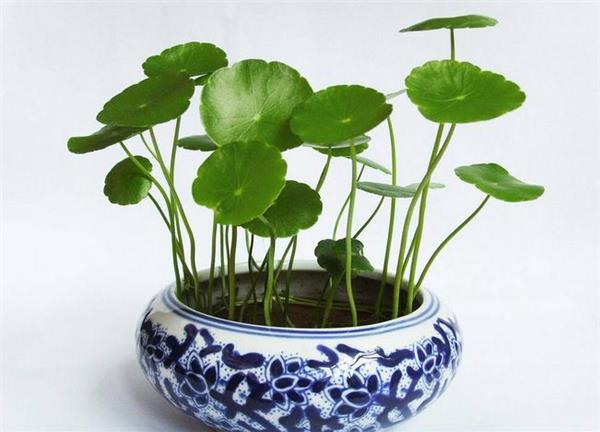
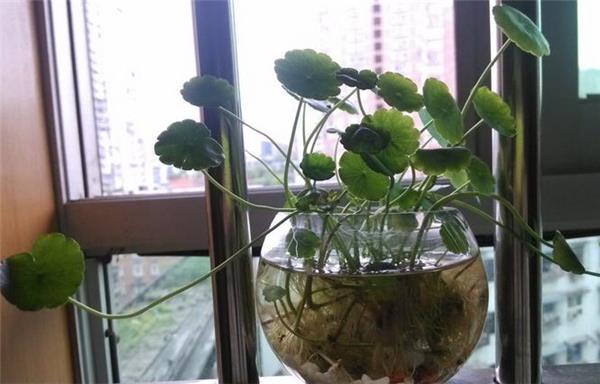
Lysimachia is suitable for rough, extensive cultivation; as long as there is enough sunlight and water, it can grow very quickly. In places without sunlight, artificial light can be used instead. The water needs to be tap water that has been left to settle for more than two hours, or used the next day. Follow the principle of watering "half-strength water", and a small amount of nutrient solution can be added to the water. There are usually yellow leaves, but they wither far more slowly than the plant grows, so do not worry. Its root system will grow green algae, but it does not need to be washed. As long as the water does not become foul-smelling, just add water to it, and at the same time mist the leaf surface occasionally.
Lysimachia does not need a very large pot; it can also be planted in a larger bowl. It is very afraid of cold. If placed outdoors in winter, all the water can be poured out, and it can be placed in a south-facing, sunny, wind-sheltered spot, where it can safely overwinter.
That is all for the related introduction to Lysimachia cultivation methods. I believe that after reading this, everyone has gained some understanding of Lysimachia cultivation methods. If any friends want to grow Lysimachia, you can refer to the related points I have introduced for you.