What to Do When Peace Lily Leaves Turn Yellow? Mastering the Care Method Is Key
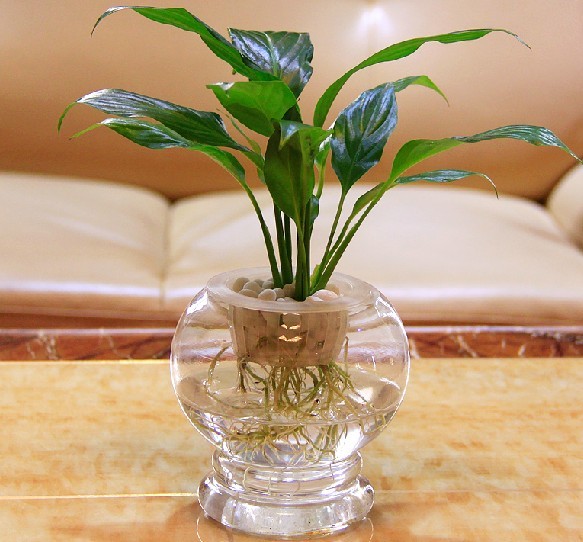
In recent years, more and more people have been growing peace lilies. It must be admitted that just hearing its name makes people want to grow one - the peace lily carries a beautiful auspicious meaning. But it is also believed that many people are not clear about how to care for a peace lily, so regarding what to do when peace lily leaves turn yellow and how to care for a peace lily, today the editor will answer each question one by one.
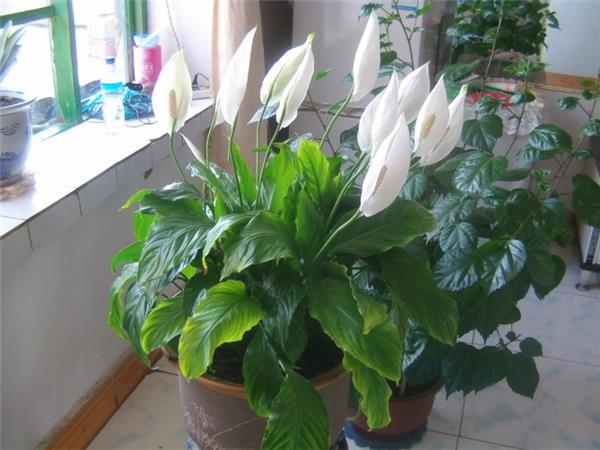
To talk about what to do when peace lily leaves turn yellow, we must first look at the causes of yellowing leaves in peace lilies.
1. Improper lighting. Peace lilies need good light in winter and early spring and should not be kept in shade, while as the light gradually intensifies they should be gradually shaded. If it has been enjoyed in a shaded place, it must not be placed directly in the sun for exposure, otherwise it will show discomfort due to the drastic change in environment, appearing as wilting, yellow leaves, and even withering and death.2. Humidity. Peace lilies need relatively high growing humidity. If the air is too dry it can cause leaf wilting, which can be solved by increasing misting or sprinkling water on the ground of the environment. Covering it with a transparent plastic bag also works, but when the light is good it should be slightly ventilated or a hole should be opened at the upper end of the plastic bag for ventilation and air exchange, otherwise the temperature inside the bag will rise sharply.
3. Improper fertilizing. Fertilizer should be applied thinly, not as a concentrated or raw fertilizer, and after applying solid fertilizer, water once with clear water. It is best to use dilute fertilizer water instead of clear water for watering; this generally will not cause fertilizer burn, and the plant will grow luxuriantly.
4. Unsuitable temperature. Generally this situation will not occur at this time; it mostly appears when the temperature is below 5°C or above 35°C.
5. Pests. If there is damage from harmful mites, the leaves will show adverse symptoms such as wilting, faded luster, and yellow withering. Specialized acaricides can be sprayed for control, such as dicofol, hexythiazox, pyridaben, and so on.
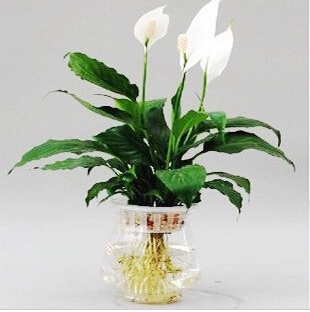
First, watering. Peace lilies have a relatively high demand for water and must often be kept with moist potting soil; but overwatering must also be avoided. Once overwatered, a large amount of water accumulates in the pot, which can easily cause root rot and yellowing and withering of the plant; in addition, note that in summer and during drought, water should often be sprayed on the leaf surface and the ground to increase air humidity, which is beneficial to its growth.
Second, lighting. Peace lilies are relatively shade-tolerant, so they are suitable for growing in a semi-shady environment, and direct sunlight must be avoided. According to experiments, about 60% scattered light can meet the growth needs of a peace lily, so it can be kept year-round indoors in a place with bright scattered light. If it is placed under strong light, it will cause the leaf surface to turn yellow, and may even directly cause sunburn.
Third, temperature. Peace lilies like high temperatures and are especially afraid of cold. The most suitable growth temperature is 20-28°C. Once winter comes it must be brought indoors. The lowest temperature it can withstand is 10 degrees, so attention must be paid in winter. Relatively speaking, growing conditions in the north are too poor; if a peace lily is placed at low temperatures for a long time, it will cause root rot, leaf drop or scorched yellowing, and in severe cases may even lead to death.
Fourth, potting soil. Potting soil is the foundation of cultivation. During the growth period, a peace lily should often be kept with moist potting soil, but water accumulation in the pot must be avoided. Long-term water accumulation in the potting soil will cause root rot and yellowing and withering of the plant. If this happens, it should be removed from the pot, then dried, and then put back.
How to Propagate a Peace Lily
First, division method
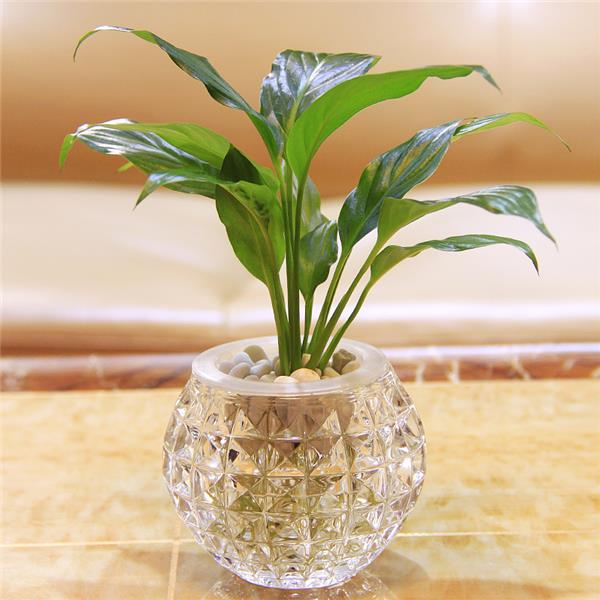
Generally speaking, a peace lily will not sprout before it is absolutely mature, so the growing point is often artificially damaged. Each plant can produce 3-5 buds. When the new buds grow to about 15 cm, cut them apart, then insert them into coarse sand and wait for them to take root. Note here that when cutting, the stem part must be included, and then wood charcoal ash should be applied to the wound to prevent rot.
Second, seeding method
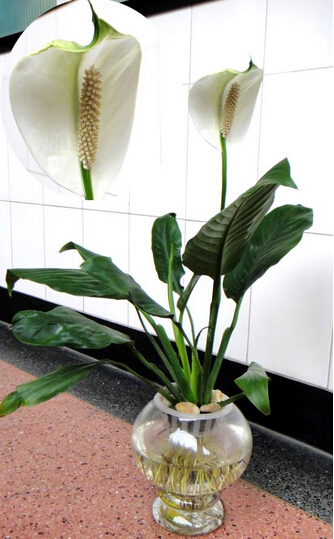
This is a method often used at cultivation bases, but it has a difficulty: it requires artificial pollination. Many people have problems here, so it needs special explanation: the white thin sheet-like object is not the flower; the protrusion in the middle is the flower, so the flower is relatively small. When the flower has pollen, use a clean brush to paint on the flower to complete pollination.
Although the tissue culture method has many advantages, up to now the tissue culture method has not been widely used in the country and is only used in experiments. Generally, with the tissue culture method, plants are first grown in plastic pots, and after they grow to 4-5 leaves they are divided and replanted, then after 3-4 repottings and transplantings, when the seedlings are 30 cm tall they are planted conventionally.
The Role of Peace Lilies in Home Life
First, peace lilies can filter benzene, trichloroethylene, and formaldehyde from the air, which is greatly helpful to human health, especially for newly renovated houses.
Second, peace lilies can suppress waste gas exhaled by the human body, prevent dryness of the nasal mucosa, and greatly reduce the possibility of illness. This help to people's bodies can be said to be direct and also very great, and this is also an important reason why many people choose to grow them.
There is also another one: the tissue culture method
Although the tissue culture method has many advantages, up to now the tissue culture method has not been widely used in the country and is only used in experiments. Generally, with the tissue culture method, plants are first grown in plastic pots, and after they grow to 4-5 leaves they are divided and replanted, then after 3-4 repottings and transplantings, when the seedlings are 30 cm tall they are planted conventionally.
The Role of Peace Lilies in Home Life
First, peace lilies can filter benzene, trichloroethylene, and formaldehyde from the air, which is greatly helpful to human health, especially for newly renovated houses.
Second, peace lilies can suppress waste gas exhaled by the human body, prevent dryness of the nasal mucosa, and greatly reduce the possibility of illness. This help to people's bodies can be said to be direct and also very great, and this is also an important reason why many people choose to grow them.