Is mosquito-repellent scented geranium really effective? Teach you the correct cultivation method
How to grow mosquito-repellent geranium, a full introduction to its cultivation methods. As summer arrives, many people choose to grow mosquito-repellent geranium to prevent mosquito bites. How do you grow mosquito-repellent geranium? Is mosquito-repellent geranium really effective?
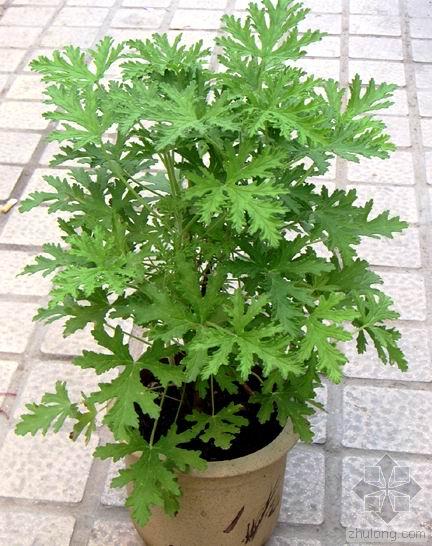
How to grow mosquito-repellent geranium. As summer arrives, various mosquito-repellent methods emerge one after another, among which "mosquito-repellent geranium" is loved by the public as a safe method with no toxic side effects. Therefore, "mosquito-repellent geranium" is currently in high demand on the market. But for many friends, once they have the "mosquito-repellent geranium," how to grow it becomes a problem. Below, the editor takes everyone to look at the cultivation methods for mosquito-repellent geranium.
Mosquito-repellent geranium is a perennial herbaceous plant; its survival temperature is above -3°C; it can be cultivated indoors and outdoors. Generally, the higher the temperature, the stronger the fragrance and the better the mosquito-repellent effect, so summer is its peak mosquito-repellent period. Seedlings develop very quickly and can grow to maturity in half a year. In two years, the main branches gradually become woody, and it can also be shaped into bonsai, with good ornamental value and mosquito-repellent effect.
Compared with general mosquito-repellent products, mosquito-repellent geranium is a completely natural product with no toxic side effects. At the same time, in the hot summer, its fresh scent can also purify the environment and make people feel pleasant and relaxed. The uses of mosquito-repellent geranium can be roughly summarized as follows: mosquito-repellent geranium can be shaped into bonsai, like a beautiful flower, repelling insects while also being ornamental. It is especially suitable for offices, living rooms, and business premises (especially restaurants and hotels) (1-2 pots per room is enough); mosquito-repellent geranium emits a lemon fragrance all year round, filling the air with fragrance, freshening the air, and safely repelling mosquitoes. No need for medicine, no need for fumigation, harmless to humans and animals, achieving biological natural mosquito repellence. Communities and apartment complexes can also plant it on a large scale to build mosquito-repellent green belts. Especially in waterside communities.
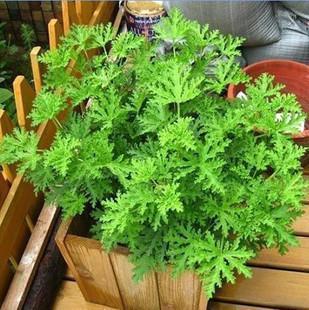
How to grow mosquito-repellent geranium, the cultivation methods for mosquito-repellent geranium
Mosquito-repellent geranium is a perennial herbaceous plant; its survival temperature is above -3°C; it can be cultivated indoors and outdoors. Generally, the higher the temperature, the stronger the fragrance and the better the mosquito-repellent effect, so summer is its peak mosquito-repellent period. Seedlings develop very quickly and can grow to maturity in half a year. In two years, the main branches gradually become woody, and it can also be shaped into bonsai, with good ornamental value and mosquito-repellent effect.
Mosquito-repellent geranium has strong adaptability and is a perennial herbaceous plant that can be cultivated indoors and outdoors. It emits a rich lemon fragrance all year round and has the effect of repelling mosquitoes and purifying the air. It truly achieves biological natural mosquito repellence without spraying medicine or fumigation, with no side effects. Undoubtedly, mosquito-repellent scented geranium is a perfect combination of nature and modern high-tech bioengineering, and is humanity's most ideal mosquito-repellent product. The advent of this product has epoch-making significance for improving and maintaining the living, working, and learning environments of modern humans.
Usually propagated by sowing or cuttings, and cuttings easily survive in spring and autumn. In early March, sow the seeds into clean fine sandy soil at a depth of 3 cm. Four hours after inserting, water thoroughly, and afterward keep the pot soil moist, neither too dry nor too wet. In early spring, place it in a warm, bright place indoors. At a room temperature of about 20°C, it will germinate and take root in about 1 month. Then divide and transplant, using ordinary cultivation soil in small pots to grow the seedlings. When the seedlings grow strong and white roots emerge from the bottom hole of the pot, use fertilized cultivation soil with some crushed hoof pieces placed underneath as base fertilizer, and transplant into chrysanthemum barrel pots for final planting.
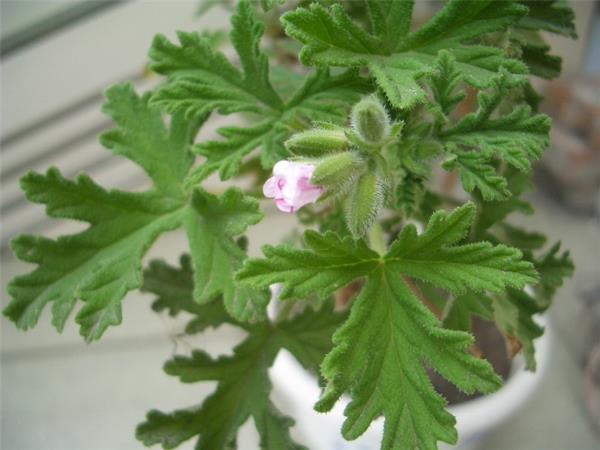
Mosquito-repellent geranium grows quickly and needs repotting once a year to add soil and fertilizer, usually from February to early March in early spring. First prune heavily, leaving only 3 side buds at the base of each branch, then remove the plant from the pot, pull away the surrounding old and decayed roots, and replace with new fertilized cultivation soil and apply base fertilizer.
After new branches emerge in early April, apply a diluted organic liquid fertilizer once a week. In late April, move it outdoors and it will bloom one after another.
In early June, move it to the inner side of the balcony in diffused light. For courtyard maintenance, move it under tree shade, on the east side of the house, or under a shade shed. Note: water when the soil surface of small pots turns white and when the soil 1 cm below the surface of large pots shows moisture.
In July to August, during high temperatures, spray water frequently to cool it down and keep the surrounding environment moist; do not let water accumulate in the pot. In mid-October, before the early frost arrives, move it indoors. In winter, the room temperature should not be lower than 12°C, with sufficient light and fresh air, and it will bloom continuously. For professional cultivation to supply large quantities of flowers for the "May Day" holiday, heavily prune in late autumn, move into a low-temperature room (below 10°C), maintain sufficient light, control water but keep it moist, and maintain it with moderate ventilation.
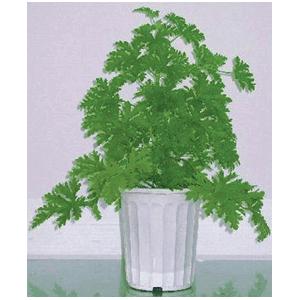
Is mosquito-repellent geranium useful?
Mosquito-repellent geranium was created by Dutch geneticist Dirk, who used gene fusion technology to introduce citronellal from lemongrass into the geranium native to Africa, cultivating a mosquito-repellent geranium with mosquito-repellent effects. Subsequently, Dirk established a genetic company in the United States to promote this technology on a large scale, and later it spread to Japan, Australia, and elsewhere.
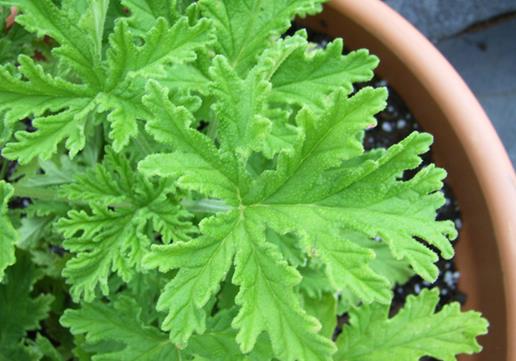
Why are mosquitoes afraid of mosquito-repellent geranium? It turns out it is because there is a special "little ingredient" inside! This product uses transgenic technology to implant the mosquito-repellent gene - the citronellal gene structure - into the "herb," using its own unique release system as a carrier to continuously release citronellal substances into the air. At the same time, it also implants a plant DNA (gene) structure containing fresh scent and air-purifying effects, forming a "natural evaporator," thus filling the air with fragrance and achieving a mosquito-repellent effect. Especially in hot summer, it makes people feel refreshed and relaxed. It truly achieves biological natural mosquito repellence without spraying medicine or fumigation, with no side effects. Undoubtedly, mosquito-repellent scented geranium is a perfect combination of nature and modern high-tech bioengineering, and is humanity's most ideal mosquito-repellent product. The advent of this product has epoch-making significance for improving and maintaining the living, working, and learning environments of modern humans. At present, there is still no definite proof that the fragrance emitted by aromatic plants such as mosquito-repellent geranium and night-blooming jessamine is harmful to the human body.
Why are mosquitoes afraid of mosquito-repellent geranium? It turns out it is because there is a special "little ingredient" inside! This product uses transgenic technology to implant the mosquito-repellent gene - the citronellal gene structure - into the "herb," using its own unique release system as a carrier to continuously release citronellal substances into the air. At the same time, it also implants a plant DNA (gene) structure containing fresh scent and air-purifying effects, forming a "natural evaporator," thus filling the air with fragrance and achieving a mosquito-repellent effect. Especially in hot summer, it makes people feel refreshed and relaxed. It truly achieves biological natural mosquito repellence without spraying medicine or fumigation, with no side effects. Undoubtedly, mosquito-repellent scented geranium is a perfect combination of nature and modern high-tech bioengineering, and is humanity's most ideal mosquito-repellent product. The advent of this product has epoch-making significance for improving and maintaining the living, working, and learning environments of modern humans. At present, there is still no definite proof that the fragrance emitted by aromatic plants such as mosquito-repellent geranium and night-blooming jessamine is harmful to the human body.