Cineraria Cultivation Methods and Uses Explained in Detail
Basic information about cineraria:
Cineraria (Latin scientific name: Pericallis hybrida B. Nord), a perennial herb, often cultivated as a 1-2 year-old plant. It is divided into tall varieties and dwarf varieties, ranging from 20-90 cm. The whole plant is covered with fine hairs, and the leaves are large and shaped like melon leaves, green and glossy. The flowers are terminal, with many capitula aggregated into corymbs, and the inflorescences densely cover the top of the branches, often forming a pot-bottom shape. The flower colors are rich, including all colors except yellow, as well as red-and-white bicolor forms. The flowering period is from January to April.
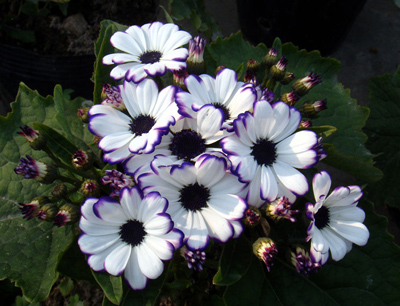
Cineraria is mainly propagated by sowing, generally carried out in late July, and it can bloom by the Spring Festival. If flowers are needed for New Year's Day, sowing can be done in mid-to-late June. Mix the seeds evenly with a small amount of fine sand, then evenly scatter them in a shallow pot filled with humus soil, and then sprinkle a layer of fine soil, just enough that the seeds are no longer visible. Then move the pot to a cool place, keep it ventilated and at a relatively low temperature. After about 1 week, when they germinate and emerge, move them out to receive sunlight, but they must be shaded at noon. After two weeks, full light can be given. To prolong the flowering period, sow in pots once about every 10 days.
Soil requirements: Cineraria likes sandy soil that is rich in humus and has good drainage performance, so when choosing soil, it is best to choose this kind of soil, which can benefit the growth of cineraria. You can also prepare nutrient soil yourself. In July to August, after turning over, sun-drying, and crushing peat or leaf mold, add 950 grams of urea, 1.15 kg of potassium dihydrogen carbonate, 3.7 kg of deodorized chicken manure, and 1 kg of superphosphate, and at the same time measure its pH value to be between 6 and 7.
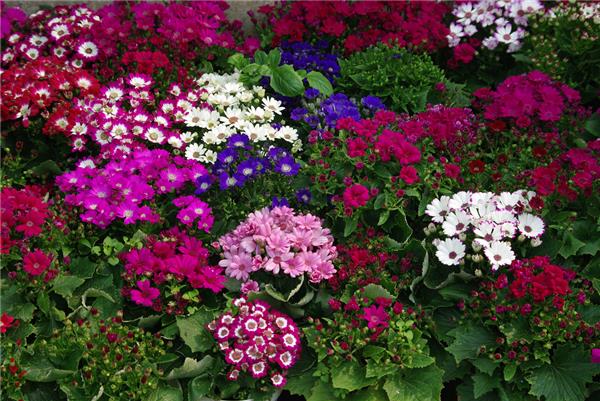
Sufficient moisture: During the growth period of cineraria, pay attention to maintaining sufficient moisture, especially during the growing period, and pay even more attention to increasing the amount of watering, generally watering once about every three days. At the same time, also pay attention to maintaining soil humidity and air humidity, and spray water on the leaves once a day. Maintaining the humidity of the soil and air can help cineraria grow more robustly and make the flower colors more vivid.
Suitable light intensity: Cineraria likes a warm environment and is suitable for growing in warm and cool seasons, so January to April is the peak growing season for cineraria. Generally, the winter temperature is too low, so cineraria should be placed on a balcony to increase its light intensity, which can be more beneficial to the growth of cineraria; in season, attention should also be paid to sun protection, because too high light intensity will instead affect the growth of cineraria.
Cineraria's impact on the environment
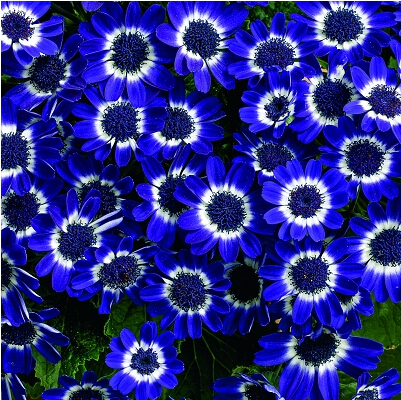
1. Cineraria fills the home with the atmosphere of nature. Cineraria is also called rabbit ear flower, thousand-day lotus, radish begonia, etc. It is a perennial herbaceous bulbous plant with brilliant flower colors; the main cultivated varieties include Europe's "red flower", Africa's "pink flower", the Mediterranean's "red with spots", etc. The flowering period is from December to April of the following year, with the full bloom period in February to March, and it is one of the main ornamental potted flowers during New Year's Day and the Spring Festival. At Jingchun Flower and Tree Garden, a new variety with multiple colors on 1 flower has also appeared. Cineraria is cross-pollinated, so there are many horticultural varieties.
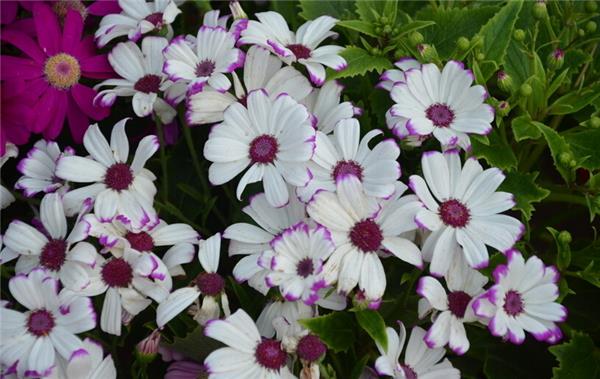
3. Cineraria makes us stronger. Sapphire blue is one of the colors of cineraria, and also the most special color. 13 brilliant sapphire-blue petals cluster around the flower center, and the flower center supports the 13 sapphire-blue petals. It represents being ELF. The leaves of cineraria are layered one upon another, and they all try their utmost to stretch their bodies so they can stand more comfortably. The jade tree remains green as before, with no concept of the four seasons at all, only holding fast to itself, and in the bleak autumn days it still keeps its own lush true color. These fragile lives, in the cold autumn days and in the rustling autumn wind, all show vitality. Their existence seems to be just to tell us: no matter how cold the wind outside is or how heavy the rain is, as long as belief is firm, life will remain green forever.
Cineraria flower language:
The flower language of cineraria is: joy, cheerfulness, happiness, family joy, prosperity, etc. It is suitable to give to relatives and friends during the Spring Festival. This flower is brightly colored and expresses beautiful feelings.
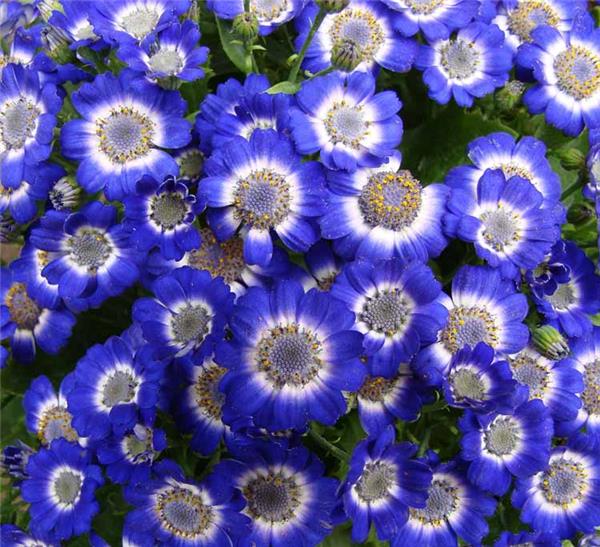
Sapphire blue is one of the colors of cineraria, and also the most special color. 13 brilliant sapphire-blue petals cluster around the flower center, and the flower center supports the 13 sapphire-blue petals. It represents being ELF. The leaves of cineraria are layered one upon another, and they all try their utmost to stretch their bodies so they can stand more comfortably. The jade tree remains green as before, with no concept of the four seasons at all, only holding fast to itself, and in the bleak autumn days it still keeps its own lush true color. These fragile lives, in the cold autumn days and in the rustling autumn wind, all show vitality. Their existence seems to be just to tell us: no matter how cold the wind outside is or how heavy the rain is, as long as belief is firm, life will remain green forever.
Cineraria flower language:
The flower language of cineraria is: joy, cheerfulness, happiness, family joy, prosperity, etc. It is suitable to give to relatives and friends during the Spring Festival. This flower is brightly colored and expresses beautiful feelings.