A roundup of aquatic plant types: what are the common aquatic plants?
Plants can be divided into many kinds, and one of them is aquatic plants. So how much do you know about aquatic plants? What types of aquatic plants are there? Let's take a look together.
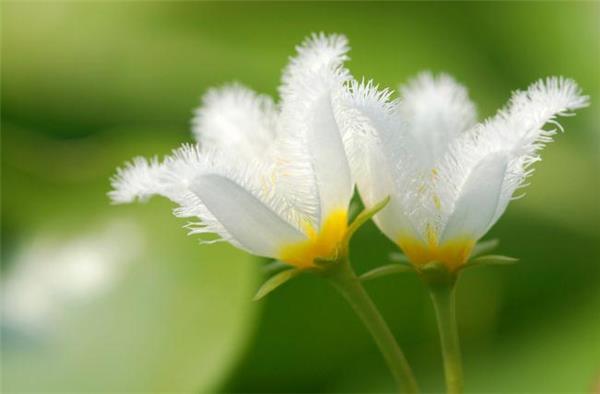
Morphological characteristics of aquatic plants
The intercellular spaces of aquatic plants are especially well developed, and they often also develop special aerenchyma to ensure that the submerged parts of the plant have enough oxygen. The aerenchyma of aquatic plants falls into two main categories: open and closed. The aerenchyma of plants such as lotus (Nelumbo nucifera) is of the open type: after air enters through the stomata of the leaves, it can pass through the aerenchyma of the stems and leaves and thus reach the air chambers in the underground stems and roots. The entire aerenchyma exchanges directly with the outside air through the stomata. The aerenchyma of plants such as hornwort (Ceratophyllum demersum) is of the closed type; it is not connected to the outside atmosphere and only stores the oxygen produced by photosynthesis for use in respiration, as well as the carbon dioxide produced by respiration for use in photosynthesis.
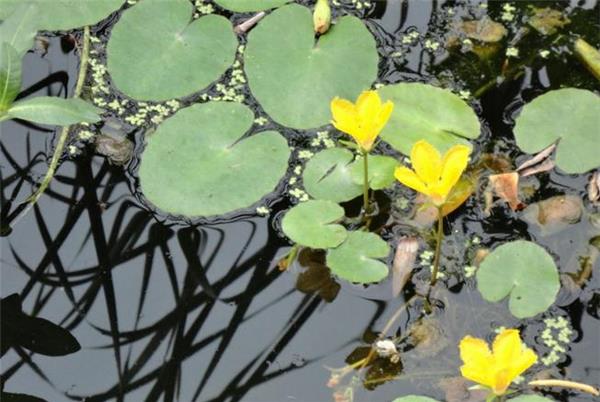
Types of aquatic plants
I. Emergent plants
Aquatic plants are generally divided into four types, and one of them is emergent plants. Emergent aquatic plants are tall, with brightly colored flowers, and the vast majority have distinct stems and leaves; they stand upright and erect, with the lower part or base submerged in water, while the roots or rhizomes are rooted in the mud to grow, and the upper part of the plant rises above the water surface. There are many kinds of emergent plants; common ones include lotus (Nelumbo nucifera), purple loosestrife (Lythrum salicaria), sweet flag (Acorus calamus), yellow flag iris (Iris pseudacorus), softstem bulrush (Schoenoplectus tabernaemontani), powdery alligator-flag (Thalia dealbata), pickerelweed (Pontederia cordata), variegated giant reed (Arundo donax var. versicolor), cattail (Typha), water plantain (Alisma), umbrella plant (Cyperus alternifolius), reed (Phragmites australis), wild rice stem (Zizania latifolia), and so on.
II. Floating-leaved plants
Floating-leaved plants are also one of the types of aquatic plants. Floating-leaved aquatic plants have well-developed rhizomes, large and brightly colored flowers, no obvious above-ground stems, or stems that are slender and weak and cannot stand upright, with leaves floating on the water surface. Common species include giant water lily (Victoria), water lily (Nymphaea), spatterdock (Nuphar), water chestnut (Euryale ferox), and floating heart (Nymphoides peltata), among others.
Floating plants such as fine-leaved mosquito fern (Azolla filiculoides) or water hyacinth (Eichhornia crassipes) can also absorb nutrients dissolved in the water through their fine roots. Deep-water plants such as those in the genus Nuphar and the genus Nymphaea have their roots at the bottom of the pond, while their flowers and leaves float on the water surface; besides being very beautiful themselves, they also provide shade for pond life and limit the growth of algae.
III. Submerged plants
Submerged aquatic plants could be considered the terrestrial plants of the water. Submerged aquatic plants have roots and stems growing in the mud, with the entire plant submerged in water, and they have well-developed aerenchyma, which facilitates gas exchange. The leaves are mostly narrow and long or thread-like, and can absorb some nutrients from the water; they can also grow and develop normally under weak underwater light.
They have certain requirements for water quality, because turbid water will affect their photosynthesis. The flowers are small and the flowering period is short, so they are mainly grown for their foliage. Submerged plants, such as those in the genus Lagarosiphon, play the role of an "oxygen machine" in the water, providing other organisms in the pond with the dissolved oxygen needed for growth; at the same time, they can also remove excess nutrients from the water, thereby keeping the water body clear by controlling algae growth.
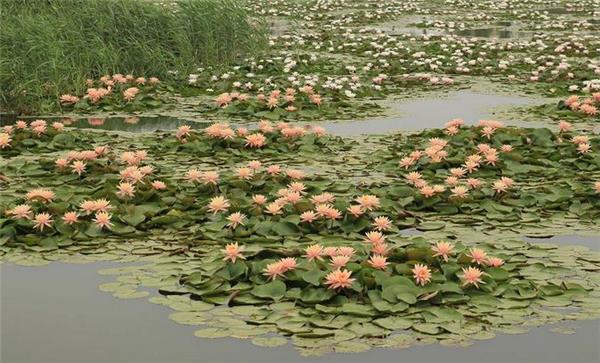
IV. Floating plants
There are relatively few types of floating aquatic plants. The roots of these plants do not grow in the mud, and the plant body floats on the water surface, drifting about with currents and wind and waves. Most are grown mainly for their foliage, providing decoration and green shade for the pond water. And because they can both absorb minerals in the water and block sunlight from entering the water, they can also inhibit the growth of algae in the water body. They can provide coverage and decoration on the water surface more quickly.
However, some varieties grow and reproduce especially rapidly and may become a nuisance in the water, such as water hyacinth (Eichhornia crassipes). So they need to be scooped out with a net regularly, otherwise they will cover the entire water surface. In addition, do not introduce these plants into larger ponds, because if you want to remove these plants from a large pond, it will be very difficult.
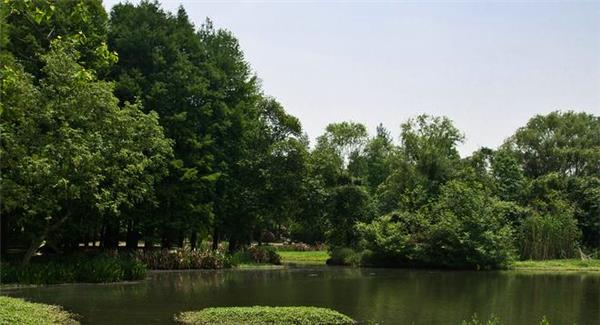
That is all for the introduction to aquatic plant types. I believe that after reading this, everyone has gained some understanding of aquatic plants. I hope the relevant knowledge introduced today can be of help to everyone.