What are the common varieties of succulents? Keep this list handy
Succulents have won people's affection thanks to their own special characteristics. So, what are the common succulents? What characteristics do succulents have? Some friends may not know much about this, so today I will give a brief introduction for everyone, let's take a look together.
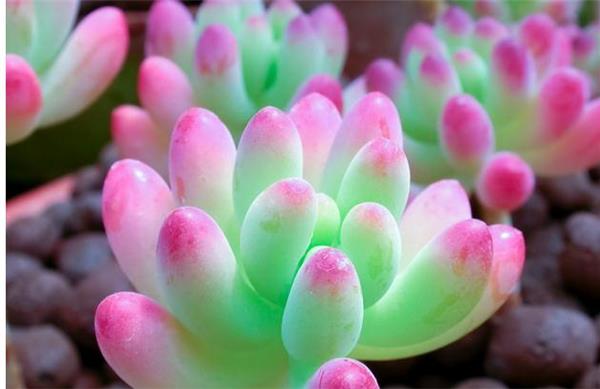
What succulents are there
1. String of Pearls
This is also a plant called "Buddha beads". It loves sunlight, but around noon it should be shaded as much as possible, especially in summer. Make sure to water it once a week, and you can usually spray a little water, which helps increase humidity and makes the beads look plumper.
2. Echeveria 'Yudie'
This is a plant that needs to be grown in a pot, usually in spring or autumn, and the potting soil is suitable if it is sandy soil with good air permeability. In winter it needs stronger sunlight to keep warm.
3. Sedum rubrotinctum
This is a plant suitable for growing between 10°C and 28°C. Generally, it is suitable to apply organic fertilizer once about a month, preferably liquid fertilizer, and pay attention to ventilation. Only by keeping it in the sun can it grow redder and redder.
4. Pachyveria 'Clavifolia'
This is a very famous succulent in the Crassulaceae family. Compared with Pachyphytum 'Peach Beauty', its leaf tips look longer. When in an environment with plenty of sunlight, it is very drought-tolerant, and its flower stalks are very tall, so its posture is also very beautiful. Its bell-shaped flowers add even more charm.
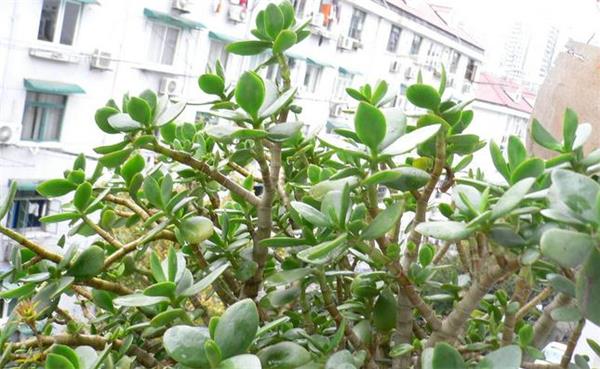
Characteristics of succulents
1. Most succulents grow leaves.
2. Although succulents have the feature of "spines", they do not have the "length" and "sharpness" of cacti. Although the surface of many succulents has spines, they are covered by layer upon layer of leaves. Only when the leaves fall does the spines of succulents become somewhat distinct.
3. Most succulents have "solitary flowers", with only one flower on the whole plant, so their ornamental value is somewhat lower than that of cacti.
4. The water-storing part of succulents in the Apocynaceae family is mostly in their stems, and this kind of plant is also called a stem succulent.
5. The blocks formed by succulents are mostly very numerous, for example, spherical bodies and bottle-shaped bodies.
Physiological characteristics of succulents
Mucus: Many succulents contain a lot of sap in their bodies, white or colorless. This liquid is a polysaccharide substance and contains pentose. This nutrient can help succulents enhance their drought resistance, and at the same time, it can also allow wounds on the outer wall of the plant to heal quickly.
Transpiration: The morphological structure of succulents allows them to reduce a great deal of transpiration. The thick cuticle is called a hairy covering. The diffusion resistance of the cuticle of succulents is very large, and they also lose much less water than other plants.
Metabolic mode: Succulents differ from ordinary plants. Ordinary plants generally absorb CO2 during the day, while they do so at night. If the surrounding temperature is low, succulents can absorb a large amount of carbon dioxide.
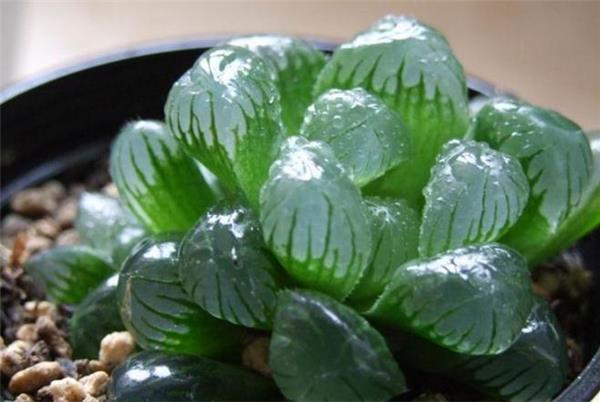
Growing succulents
Succulents are generally planted as potted plants for indoor growing. Around the world, quite a few people like to grow succulents. This kind of plant has a very strong ability to adapt to the environment and is also very easy to grow. This kind of plant mostly likes shady places, so it can be seen that it is truly a must-have plant for indoor growing. As long as the soil drains well and the air circulates quickly, it is fine. We do not need to water it regularly every day, nor do we need to fertilize it. We only need to manage the external growing environment for it.
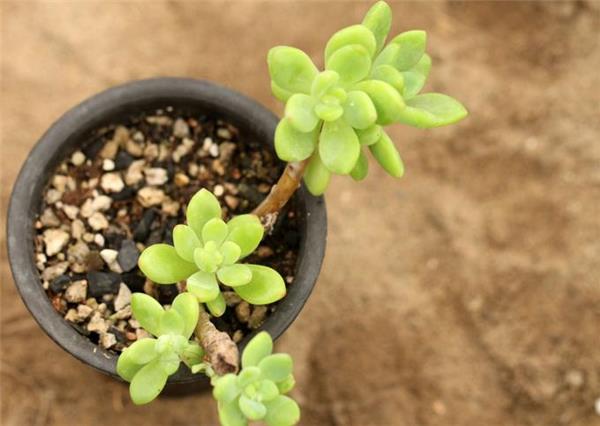
That is all for the introduction to succulents. I believe that after reading this, everyone has gained some understanding of succulents. If any friends want to grow succulents, you can refer to the relevant points I have introduced for everyone.