What are the cultivation methods for the small sun pitcher plant
What is a pitcher plant? And how should the small sun pitcher plant be cultivated? Some friends may not be especially familiar with this yet, so today we will give a brief introduction, and let us take a look together.
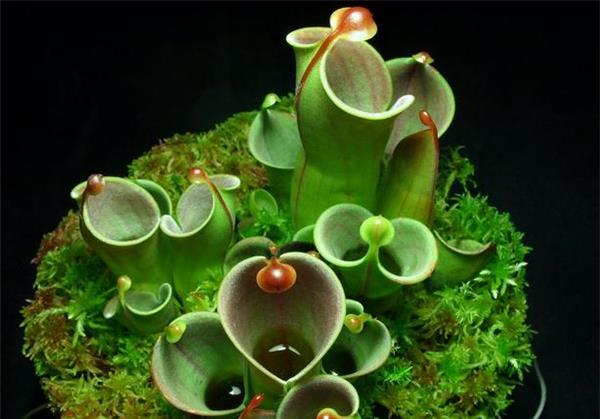
Morphological characteristics of the pitcher plant
Perennial carnivorous herb. Stemless, leaves in a rosette, leaves evergreen, rough, cylindrical, with downward-pointing hairs inside the leaf so that insects can enter but are not likely to get out. Flower scapes erect, flowers solitary, nodding, ranging from yellow to pink depending on the variety, opening from April to May.
The pitcher plant belongs to the genus Sarracenia in the family Sarraceniaceae. Plants of this genus are native to Western Europe, North America, and Mexico. Because their tubular leaves can secrete digestive fluid, which mixes with the stored rainwater to cause insects trapped inside the tube to decay. In other words, they use their leaves to capture and digest insects such as ants and wasps.
Growth habits: Prefers warmth and requires relatively high humidity, suitable for growing in open areas with good ventilation and direct sunlight. Landscape use: Can be used as decoration in gardens, and is even more suitable for cultivation in schools as biological science education material. Propagation and cultivation: Propagated by sowing or division.
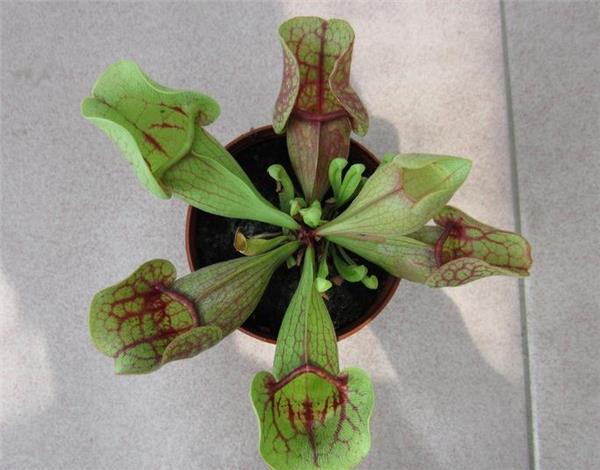
How to grow the small sun pitcher plant
Soil: The pitcher plant prefers poor, acidic soil. The growing medium is prepared from materials such as peat soil, sphagnum moss, and perlite, or it can be planted with peat soil alone. The bottom of the pot should be lined with plenty of broken bricks or broken pot pieces. Planting should not be too deep; half of the rhizome should be left exposed above the soil surface. After planting, cover the pot surface with a small amount of moss to retain moisture, then place the pot in shallow water 3-4 cm deep.
Temperature: The pitcher plant likes warm winters and cool summers. The suitable growing temperature is 20-26°C, and it is relatively cold-tolerant. In winter, the pitcher plant is in its dormant period, and the overwintering temperature should not be lower than -5°C, but it is best to maintain a temperature above 8°C. The pitcher plant is not tolerant of dryness and high temperatures. When temperatures are high, measures such as shading, spraying water, and enhancing ventilation should be used to cool it down.
Light: The pitcher plant likes a semi-shaded environment, and strong sunlight will scorch the leaf tubes. In summer, shade is needed, blocking 50%-60% of sunlight, or place the pitcher plant in a spot with ample scattered light, avoiding direct sunlight. At other times, ample light is needed, which can make the pitcher-shaped leaves of the pitcher plant more fresh green and attractive. When light is insufficient, the pitcher plant will grow leggy and the leaf color will become dull.
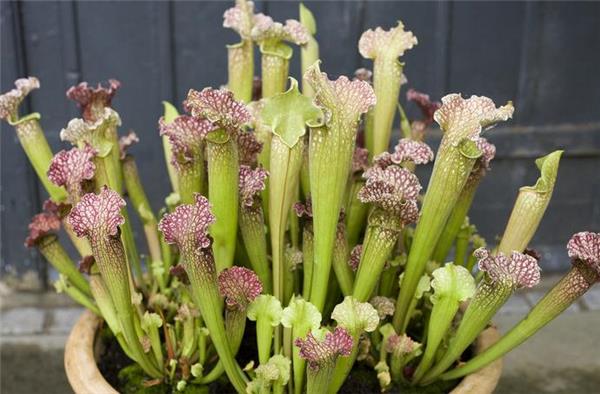
Watering: The pitcher plant likes a moist soil environment and is not tolerant of drought. During the growing period, the pitcher plant should be watered abundantly to keep the medium moist. In winter, watering should be controlled, and the soil only needs to be slightly moist. In summer, prevent the water temperature from getting too high, otherwise it will cause root rot. Rainwater is best for watering, and water containing lime should not be used.
Humidity: The pitcher plant is suitable for growing in a humid environment and is not tolerant of dryness. Therefore, during the growing period, the pitcher plant should be sprayed frequently around the plant and its surroundings to keep the environment humid. In summer, more water should be sprayed on the leaf surface of the pitcher plant, which can both lower the ambient temperature and prevent the dry environment from being unfavorable to plant growth.
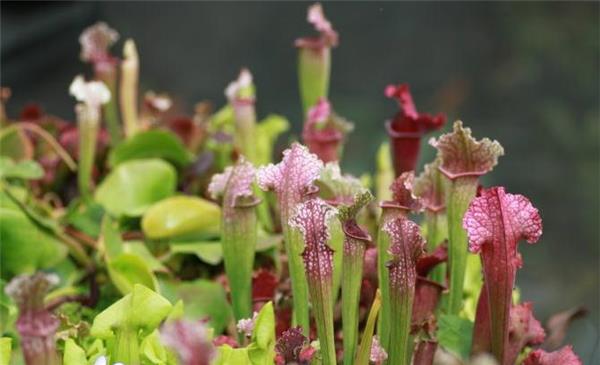
Fertilization: In spring, the pitcher plant can be given an additional nitrogen-based fertilizer once every half month. A 0.2%-0.3% fertilizer solution can be used to water the roots, or the diluted fertilizer solution can be poured directly into the pitcher traps for absorption. For pitcher plants with red leaves and red veins, attention should be paid to the balance of nitrogen, phosphorus, and potassium so that the leaf color of the pitcher plant is vivid and its ornamental value is improved.
That is all for the related introduction to the cultivation methods of the small sun pitcher plant. We believe that after reading this, everyone has gained some understanding of the cultivation methods of the small sun pitcher plant. We hope the related content introduced today can be of some help to everyone.