How to Grow Cobra Lily (Darlingtonia californica)? A Detailed Guide to Care Methods
Many friends are not particularly familiar with the cultivation methods of the cobra lily, and troubles always seem to arise during the growing process. Today, we will introduce the cultivation methods of the cobra lily, so let us take a look together.
Introduction to the Cobra Lily
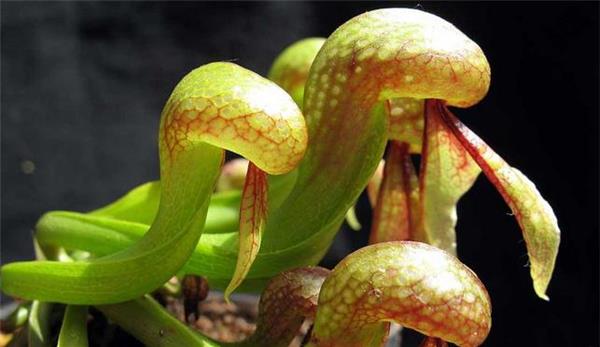
The cobra lily is one of the genera in the pitcher plant family (Sarraceniaceae) and is a carnivorous plant, mainly distributed in northern California and Oregon in the United States.
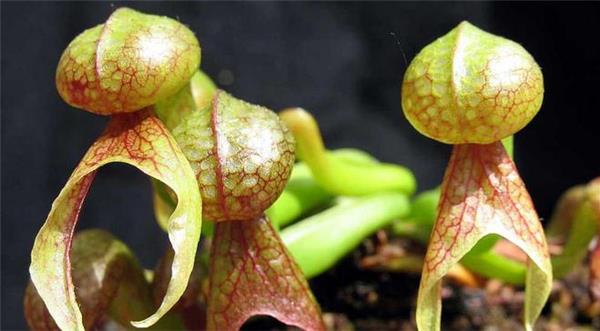
The leaves of the cobra lily are dimorphic. The leaves are arranged in a rosette, with each mature growth point consisting of 3 to 14 leaves. Within 2 to 3 years, the leaves of seedlings are all simple tubular shapes with gradually tapering tips. Young leaves are generally 1 to 3 cm long and range from red-green to red. After that, the leaves of the cobra lily transition to the mature state. Mature leaves already have insect-catching capability, are 20 to 80 cm long, hollow, with the lower part tubular and the upper part bulbous and swelling forward. At the bottom of the front bulge of the leaf there is a 10 to 20 mm hole, which is the only opening of the leaf. The rim of the pitcher mouth curves inward, forming a shape similar to the mouth of a lobster trap. Connected to the pitcher mouth is a bifurcated fish-tail-shaped appendage. Nectaries are present on the dorsal side of the appendage and around the pitcher mouth.
Cultivation Methods for the Cobra Lily
Temperature: It prefers warm winters and cool summers, with a suitable growing temperature of 10-20V, and is relatively cold-tolerant. In winter, the plant is in its dormant period, and the temperature should not be lower than -5°C, but it is best to maintain a temperature above 8°C. In summer, it is not tolerant of dryness and high temperatures, with a suitable growing temperature of 20-26°C. During high temperatures, measures such as shading, misting the environment and enhancing ventilation should be adopted to create a relatively cool environment.
Light: It prefers a semi-shaded environment, and strong sunlight will scorch the leaf tubes. From late spring to early autumn, attention should be paid to shading, blocking out 50%-60% of sunlight; or place it in a spot with ample scattered light, avoiding direct sunlight. At other times, ample light is needed. Plants that fully receive sunlight in the open ground in winter and spring often have pitcher leaves that are fresher and more pleasingly green than those cultivated in greenhouses or polytunnels. When light is insufficient, the plant grows leggy and the leaf color becomes dull.
Watering: It prefers a moist soil environment and is not tolerant of drought. During the growing period, it should be watered abundantly to keep the substrate moist. In winter, watering should be controlled, and slight moisture is sufficient. In summer, prevent the water temperature from getting too high, otherwise it will cause root rot. Rainwater is best for watering, and watering with water containing lime should be avoided.
Environmental Humidity: It prefers a humid environment and is not tolerant of dryness. During the growing period, the plant and its surroundings should be misted frequently to keep the environment humid. In summer, spraying water on the leaf surface more often can lower the ambient temperature and also avoid the adverse effects of dry hot winds on the plant.
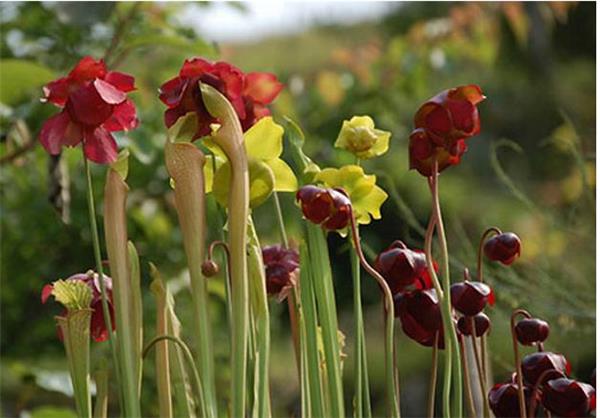
Fertilizing: In spring, apply a nitrogen-based fertilizer once every half month. You can water the roots with a 0.2%-0.3% fertilizer solution, or directly pour the diluted fertilizer solution into the insect-catching pitchers for absorption. For varieties with red leaves and red veins, attention should be paid to the balance of nitrogen, phosphorus and potassium to make the leaf color vivid and enhance ornamental value. Do not apply nitrogen fertilizer alone or in excess, otherwise the leaf color will fade and turn chlorotic. Fertilizing should be light rather than concentrated, as concentrated fertilizer easily causes fertilizer burn. During winter dormancy, fertilizing should be stopped.
Potting: It prefers lean acidic soil. The substrate is prepared from materials such as peat moss, sphagnum moss and perlite, or it can be planted with peat moss alone. A thick layer of broken bricks or broken pot pieces should be placed at the bottom of the pot. Planting should not be too deep; half of the rhizome should be left exposed above the soil surface. After planting, cover the pot surface with a small amount of moss to retain moisture, then place the pot in shallow water 3-4 cm deep.
That concludes the related introduction to the cultivation methods of the cobra lily. I believe that after reading this, everyone has gained some understanding of how to grow the cobra lily. We hope the related knowledge points introduced today will be helpful to everyone.