What plant is Selaginella? Read this article to understand the related introduction
Selaginella is a resurrection plant that grows on rocks, mostly on sunny hillside rocks or in dry rock crevices. Some friends may not be particularly familiar with Selaginella, so today I will give a brief introduction for everyone. Let us take a look together.
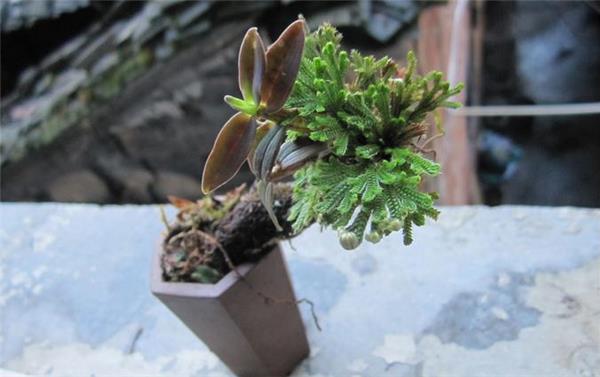
What plant is Selaginella
Many people want to ask what plant Selaginella is. In fact, Selaginella is what we commonly call the "nine-death resurrection grass." Its roots can separate from the soil on their own, curl up like a fist, move with the wind, revive upon contact with water, and the roots drill back into the soil to seek moisture. It has an extremely tenacious drought-resistant ability. When the weather is dry, the branchlets curl up and shrink into a ball to preserve the moisture inside its body. Once it receives rainwater and the temperature rises, the curled branchlets spread out flat, so it is called "nine-death resurrection grass."
Introduction to the characteristics of Selaginella
Now that we have explained what plant Selaginella is, are you even more interested in it? In fact, the secret of Selaginella's extraordinary "resurrection" ability lies entirely in its cells' "random adaptability." When drought comes, all its cells enter a dormant state, and metabolism almost completely stops, as if it were dead. After receiving moisture, all its cells resume normal physiological activity.
Speaking of it, this ability of the nine-death resurrection grass was also forced out by its environment. It grows on sunny hillsides or in rock crevices, where the soil is barren and has very poor water-holding capacity. Its water source for growth depends almost entirely on rainwater falling from the sky. In order to survive under long periods of drought without rain, it was forced to develop this "ability."
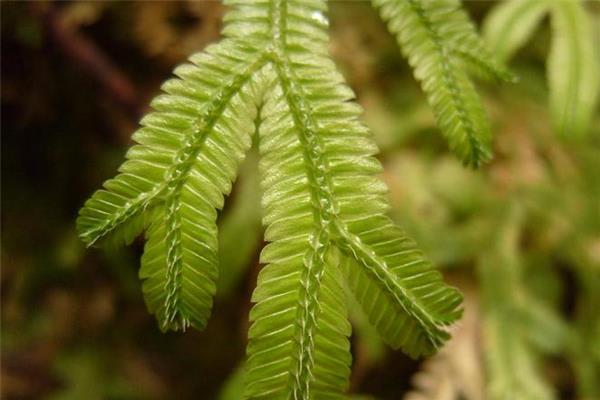
What are the effects of Selaginella
1. Breaking blood and dispersing stasis. Selaginella is pungent in taste, neutral and slightly warm in nature. Pungent disperses and warm unblocks, moves qi and breaks blood, disperses stasis and relieves pain. It is used to treat abdominal pain, amenorrhea, and abdominal masses and gatherings, among other patterns.
2. Invigorating blood and stopping bleeding. This product is pungent and warm. Pungent disperses and warm unblocks, disperses stasis and relieves pain. It is used to treat various blood patterns such as hematemesis, bloody stool, bloody urine, traumatic injuries, and abnormal uterine bleeding.
3. Relieving cough and transforming phlegm. This product is pungent in taste and slightly warm. It enters the lung meridian, warms the lungs and disperses cold, relieves cough and transforms phlegm. When wind-cold pathogens bind the exterior and invade the lungs, lung qi fails to diffuse, and fluids fail to distribute, there appear cough with phlegm, thin white phlegm, nasal congestion with clear discharge, itchy throat and heavy voice, headache and fever, aversion to cold and wind, aching bones and joints, thin white tongue coating, and floating tight or floating moderate pulse. Treatment should be to dispel wind and disperse cold, diffuse the lungs and nourish the metal, relieve cough and transform phlegm. This product has these effects, so it can be selected.
4. Unblocking meridians and activating collaterals. Selaginella is pungent, dispersing, warm, and unblocking. It moves qi and invigorates blood, unblocks meridians and relaxes collaterals, and is good for treating flaccidity and weakness. Flaccidity refers to weak and unusable limbs, while weakness refers to weakness and lack of strength in the lower limbs. To treat flaccidity, one should focus on the yangming channel alone. Although this is an ancient instruction, prolonged illness must involve stasis, the collaterals lose nourishment, there is numbness and loss of sensation, and tendons and vessels twitch, and in severe cases they become withered and unusable. Administering products that move qi and invigorate blood has the wonder of pushing out the old and bringing in the new.
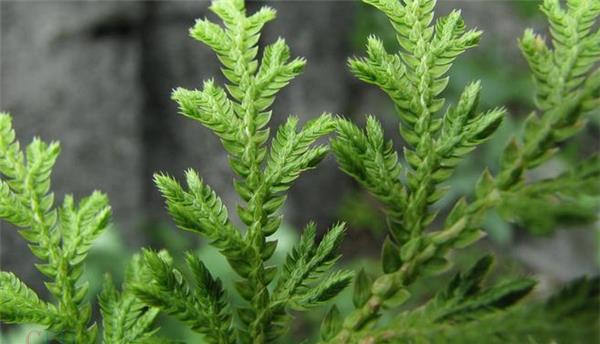
Cultivation methods of Selaginella
How should Selaginella be cultivated? To cultivate Selaginella, the potting soil should be loose, well-drained sandy loam. After planting, place it in a damp, shaded place without direct sunlight. For spore propagation of Selaginella, select stem segments with mature sporangia growing in the leaf axils, cut 1.5 cm from the branch tip, and place them on the surface of clean, well-drained soil. The soil is commonly made by mixing 1 part soil with 4 parts fine sand. Sprinkle some sifted fine soil on the cut end of the stem segment, keep the cut end moist, cover with glass to prevent water loss, keep it often moist, and place it under temperature conditions of about 20°C. After about 9 months, new plants can grow.
That is all for the related introduction to Selaginella. I believe that after reading it, everyone has gained some understanding of Selaginella. If any friends want to cultivate Selaginella, you can refer to the related knowledge points I have introduced for everyone.