A detailed guide to growing ivy: beginners can learn it easily
Placing ivy indoors can serve a decorative purpose on the one hand, and on the other hand it can also help purify the air. So, how much do you know about how to grow ivy? Let us take a look together next.
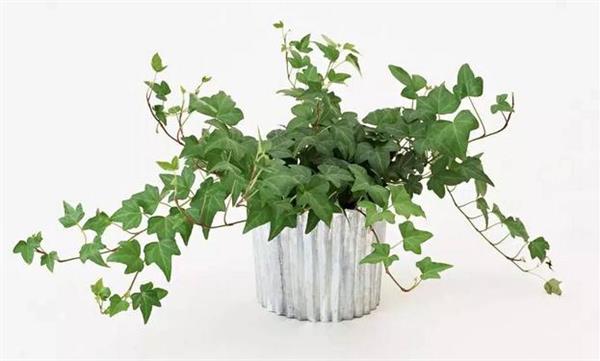
The benefits of ivy
1. Ornamental and pleasing to the eye
Ivy is most commonly planted on outdoor walls or in courtyards, or grown indoors in hanging baskets. No matter where it is, it has vigorous vitality, climbing like a gecko and spreading out like a spider web. Every year from late spring into summer, we see a stretch of emerald green.
2. Freshening the air
It can enhance the natural feel and freshness of the owner's living environment. Moreover, it is a very healthy and eco-friendly ornamental plant. It can not only green the environment but also purify the air, absorb indoor waste gases and release oxygen through photosynthesis, among many other benefits.
3. Auspicious symbolism
When people mention ivy, they think of emerald green plants and also of ivory towers representing knowledge; the famous universities in the United States are all called the Ivy League. It seems that when we speak of ivy, we think of words like youth, youthful vigor, hope and vitality. This is not only because of its emerald green appearance, but also because people have endowed it with an infinite flower language of youth, as if it belongs only to young people in their youth, their time, and their pure friendships, romances and so on during their school days.
4. Medicinal value
Ivy also has good medicinal value. The whole plant can be used as a Chinese herbal medicine. It can clear heat and reduce internal heat, has a good protective and nourishing effect on the human liver, relieves pain in parts of the body, and can also reduce swollen abscesses and has a good disinfecting and sterilizing effect. In addition, ivy also has a good cosmetic effect, helping to firm the skin and reduce edema.
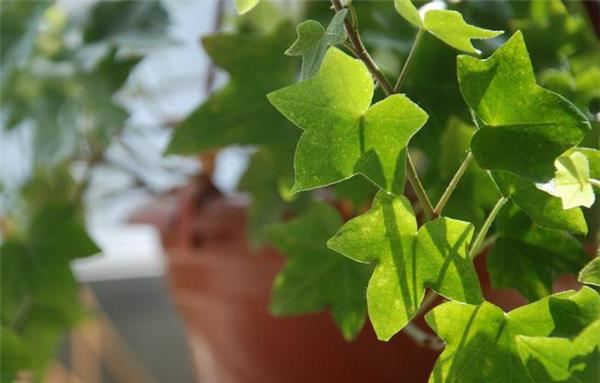
How to grow ivy
1. Propagation by cuttings
Ivy is mainly propagated by cuttings. When taking cuttings, note: do not use perennial old branches for the cuttings; choose thick, robust young shoots instead. Be careful to protect the buds on the cuttings, otherwise the survival of the new plants will be affected.
2. Suitable temperature
Ivy prefers warmth, and the suitable growing temperature is 20°C-25°C. It fears heat and is not cold-tolerant. Therefore, when keeping it indoors, pay attention to ventilation and cooling in summer. In winter, the room temperature should preferably be kept above IO°C, and must not be lower than 5°C.
3. Moderate light
Ivy likes light and is also fairly shade-tolerant. Grown under semi-light conditions, its internodes are shorter, the leaf shape is more uniform, and the leaf color is more vivid, so it is best grown indoors in a bright spot. If in spring and autumn you can each choose a period to place it outdoors in a shaded spot so that it gets more morning and evening sunlight, it will grow vigorously with bright green leaves. However, be careful to prevent direct strong light, otherwise it is prone to sunscald.
4. Appropriate watering
During the growing season, water according to the principle of watering when dry and stopping when moist; do not let the potting soil become overly wet, otherwise it easily causes root rot and leaf drop. In winter, when room temperature is low, watering should especially be controlled, keeping the potting soil only slightly moist. In northern winters, the climate is dry, so it is best to spray and wash Du Chuan once a week with clean water at a temperature close to room temperature to maintain air humidity; then the plant will look lively and the leaves will be tender green and glossy.
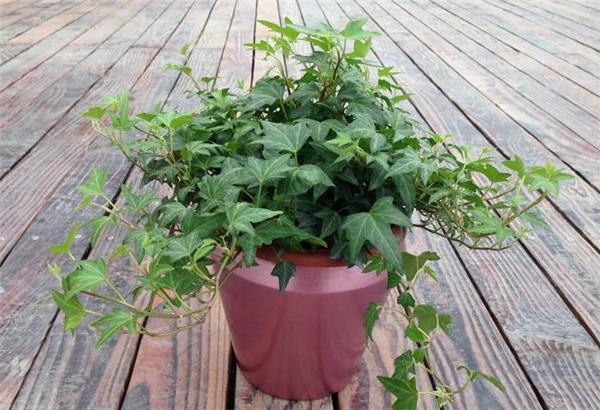
5. Reasonable fertilizing
For home cultivation of ivy, the potting soil should preferably be a growing medium made by mixing leaf mold or peat soil with 1/4 river sand and a small amount of bone meal. During the growing season, apply dilute cake fertilizer water once every 2-3 weeks. Generally, do not fertilize in summer and winter. When fertilizing, never apply too much nitrogen fertilizer, otherwise the patterns and patches on the leaves of variegated varieties will fade to green. The ratio of nitrogen, phosphorus and potassium is preferably 1;1;l. In the peak growing season, you can also spray the leaves 1-2 times with 0.2% monopotassium phosphate solution, which will make the leaf color even more beautiful. But note that when applying liquid fertilizer, avoid contaminating the leaves, so as not to cause leaf scorch.
6. Timely pruning
When ivy grows to a certain height, pay attention to timely pinching. Pinching can encourage more branching and make the plant shape fuller.
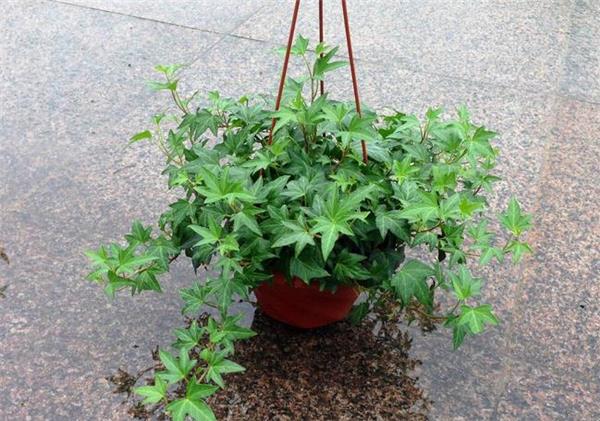
That is all for the related introduction to how to grow ivy. I believe that after reading this, everyone has gained some understanding of how to grow ivy. If any friends want to grow ivy, you can refer to the related points I have introduced for you.