Flower and Plant Bonsai: How Is It? A Comprehensive Analysis of Pros and Cons
1. Spraying method
(2) Spray with a 0.1% baking soda solution, which can control powdery mildew on flowers such as Chinese roses, chrysanthemums, garden balsam, cotton rose, and cineraria, with a control rate of over 80%.
(3) Spray with a 2% urea solution once every 10 days, for 2 to 3 consecutive sprays, which can kill pests such as aphids and red spiders on flowers and trees.
2. Wiping method
(1) Dip a cotton ball in vinegar and gently wipe the leaves of camellia. This not only kills scale insects but also makes leaves previously damaged by scale insects turn green again.
(2) Repeatedly wipe orchid leaves gently with alcohol to remove the scale insects on them.
(3) If the branches and trunk of a stump bonsai rot, first scrape off the rotting part of the stump with a blade sterilized with iodine tincture, then apply iodine tincture, and apply it again after 7 to 10 days to prevent continued rotting.
3. Fertilization method
(1) When fertilizing flowers and trees, mix in a small amount of silicon fertilizer. After the flowers and trees absorb it, it can increase the hardness of their epidermal cells, thereby enhancing their ability to resist pests.
(2) Frequently scattering plant ash can greatly reduce the incidence of gray mold on flowers such as peonies, tulips, and cyclamen, and also helps make flower branches sturdy and flower colors vivid.
4. Injection method
Exposed-root bonsai
① Shallow planting and root lifting. Cultivate in a shallow pot, and select a semi-finished stump with well-developed main roots that is easy to shape. Expose the lateral roots at the base of the trunk above the potting soil in an elegant arrangement. For those whose lateral roots at the base of the tree are not suitable to be directly exposed, the method of lifting the roots can be used to lift the roots out of the pot surface, and in combination with the form of the stump, reasonably cultivate exposed roots.
② Raising roots to expose roots. Cultivate in a deep pot. Through measures such as repotting, gradually raise the roots higher than the potting soil year by year to achieve the ornamental purpose. You can also first expose part of the roots above the pot surface and then add soil, and after a period of growth, scrape away the soil to promote early formation.
③ Layering and cuttings. For stumps not suitable for directly exposing roots, if branches grow from the base of the stump, after they are semi-lignified, ring-bark the branches, press them into the potting soil, and promptly cut off the branches after rooting, so as to achieve the purpose of exposing roots.
Clustered-tree bonsai
① Use a shallow pot, which can show the wild charm of a grove and the feel of open wilderness, make the trees appear larger, give a deeper visual impression, and also allow soil mounds, stones, and scenery to be arranged in the shallow pot, making the bonsai more lively and vivid.
② The materials generally used for clustered-tree bonsai are small shrubs. When planting, they should differ in size and be staggered in height; otherwise the landscape will be dull and lack vitality. ③ In the making of clustered-tree bonsai, the stumps should have advance and retreat, and the space should have density and sparseness, creating undulating changes in the composition. It should have the feeling of a forest, not make people feel suffocated.
Miniature bonsai
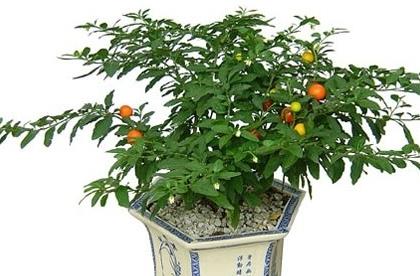
① Material selection and shaping. For miniature bonsai materials, generally choose materials with fine branches and small leaves, easy survival after potting, peculiar roots and trunks, gorgeous flowers and fruits, and easy shaping, such as five-leaf pine, small-leaf Buddhist pine, fine-leaf holly, serissa, asparagus fern, and Japanese bush cherry. You can also dig suitable stumps in the wild, shape them, and then plant them. When shaping, methods such as palm-fiber tying, lead-wire wrapping, and branch bending are commonly used.
② Potting and care. While shaping, the tree should be transplanted from a clay pot into a purple clay pot or glazed pot. Generally, tall and deep cylindrical pots are suitable for cascade style; oval or shallow rectangular pots are suitable for growing straight-trunk or slanting-trunk styles; polygonal shallow pots are for growing tall-trunk styles; round pots can be used for low, twisted plants. Care after planting: the potting soil should often be kept moist, maintain a suitable temperature in winter, and place it in a shaded place in midsummer. During the growth period, apply thin fertilizer frequently, generally once every 10 days. You can apply decomposed soybean cake, hoof pieces water, and so on, or apply complete-element compound flower fertilizer.
Exposed-root bonsai
① Shallow planting and root lifting. Cultivate in a shallow pot, and select a semi-finished stump with well-developed main roots that is easy to shape. Expose the lateral roots at the base of the trunk above the potting soil in an elegant arrangement. For those whose lateral roots at the base of the tree are not suitable to be directly exposed, the method of lifting the roots can be used to lift the roots out of the pot surface, and in combination with the form of the stump, reasonably cultivate exposed roots.
② Raising roots to expose roots. Cultivate in a deep pot. Through measures such as repotting, gradually raise the roots higher than the potting soil year by year to achieve the ornamental purpose. You can also first expose part of the roots above the pot surface and then add soil, and after a period of growth, scrape away the soil to promote early formation.
③ Layering and cuttings. For stumps not suitable for directly exposing roots, if branches grow from the base of the stump, after they are semi-lignified, ring-bark the branches, press them into the potting soil, and promptly cut off the branches after rooting, so as to achieve the purpose of exposing roots.
Clustered-tree bonsai
① Use a shallow pot, which can show the wild charm of a grove and the feel of open wilderness, make the trees appear larger, give a deeper visual impression, and also allow soil mounds, stones, and scenery to be arranged in the shallow pot, making the bonsai more lively and vivid.
② The materials generally used for clustered-tree bonsai are small shrubs. When planting, they should differ in size and be staggered in height; otherwise the landscape will be dull and lack vitality. ③ In the making of clustered-tree bonsai, the stumps should have advance and retreat, and the space should have density and sparseness, creating undulating changes in the composition. It should have the feeling of a forest, not make people feel suffocated.
④ If the trees in the bonsai are not pruned for a long time, branches often grow wildly and become tangled. Therefore, they should be pruned at any time to maintain the spatial structure and the density-sparseness relationship, and improve the ornamental value.
Miniature bonsai
① Material selection and shaping. For miniature bonsai materials, generally choose materials with fine branches and small leaves, easy survival after potting, peculiar roots and trunks, gorgeous flowers and fruits, and easy shaping, such as five-leaf pine, small-leaf Buddhist pine, fine-leaf holly, serissa, asparagus fern, and Japanese bush cherry. You can also dig suitable stumps in the wild, shape them, and then plant them. When shaping, methods such as palm-fiber tying, lead-wire wrapping, and branch bending are commonly used.
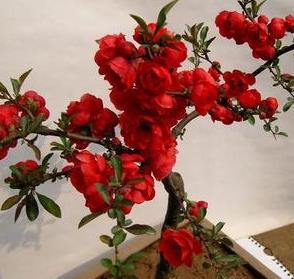
Ring-bark the branches, press them into the potting soil, and promptly cut off the branches after rooting, so as to achieve the purpose of exposing roots.
Clustered-tree bonsai
① Use a shallow pot, which can show the wild charm of a grove and the feel of open wilderness, make the trees appear larger, give a deeper visual impression, and also allow soil mounds, stones, and scenery to be arranged in the shallow pot, making the bonsai more lively and vivid.
② The materials generally used for clustered-tree bonsai are small shrubs. When planting, they should differ in size and be staggered in height; otherwise the landscape will be dull and lack vitality. ③ In the making of clustered-tree bonsai, the stumps should have advance and retreat, and the space should have density and sparseness, creating undulating changes in the composition. It should have the feeling of a forest, not make people feel suffocated.
④ If the trees in the bonsai are not pruned for a long time, branches often grow wildly and become tangled. Therefore, they should be pruned at any time to maintain the spatial structure and the density-sparseness relationship, and improve the ornamental value.
Miniature bonsai
① Material selection and shaping. For miniature bonsai materials, generally choose materials with fine branches and small leaves, easy survival after potting, peculiar roots and trunks, gorgeous flowers and fruits, and easy shaping, such as five-leaf pine, small-leaf Buddhist pine, fine-leaf holly, serissa, asparagus fern, and Japanese bush cherry. You can also dig suitable stumps in the wild, shape them, and then plant them. When shaping, methods such as palm-fiber tying, lead-wire wrapping, and branch bending are commonly used.