Is the Portulacaria afra (Elephant Bush) Toxic? A Detailed Guide to Growing It
Succulent plants have always been loved for their cute appearance. Potted Portulacaria afra not only grows relatively quickly, but its adorable look and fleshy leaves and stems make people love it even more. Today, the editor will briefly introduce how to grow Portulacaria afra and whether it is toxic.
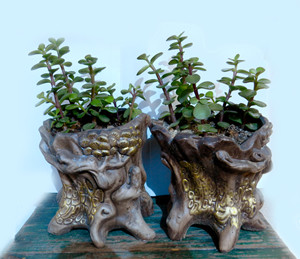
A fleshy evergreen subshrub, reaching up to 4 m in height. The stems are fleshy, slightly woody at the base, much branched, growing almost horizontally; new stems are reddish-brown, older stems grayish-white, with conspicuous nodes. Leaves are simple, opposite, obovate, about 1.2 cm long and about 1 cm wide, entire, bright green, fleshy. It flowers from May to July, with small, pale pink flowers.
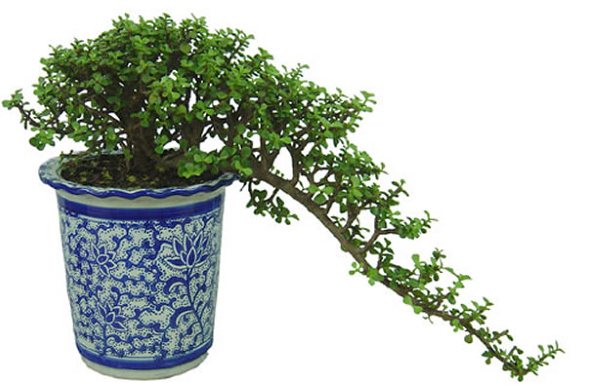
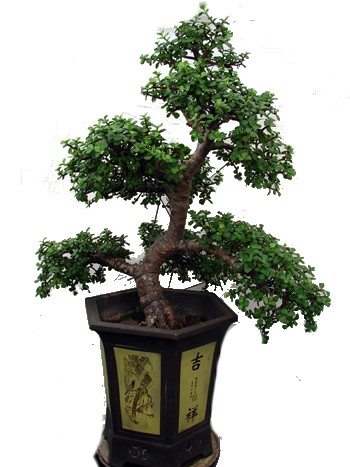
The stems of Portulacaria afra are thick and swollen, and the leaves are small and interesting, closely resembling the leaves of purslane (Portulaca oleracea), full of the vigorous, ancient charm of old trees. It is robust by nature and easy to care for. Besides being grown as a potted ornamental, it is also an excellent plant species for making stump bonsai. Because florists gave it an elegant and colorful commercial name - "Jinzhi Yuye" (Golden Branch and Jade Leaf) - it has become even more popular.
Temperature: Portulacaria afra prefers warmth, with an optimal growing temperature of 20-25°C. It is not tolerant of low temperatures, and the overwintering temperature should be maintained above 10°C; low temperatures will cause leaf drop. It is also not tolerant of intense heat; during high summer temperatures the plant enters a semi-dormant state, so ventilation should be strengthened and water sprayed into the surrounding environment more often to lower the temperature. At the same time, avoid a stuffy, hot and humid environment, otherwise root rot will cause leaf drop.
Light: Portulacaria afra prefers full sunlight, and even in hot summer it needs direct sunlight, preferably receiving more than 4 hours of direct light per day. Under sufficient sunlight, the plant has a compact form with small, thick leaves and high ornamental value. It tolerates partial shade, but under partial shade conditions, although the branches and leaves grow more luxuriantly, they tend to become leggy, with loose and non-compact branches and leaves, elongated stem nodes, and large, thin leaves, resulting in an unattractive plant shape, and young branches turning green; on variegated Portulacaria afra, the variegation colors on the leaves will fade, reducing its ornamental appeal. If the placement location has insufficient light, 12 hours of artificial supplemental lighting can be given, which also allows the plant to grow normally. Variegated Portulacaria afra, however, prefers a slightly shaded environment and needs appropriate shading in summer.
Watering: Because its branches and leaves are fleshy and the plant stores a relatively large amount of water internally, Portulacaria afra prefers a relatively dry soil environment. When watering, follow the principle of "alternating dry and wet, better dry than wet"; overly wet potting soil easily leads to root rot. May to June is the period of vigorous growth, so it should be watered thoroughly and the potting soil kept moist, but avoid overly wet potting soil. During the plum rain season, check promptly after rain and pour out any accumulated water in the pot. During summer semi-dormancy, watering should be controlled, as high temperature and high humidity very easily cause root rot. In autumn, when the weather turns cool, it is again a suitable growing period for the plant, so water should be supplied adequately to keep the potting soil moist but not overly wet. In winter, watering should be moderated to keep the potting soil relatively dry.
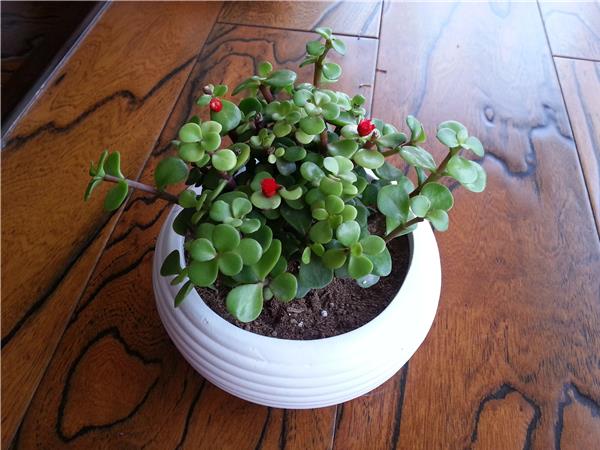
Fertilizing: Portulacaria afra does not like heavy fertilization. During the spring and autumn growing periods, apply a dilute nitrogen fertilizer once every 15-20 days. Varieties with variegated patterns on the leaves should receive additional phosphorus and potassium fertilizer to make the leaf color more vivid. On variegated Portulacaria afra, when nitrogen fertilizer is excessive, the green parts of the leaves will increase, reducing its ornamental value.
Pruning: Because Portulacaria afra grows relatively quickly, the stems have many branches, and the branches grow very irregularly, pruning and shaping can be carried out at any time during the growing process to maintain a beautiful plant form.Repotting: Repot Portulacaria afra once every spring. It requires well-drained sandy loam soil; the growing medium can be prepared from materials such as leaf mold, peat soil, coarse sand or rice husk ash.
Pest and disease control: Portulacaria afra is affected by pests and diseases such as anthracnose, whiteflies and scale insects.
Is Portulacaria afra Toxic?
Friends who enjoy growing Portulacaria afra bonsai all worry about the question "Is Portulacaria afra toxic?" According to available information, Portulacaria afra is a medicinal and edible plant and is not toxic. Moreover, the whole plant is used medicinally, with effects of clearing heat and draining dampness, detoxifying and reducing swelling, reducing inflammation, quenching thirst, and promoting urination; the seeds have the effect of improving eyesight. Portulacaria afra is also known as Yinxingmu and Xiaoye Bolizui; it is a perennial fleshy shrub in the family Portulacaceae (purslane family), genus Portulacaria. Home cultivation is mainly for foliage display; it can be grown in hanging baskets and is a good material for making bonsai.
(1) Cuttings: Usually carried out in April and September-October. Select robust, plump stems with relatively short internodes, about 10 cm long, as cuttings. After cutting, let them dry for a few days first, and once the cut surface is dry, proceed with inserting the cuttings. After insertion, keep the cutting medium slightly dry; roots form after 15-20 days, and it roots very easily.
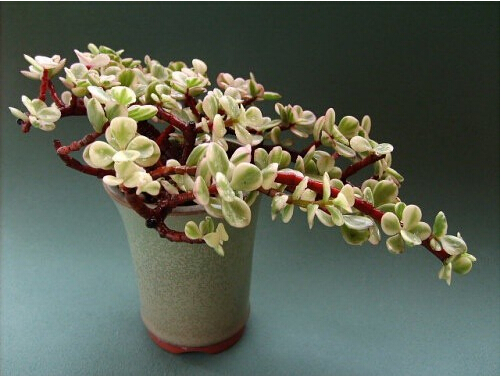
(2) Grafting: Variegated Portulacaria afra can also be propagated by grafting. Cut off current-year variegated Portulacaria branches as scions; the scions should not be too long. Slant-cut both sides of the scion base into a duck-bill shape; choose an old Portulacaria afra as the rootstock, and shorten all side branches, with the cut-off branches usable for cuttings; then make a vertical cut 1-2 cm deep in the cut surface at the top of each rootstock, insert the scion into the slit of the rootstock; finally, tie and bind the junction with plastic film. Place the grafted plant in a semi-shaded, rain-protected spot, and do not let water enter the graft junction when watering; it survives after 10-15 days.
After cutting, let them dry for a few days first, and once the cut surface is dry, proceed with inserting the cuttings. After insertion, keep the cutting medium slightly dry; roots form after 15-20 days, and it roots very easily.
(2) Grafting: Variegated Portulacaria afra can also be propagated by grafting. Cut off current-year variegated Portulacaria branches as scions; the scions should not be too long. Slant-cut both sides of the scion base into a duck-bill shape; choose an old Portulacaria afra as the rootstock, and shorten all side branches, with the cut-off branches usable for cuttings; then make a vertical cut 1-2 cm deep in the cut surface at the top of each rootstock, insert the scion into the slit of the rootstock; finally, tie and bind the junction with plastic film. Place the grafted plant in a semi-shaded, rain-protected spot, and do not let water enter the graft junction when watering; it survives after 10-15 days.