How to Grow Firethorn? Detailed Guide to Cultivation Methods and Bonsai Making
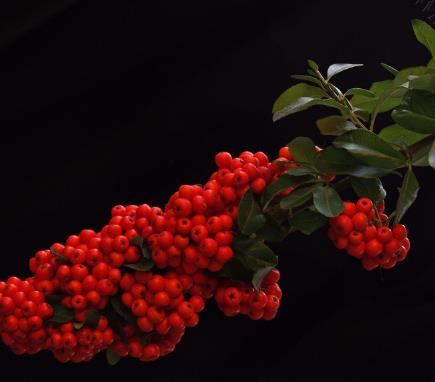
Firethorn, also known as Huobaguo, Jiumingliang, Chiyangzi, Doujinniang, and Shuicuizi, belongs to the genus Pyracantha in the Rosaceae family. The plant grows 1 to 3 m tall, with obovate, bright green leaves and compound corymbose inflorescences bearing white flowers. The fruit is round, turning bright red when ripe, and does not fall after frost; the red berries hang on the branches until the following spring before dropping.
Firethorn Cultivation Methods
1. Soil: Firethorn is not demanding about soil, but for good plant growth and development, it is still best to choose a slightly acidic soil with deep soil layers, loose texture, rich organic matter, relatively fertile, and good drainage, with a pH of 5.5 to 7.3.
2. Watering: Firethorn is drought-tolerant, but when the soil is dry in spring, it can be given 1 application of fertilizer before flowering, and watered thoroughly. During the flowering period, keep the soil on the dry side to favor fruit setting, so do not water too much. If the flowering period coincides with the rainy season, also pay attention to digging drainage ditches and draining water to avoid flower drop caused by excessive moisture. After the fruit matures and is harvested, water thoroughly for overwintering before entering winter dormancy.
3. Sunlight: Firethorn likes plenty of light. Only with sufficient light can it produce more fruit and greatly increase its ornamental effect.
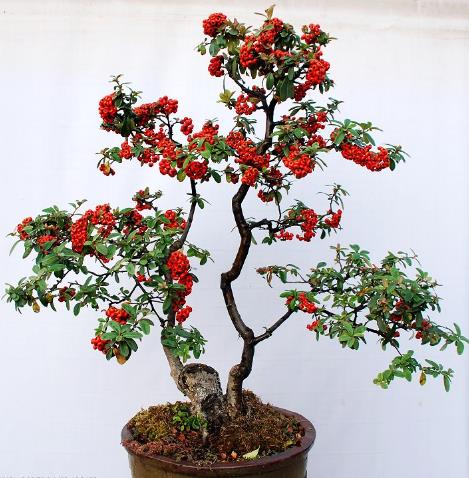
Firethorn likes moisture and fertilizer, and prefers a climate environment with sufficient light, good ventilation, and warmth and humidity. Firethorn tolerates poor soil, and temperatures can drop as low as 0°C-5°C or lower. Firethorn has a well-developed root system, sprouts branches quickly, grows rapidly, and tolerates pruning and training.
For firethorn bonsai, the best soil is relatively fertile garden soil or surface soil from mountain forests, and decomposed base fertilizer, fine sand, and potting soil can also be used.
Firethorn is best repotted once a year. Choose late autumn or early spring for repotting, that is, after new shoot growth stops or before new shoots begin to grow. For firethorn that is not bearing fruit, the pot and soil can be changed in any season. No matter when the soil is changed, keep some of the old soil, cut off long roots, avoid root balling, and pot it quickly so as not to affect growth.
Firethorn bonsai is especially afraid of drying out and is prone to pest and disease invasion. Diseases mainly come from external invasion or the potting soil, mainly fungal infections, black rot, and powdery mildew, with powdery mildew being especially severe.
Control methods are mainly fungicides such as carbendazim and thiophanate, mainly sprayed on branches and leaves and drenched at the roots. Usually place it in a ventilated and clean environment with sufficient light; vigorous growth can reduce the incidence of disease.
The most common insect pest of firethorn is aphids. Control methods include timely spraying of trichlorfon, emulsifiable dimethoate, and so on. Generally spray in the afternoon, at least once every three days; more than three times can achieve complete control, and spraying can also be done whenever they are found.
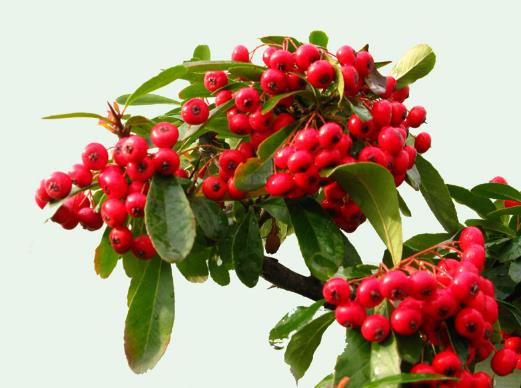
1. Ornamental. Firethorn is evergreen all year round, with soft and small branches and leaves and waxy leaves. It blooms white flowers in spring, then bears green fruit, and in late autumn the fruit turns fire red. Its ornamental value is very high, making it a very ideal flowering bonsai.
2. Artwork. Firethorn wood is hard and has good toughness. Firethorn over ten years old is a superior wood material. Its roots can naturally form deformed and strange shapes, and the roots of 3-5 year old firethorn trees can also be made into root carving artworks.
3. Food. Firethorn fruit is rich in organic acids, protein, amino acids, vitamins, and various mineral elements. It can be eaten fresh and can also be processed into various beverages.
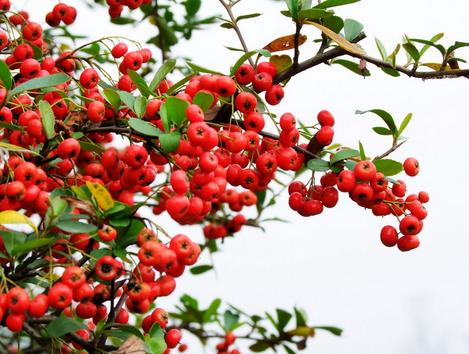
I. Cutting time: September is best. Some people also believe that spring cutting and cutting during the moldy rainy season are good. According to our observations, each year in July and August, firethorn differentiates flower buds for the following year, and by September most have completed the flower bud differentiation process. Cuttings obtained at this time will surely bloom profusely the next year. In addition, the weather gradually cools in September while the ground temperature is still high. At this time, there is no risk of cutting rot, and it suits the habits of firethorn, with a survival rate of up to 100%.
II. Cutting process: 1. Cuttings: Select robust current-year branches, cut them into 10-15 cm segments, keep two pairs of leaves at the upper part, and the lower leaves can be removed.
2. Substrate: River sand or loose, well-drained potting soil. River sand can be washed with boiling water for disinfection, and potting soil can be disinfected with 50 times diluted formalin, or disinfected by sun exposure.
3. Cutting: There are two methods. They can first be inserted into river sand, kept moist daily, and slightly shaded; roots will form after about 1 month. After rooting, transplant them into nutrient pots filled with potting soil and place them in a cold room to overwinter. They can also be inserted directly into potting soil, one seedling per pot, and under conditions of 20-25°C, they will root in 30 days.
III. Styling: After the cuttings survive, plant them in inch pots in March of the following year. More humus soil and organic fertilizer can be added to the potting soil to make them sprout as quickly as possible and grow luxuriantly. After flowering in May, they can be moved to 4-inch pots for care, and given sufficient water and fertilizer so that the branches fully lengthen and thicken. By the end of August and early September, styling can begin.
Firethorn cuttings generally produce one long branch from a top bud, which can reach 1 m in length in the same year. It should be protected and not pruned.
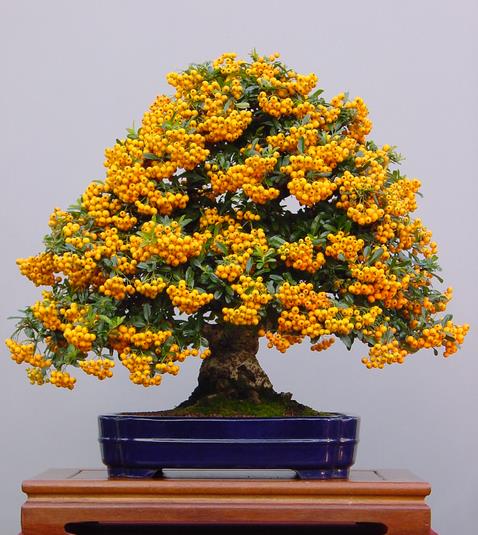
Firethorn fruit ripens from September to December, and fruit for seedling cultivation is suitably harvested in January to February. After harvesting, remove leaves, branch thorns, fruit stalks, and other debris, spread them in a cool place to ventilate for about 10-15 days, and turn them once a day.
Firethorn fruit is a pome and contains a large amount of flesh. First, use a plastic basin or bucket, add an appropriate amount of 40°C warm water, then place the fruit into the container and soak for 2 h to soften the fruit skin. Squeeze by hand to press the seeds out of the flesh, then rinse with clean water 4 to 5 times to remove fruit skin, flesh, shriveled seeds, and other debris, thereby obtaining relatively pure, mature, plump black seeds. Mix the seeds with fine sand at a ratio of 1:3. The fine sand should be sifted through a 200-mesh sieve, and the humidity should be such that it forms a ball when squeezed in the hand and disperses when the hand is opened. At the lower layer of an indoor wall corner, spread 3 cm thick fine sand, place in the seeds, cover the upper layer with 5 cm thick fine sand for storage, and frequently check the humidity to prevent freezing damage.
Reasons Firethorn Does Not Bear Fruit
1. Improper cultivation. During the flower bud differentiation period of firethorn, if water is uncontrolled, light is insufficient, and the environment is unsuitable, its flower buds cannot differentiate normally, which will make it difficult for it to bloom and bear fruit normally the following year.
2. Improper fertilization. If fertilizer is imbalanced when fertilizing firethorn, such as too much nitrogen fertilizer and insufficient phosphorus fertilizer, it cannot normally form buds, bloom, and bear fruit.
3. Pruning mistakes. Firethorn mostly blooms on one-year-old short branches. The thick, long, robust branches produced in the current year generally do not bloom. If short branches are mistakenly pruned, it may result in no flowering branches and failure to bloom and bear fruit normally.
When Does Firethorn Bloom
When does firethorn bloom? Ji, also known as Jiubingliang, Jiumingliang, Huobaguo, and Chiyangzi, is an evergreen shrub or small tree of the genus Pyracantha in the Rosaceae family, reaching up to 4 m tall. It is usually propagated by sowing, cutting, and layering. The flowering period is March-May. The fruiting period is August-November.
place them in a cold room to overwinter; they can also be inserted directly into potting soil, one seedling per pot, and under conditions of 20-25°C, they will root in 30 days.
III. Styling: After the cuttings survive, plant them in inch pots in March of the following year. More humus soil and organic fertilizer can be added to the potting soil to make them sprout as quickly as possible and grow luxuriantly. After flowering in May, they can be moved to 4-inch pots for care, and given sufficient water and fertilizer so that the branches fully lengthen and thicken. By the end of August and early September, styling can begin.
Firethorn cuttings generally produce one long branch from a top bud, which can reach 1 m in length in the same year. It should be protected and not pruned.
Firethorn fruit ripens from September to December, and fruit for seedling cultivation is suitably harvested in January to February. After harvesting, remove leaves, branch thorns, fruit stalks, and other debris, spread them in a cool place to ventilate for about 10-15 days, and turn them once a day.
Firethorn fruit is a pome and contains a large amount of flesh. First, use a plastic basin or bucket, add an appropriate amount of 40°C warm water, then place the fruit into the container and soak for 2 h to soften the fruit skin. Squeeze by hand to press the seeds out of the flesh, then rinse with clean water 4 to 5 times to remove fruit skin, flesh, shriveled seeds, and other debris, thereby obtaining relatively pure, mature, plump black seeds. Mix the seeds with fine sand at a ratio of 1:3. The fine sand should be sifted through a 200-mesh sieve, and the humidity should be such that it forms a ball when squeezed in the hand and disperses when the hand is opened. At the lower layer of an indoor wall corner, spread 3 cm thick fine sand, place in the seeds, cover the upper layer with 5 cm thick fine sand for storage, and frequently check the humidity to prevent freezing damage.
Reasons Firethorn Does Not Bear Fruit
1. Improper cultivation. During the flower bud differentiation period of firethorn, if water is uncontrolled, light is insufficient, and the environment is unsuitable, its flower buds cannot differentiate normally, which will make it difficult for it to bloom and bear fruit normally the following year.
2. Improper fertilization. If fertilizer is imbalanced when fertilizing firethorn, such as too much nitrogen fertilizer and insufficient phosphorus fertilizer, it cannot normally form buds, bloom, and bear fruit.
3. Pruning mistakes. Firethorn mostly blooms on one-year-old short branches. The thick, long, robust branches produced in the current year generally do not bloom. If short branches are mistakenly pruned, it may result in no flowering branches and failure to bloom and bear fruit normally.
When Does Firethorn Bloom
When does firethorn bloom? Ji, also known as Jiubingliang, Jiumingliang, Huobaguo, and Chiyangzi, is an evergreen shrub or small tree of the genus Pyracantha in the Rosaceae family, reaching up to 4 m tall. It is usually propagated by sowing, cutting, and layering. The flowering period is March-May. The fruiting period is August-November.