How to grow Begonia maculata? A detailed guide to its care methods
Begonia maculata is also a very beautiful plant, but recently many people have told me that the Begonia maculata they are growing looks half-dead. This is because they have not mastered the correct way to grow Begonia maculata. Next, I will explain the care methods for Begonia maculata.
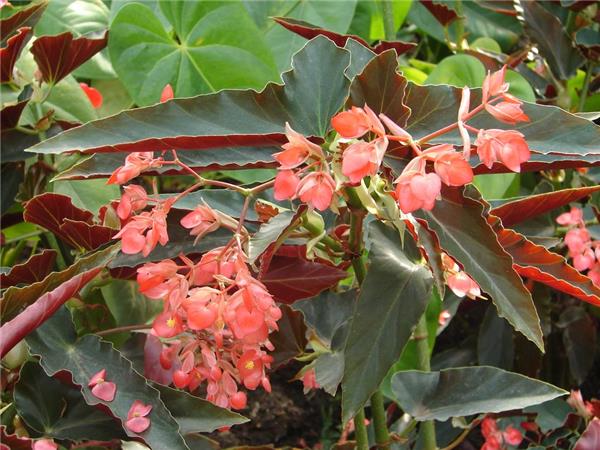
Care methods for Begonia maculata
[Key growing points]
Temperature: It likes warmth, and the most suitable temperature for growth is 18-20°C. It is one of the more cold-tolerant types of begonia, but it still needs a temperature above 5°C to survive the winter. Below 5°C, it loses its leaves; at 2°C, a large number of leaves fall off, and the branch tips turn yellow and die, but the plant can still sprout and send out shoots the following spring from the remaining parts that were not killed by the cold. It fears severe summer heat, and when the temperature reaches above 30°C, the plant grows slowly and enters a semi-dormant state. If care is improper, it easily loses leaves, so measures such as shading, misting the leaves, and increasing ventilation should be taken to lower the temperature and form a relatively cool micro-environment.
Light: It likes ample scattered light. When the light is suitable, the stems are sturdy, the internodes are short, there are many side branches, the leaf color is vivid, and there are many brightly colored flowers. It dislikes intense direct sunlight. When the sunlight is too strong, the leaves easily turn yellow, become scorched at the edges, or even fall off. It should also not be kept too shady, otherwise the plant will grow leggy and become thin and tall, bloom sparsely or not at all, and in severe cases it will also cause leaf drop. From May to September, shading should be provided, blocking 50%-60% of the light, or the plant should be placed in a spot with ample scattered light. At other times, it needs sufficient sunlight. When there is ample light in spring and autumn, it easily forms flower buds.
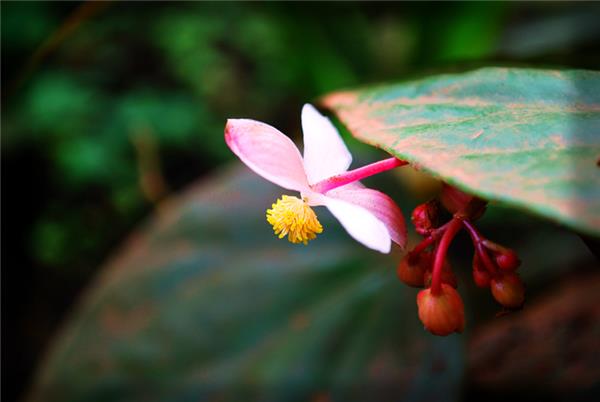
Watering: It fears drought and likes a moist soil environment. During the growing period, it should be watered thoroughly to keep the potting soil moist, not too dry or too wet. Both dryness and excessive moisture will affect root absorption and cause leaf drop, bud drop, and flower drop. It dislikes excessive moisture and waterlogging, otherwise the roots will rot and the plant will die. Although the plant is semi-dormant in the high temperatures of summer, because the air temperature is high and the leaf area is large, watering still needs to follow the principle of "do not water until dry, and when watering, water thoroughly," but waterlogging must be prevented. In winter, watering should be controlled and the potting soil kept slightly dry. Too much watering easily causes root rot and leaf drop.
Environmental humidity: Its native habitat is under forest or beside ditches with relatively high humidity, so it likes a moist environment, and the relative air humidity should not be lower than 50°C. It is best to maintain 65°C-70. When it is too dry, the leaf edges curl, turn yellowish brown, and even fall off. During the growing season, water should often be sprayed on the branches, leaves, and surroundings to increase the relative air humidity. In summer, spraying water on the leaves can also lower the temperature, which is beneficial to the plant's growth and flowering.
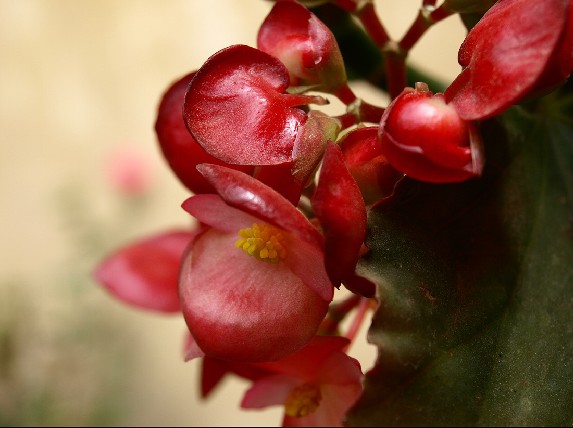
Fertilization: From April to June, apply fertilizer once every 10-15 days. Fertilization in early to mid-April should be mainly nitrogen-based to promote the growth of branches and leaves. During the bud stage, more phosphorus and potassium fertilizer should be applied to promote bud formation and flowering. Fertilization should stop during the flowering period. Because the root system is numerous and fine, it is relatively sensitive to fertilizer concentration, so fertilization should follow "apply diluted fertilizer frequently" and avoid fertilizer solution that is too concentrated. When fertilizing, do not let the fertilizer solution stain the leaves, otherwise it will scorch them. Stop fertilizing during the semi-dormant period in summer. Autumn is another period of vigorous growth, so apply a mainly nitrogen-based fertilizer once every 10-15 days, but after October stop applying nitrogen fertilizer and apply phosphorus and potassium fertilizer twice to improve the plant's cold resistance. When the winter temperature is below 10°C, stop fertilizing.
Pruning: During the seedling stage, pinch off the growing tips to encourage branching and form a full plant shape. In spring, prune the plant along with repotting. If the plant is too tall and affects the beauty of its shape, the overly tall branches can be cut back hard to encourage new shoots and control plant height. It has strong sprouting ability. Because the inflorescences grow on new branches, when the new branches grow to an appropriate height, cut off the old and weak branches to encourage the plant to renew itself and benefit future flowering. If the plant is tall and has many inflorescences, supports should be set up to prevent the branches from bending under the weight. After the flowers fade, the spent flowers and flowered branches should be cut off immediately to encourage new branches, so that it forms more buds and blooms frequently.
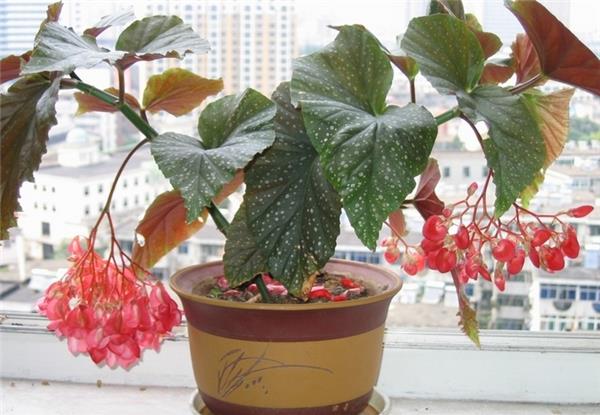
Repotting: Repot once every year, preferably after the weather warms in spring or in September. It likes slightly acidic sandy loam rich in organic matter, loose, and well-drained. The growing medium can be prepared from materials such as leaf mold, peat soil, garden soil, rice husk ash, or perlite.
Pest and disease control: It is harmed by pests and diseases such as powdery mildew, damping-off, thrips, and red spider mites.
[Common problems in cultivation]
Common problem Cause
Leaf drop ①Low temperature; ②Light too weak or too strong; ⑤Potting soil too dry or too wet; ④Fertilizer too concentrated
Plant thin and tall, blooming sparsely or not at all Usually caused by insufficient light
Scorched leaf edges ①Light too intense; ②Air too dry; ⑤Application of concentrated fertilizer
Introduction to Begonia maculata
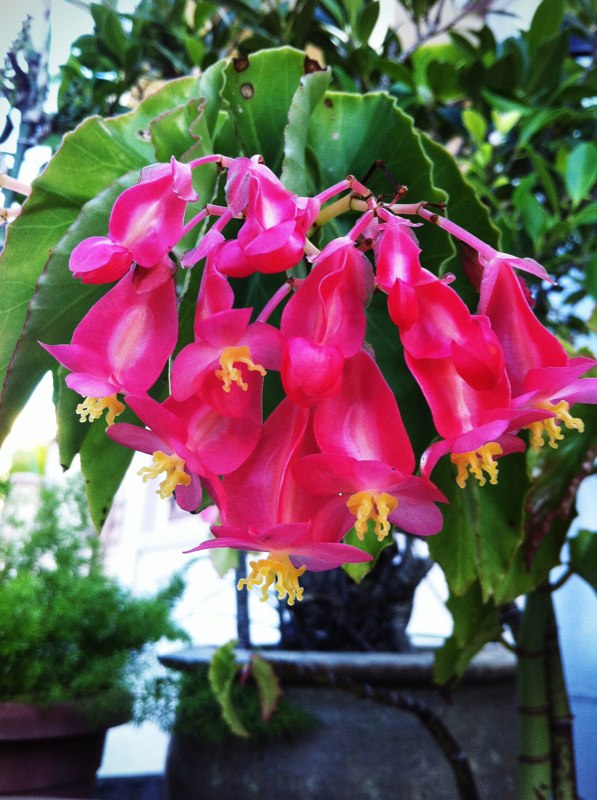
Begonia maculata is a perennial subshrub, named for its stem nodes, which closely resemble bamboo nodes. In warm regions it can be enjoyed for flowers all year round, and usually its peak flowering period is from April to November each year. It likes semi-shade, moisture, and warmth, is not cold-tolerant, and dislikes exposure to blazing sun, intense heat, and waterlogging. It has strong drought resistance, fears waterlogging, and likes loose, fertile sandy loam. The watering principle is to water when dry and withhold when wet. The leaf surface is green, and the flowers are bright red, hanging in clusters, with a graceful and gorgeous appearance. It is robust by nature and very suitable for home cultivation.
The above is the correct method for growing Begonia maculata that I have explained to everyone. You should all read it carefully, otherwise there may be a situation where it cannot be kept alive. As the saying goes, diligence makes up for clumsiness, and the same principle applies to growing Begonia maculata.
Scorched leaf edges ①Light too intense; ②Air too dry; ⑤Application of concentrated fertilizer
Introduction to Begonia maculata
Begonia maculata is a perennial subshrub, named for its stem nodes, which closely resemble bamboo nodes. In warm regions it can be enjoyed for flowers all year round, and usually its peak flowering period is from April to November each year. It likes semi-shade, moisture, and warmth, is not cold-tolerant, and dislikes exposure to blazing sun, intense heat, and waterlogging. It has strong drought resistance, fears waterlogging, and likes loose, fertile sandy loam. The watering principle is to water when dry and withhold when wet. The leaf surface is green, and the flowers are bright red, hanging in clusters, with a graceful and gorgeous appearance. It is robust by nature and very suitable for home cultivation.
The above is the correct method for growing Begonia maculata that I have explained to everyone. You should all read it carefully, otherwise there may be a situation where it cannot be kept alive. As the saying goes, diligence makes up for clumsiness, and the same principle applies to growing Begonia maculata.